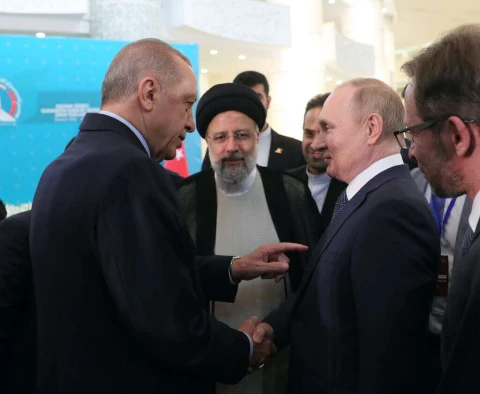
Can Turkey, Russia, and Iran Bring Permanent Security to Syria?
Ultimately, the Astana Process reflects the nature of politics today.

Ultimately, the Astana Process reflects the nature of politics today.
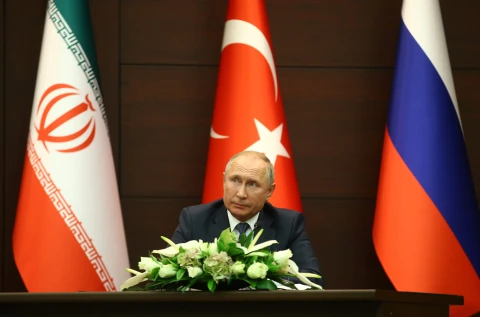
The task of Russia looks much more complex and goes beyond specific case of the Syrian civil war, having military and political dimensions. Russia wants to return as a full-fledged player in the Mediterranean basin through Syria.
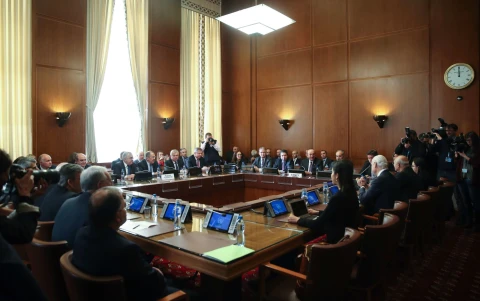
Without the participation of the Syrian public, both inside and outside Syria, a constitution written in Geneva, Astana, or in Paris may not have the legitimacy required to mobilize the Syrian public to participate in a transitional political process.
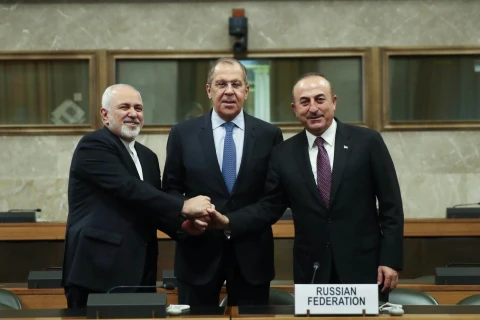
Yesterday in Geneva, Foreign Ministers of Turkey, Russia and Iran - Mevlut Cavusoglu, Sergey Lavrov, Muhammad Javad Zarif - agreed upon the establishment of a constitutional commission of which the composition is yet to be set.
Defending civilians against the brutality of the Assad regime and his allies should not only be Turkey’s responsibility. The international community, including the U.S., has great responsibilities to carry in this particular matter as well.
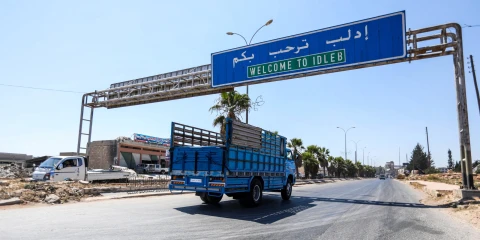
If the regime and Russian military campaign goes beyond a limited military intervention and turns into a full-scale military assault in Idlib, then two major developments should be expected. The first one is the radicalization of the moderate armed groups against Russia and the Syrian regime, and the second is the alienation of Turkey from the Astana process, which might bring more cost for Russia.