Turkish Defense Industry at the Global Super League
NATO's new concept centers on drone technologies and electronic warfare capabilities, focusing on a vision of a multi-layered ‘defense dome’ that effectively covers the skies and seas.
October 23, 2025
T
he 1970s and 80s saw regular armies in Latin America, Asia and later Africa, including Turkey, facing serious problems in their fight against terrorist groups, guerrillas and paramilitary groups. The appetite of Western countries such as the United Kingdom, France, and Germany, and most intensely the United States, to intervene in regimes in many countries around the world, along with the financing of the U.S.’s shadowy paramilitary companies and military-industrial complex through hundreds of operations conducted by the Pentagon and the CIA, led to an unprecedented expansion in the volume of arms and ammunition imports by developing countries, both Atlantic and non-Atlantic.
In the post-World War II era, when NATO was established, global military spending stood at around 500 billion dollars in today’s figures. As the Cold War escalated and tensions between the Western and Eastern blocs deepened, military spending first rose to 1.5 trillion dollars and then to 1.8 trillion dollars just before the end of the Cold War. Of this expenditure, $750 billion was by the United States, $1 trillion by NATO, $600 billion by the Soviet Union, and the remaining $200 billion by countries not belonging to any military pact. After the Cold War, in the early 2000s, global military spending fell to $1.2 trillion, with $750 billion spent by NATO, approximately $100-150 billion by Russia and China, and $250-300 billion by the remaining countries.
Today, particularly since the outbreak of the Russia-Ukraine War in 2022, we are talking about global military expenditure that has surpassed $2.8 trillion on an annual basis as of the first half of 2025, up from $2.2 trillion. In the defence sector, the 15 leading countries, including Turkey, in terms of military power and capability; are caught between coordinating, transitioning, and adapting to conventional army structures, conventional weapons, ammunition, and platforms; new-generation irregular warfare techniques; new-generation warfare technologies and strategies; and artificial intelligence-focused new-generation weapons, ammunition, and platforms. They are struggling to train sufficient high-quality personnel and manage costs effectively. The United States’ defence spending, which has reached $1 trillion, is now straining the federal budget.
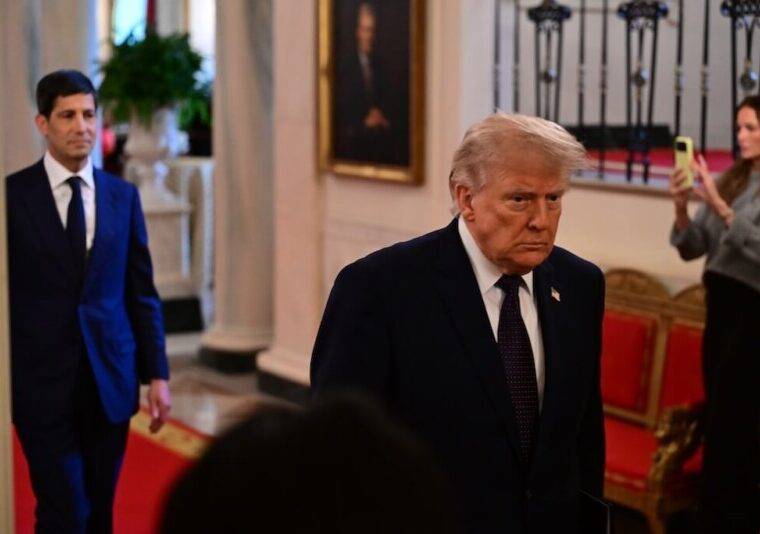
Therefore, after taking office for a second term, President Trump made it clear that it is not possible for the United States to bear the entire burden of the Atlantic Alliance and NATO’s defence and warfare capabilities. He warned that if NATO member EU countries do not increase their military investment and spending by at least 2.5-3 times by 2028, the United States may withdraw from NATO to some extent. Therefore, despite objections from some EU countries, at the recent NATO summit, all countries pledged to comply with the U.S. call for spending and investment. Russia’s drone and fighter jet violations in September, first in Poland, then in Estonia, and subsequently in some Scandinavian countries’ airspace, have prompted NATO to take action.
Consequently, strategic efforts to design a more comprehensive air defence system under NATO and to deepen NATO’s capabilities will be accelerated. For this reason, many NATO countries have also accelerated mutual cooperation with Turkey in the areas of defence, security and new generation warfare technologies.
Especially in the last five years, the concept of warfare has changed radically. With drones, land, sea and submarine platforms are no longer just reconnaissance or surveillance tools, but have become strategic elements with direct attack capabilities. The Russia-Ukraine War has proven on the ground how low-cost but deadly unmanned systems can upset the balance on the front lines. Ukraine’s FPV drones and the naval drones it uses in the Black Sea have shaken the traditional understanding of naval and air superiority.
The 2020 Azerbaijan–Armenia Karabakh War demonstrated that UAVs could alter the course of ground warfare without the need for air superiority, opening the door to a new doctrine. This change in warfare techniques on the battlefield heralds an era described internationally as ‘lethal transparency.’ New-generation electronic warfare systems, artificial intelligence-supported swarm algorithms, and layered air defence networks have now become integral components of the new generation battlefield.
This rapid evolution is also forcing NATO to take radical steps. At the recent summit in The Hague, alliance members agreed on a target of defence spending reaching 5% of their GDP. This ratio represents a radical departure from the long-neglected 2% spending threshold in many European countries. Russia’s increasingly frequent violations of NATO countries’ airspace in the Baltic and North Seas are raising the need for ‘active defence’ beyond deterrence. Faced with this situation, Trump first sent a loud message to European capitals to ‘fulfil your commitments’. Trump stated that Russian aircraft and drones should be shot down immediately if they violate airspace but left the details of U.S. support on this issue up in the air.
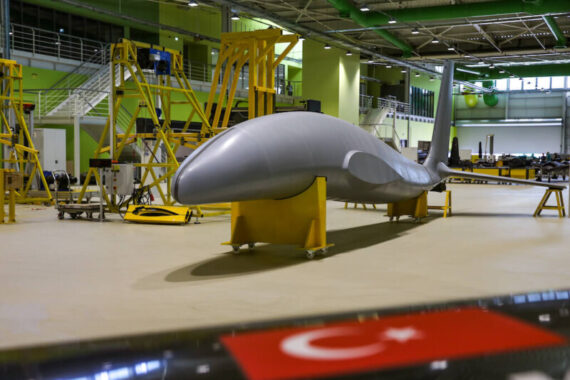
NATO’s new concept centers on drone technologies and electronic warfare capabilities, focusing on a vision of a multi-layered ‘defence dome’ that effectively covers the skies and seas. Thus, the alliance aims to establish a security architecture that integrates not only land and air forces, but also space and cyberspace. In this historic transformation process that NATO must rapidly implement, Turkey has become a power centre not only regionally but also globally. Ten years ago, Turkey accelerated revolutionary steps to produce its own UAVs and SİHA (unmanned aerial vehicles) with local and national capabilities, and in just five years, it has become the world’s most ambitious drone manufacturer and exporter.
Baykar’s TB2 and Akıncı models have successfully served in Syria, Libya and Karabakh, and have become symbols against the Russian army in Ukraine. The TB3’s ability to take off and land from the TCG Anadolu has propelled Turkey into the drone carrier concept and placed it at the forefront of sea-air integration. Unmanned combat aircraft projects such as Kızılelma and ANKA-3 also enable manned and unmanned air assets to converge under the same doctrine.
In addition, the process of building short, medium and long-range air defense layers with domestic capabilities under the HİSAR and SİPER programs and the Steel Dome project is being followed with admiration by many of Turkey’s allies and is also facilitating the signing of successive long-term defense technology and security cooperation agreements between Turkey and these allies. The GÖKDENİZ close-range air defence system, TF-2000 air defense frigates and the naval drones under development also reinforce the ‘system of systems’ vision in terms of Turkey’s new generation warfare doctrine and strategy.
Our defence industry exports, which reached $1.8 billion in 2024 and are already projected to exceed $2.5 billion in 2025, demonstrate in figures how this historic leap is transforming into high added value for the Turkish economy on a global scale. Turkey’s goal is to gradually increase its defence industry exports from $11 billion to $15 billion in the 2028-2030 period.
In a context where the emerging E7 economies are accelerating strategic cooperation and wide-ranging joint project steps to deepen their economic, commercial, political and military cooperation with Turkey without exception, the President’s fair, strong and determined stance, which reinforces the perception of a ‘Strong Turkey’, is causing the messages he has delivered and will deliver at all international meetings to be followed with great interest by the international public.
Therefore, under the visionary leadership of the Turkish President, the giant strides taken over the past 20 years in the fields of defense, security, energy and digital technologies, along with our capabilities and capacities that have elevated the Turkish Armed Forces to among the world’s strongest armies, enable a strong Turkey to stand up for its own geography and the oppressed, to hold those responsible to account, and to manage a strong diplomatic process both on the ground and at the negotiating table. Under President Erdoğan’s strong, determined and visionary leadership, Turkey has assumed the role of a ‘game changer’ that is reshaping the destiny of Eurasia. A strong Turkey also forms the essence of the Vision for the Turkish Century.
Recommended
The historic steps that have elevated Turkey to the ‘Global Super League’ in the international defense industry and its performance in producing domestic high technology have brought to the fore an increasing expectation of responsibility from our country within the NATO and European security architecture. From the Black Sea to the Eastern Mediterranean, no one now disputes Turkey’s indispensable role in terms of the security of energy routes and the defense of the eastern flank.
In the defence plans of allied countries, Turkey’s technological superiority in unmanned systems and electronic warfare capabilities are frequently cited as examples. This situation provides Turkey with both a broader diplomatic manoeuver space and a stronger voice in alliance decision-making processes. Turkey now positions itself not only as a geostrategic bridge between the Atlantic and the Pacific, but also as a technology supplier and doctrine contributor to NATO’s new generation defense architecture.
Europe, which has been dragging its feet for years on Trump’s warning that ‘it is time to contribute more,’ has accelerated its defense investments. Germany, France and many other countries have put plans in place to exceed the 2% defense spending threshold. NATO’s new target is to raise this ratio to 5%. This does not simply mean inflating budgets; on the contrary, it means opening the door to massive investments in new-generation drone technologies, hypersonic missiles and artificial intelligence-supported defense networks. Balancing the financial burden for the sake of Atlantic security is now an unavoidable necessity. Washington is forcing Europe to renew its defense industry and rapidly integrate new generation weapons technologies.
Turkey is one of the few countries that currently meets NATO’s defence spending commitments. This positions Turkey as a reliable partner in burden-sharing. In the coming period, the completion of the Iron Dome project, the deployment of long-range systems such as SİPER Block-II/III against hypersonic threats, and the commissioning of TF-2000 air defence destroyers will make valuable contributions to Turkey’s deterrence concept. Furthermore, the development of naval drones and autonomous underwater vehicles in the Black Sea and Eastern Mediterranean will take Turkey’s deterrence to a whole new level.
Furthermore, advances in electronic warfare and counter-unmanned aerial systems (C-UAS) technologies point to a process that will both strengthen our national security and make Turkey an indispensable technology supplier in the eyes of its allies. This momentum is also positioning Turkey not only as a regional power but also as one of the global standard-setters in the era of unmanned systems and layered defence.
Drones, hypersonic missiles and electronic warfare capabilities have overturned the parameters of conventional warfare. While NATO is enhancing its institutional capacity to respond to this transformation with record-level increases in defense budgets, Turkey is emerging as one of the most critical actors in the era of uncertainty that defines the next stage, thanks to the high-tech defense ecosystem it has built over the past decade and its proven operational capabilities in the field.
The next five years will elevate Turkey’s defense industry beyond regional influence to become a global reference point, cementing Turkey’s membership in the ‘Global Super League’. Amidst the growing threats of a third world war shaping the global security architecture within the global economic-political system, Turkey is rapidly establishing itself as a key strategic player with its high-capability defense and security technologies, weapons, ammunition and platforms.
(Originally published in Turkish by Kriter)

Kerem Alkin is an ambassador, economist and a writer who holds a BA in Management as well as an MA and a PhD in Economics from Istanbul University.
You can see how this popup was set up in our step-by-step guide: https://wppopupmaker.com/guides/auto-opening-announcement-popups/

Stay informed by subscribing to
our weekly newsletter.
You can see how this popup was set up in our step-by-step guide: https://wppopupmaker.com/guides/auto-opening-announcement-popups/
You can see how this popup was set up in our step-by-step guide: https://wppopupmaker.com/guides/auto-opening-announcement-popups/
You can see how this popup was set up in our step-by-step guide: https://wppopupmaker.com/guides/auto-opening-announcement-popups/
You can see how this popup was set up in our step-by-step guide: https://wppopupmaker.com/guides/auto-opening-announcement-popups/