China’s Wang Yi to Visit Pakistan for Strategic Dialogue After India Trip
In 2024, bilateral trade between China and Pakistan surpassed $23 billion, making Beijing Islamabad’s largest trading partner.
August 19, 2025
C
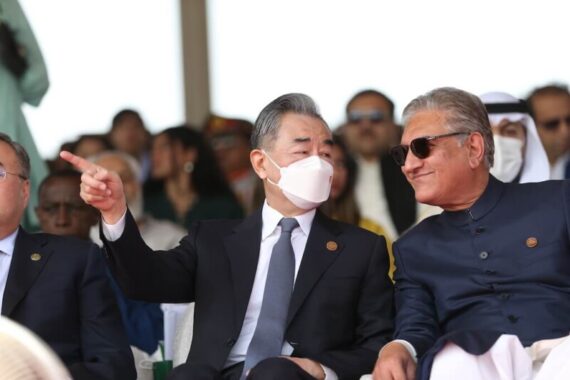
hina’s top diplomat Wang Yi will arrive in Pakistan on Wednesday, August 20, 2025 for a three-day visit to hold high-level talks with Foreign Minister Ishaq Dar, as the two long-time allies seek to strengthen political, economic, and security cooperation amid shifting regional dynamics.
The visit, announced Tuesday by Beijing and Islamabad, will mark the sixth round of the China-Pakistan Strategic Dialogue, a platform both countries have used to align their foreign policy priorities and advance joint projects.
“China and Pakistan are iron-clad and all-weather friends,” Chinese Foreign Ministry spokeswoman Mao Ning told reporters in Beijing, emphasizing that the talks would focus on expanding “practical cooperation” in areas ranging from infrastructure to defense.
Wang’s trip to Islamabad comes immediately after his two-day visit to India, where relations remain tense over a disputed Himalayan border and New Delhi’s growing strategic alignment with the United States. Analysts say the back-to-back visits underscore Beijing’s balancing act in South Asia, where it seeks to manage rivalry with India while bolstering its “all-weather partnership” with Pakistan.
During his stay, Wang is also expected to meet with Prime Minister Shehbaz Sharif and President Asif Ali Zardari. Discussions are likely to include progress on the $62 billion China-Pakistan Economic Corridor (CPEC), a flagship project under Beijing’s Belt and Road Initiative that connects China’s Xinjiang province to the Arabian Sea via Gwadar port in Balochistan.
CPEC has been hailed by both sides as a “game changer” for Pakistan’s economy, but it has also faced delays, security challenges, and growing scrutiny from international lenders. Islamabad is eager to secure further Chinese investment as it struggles with a fragile recovery from last year’s balance-of-payments crisis.
Recommended
In 2024, bilateral trade between China and Pakistan surpassed $23 billion, making Beijing Islamabad’s largest trading partner. China is also Pakistan’s leading supplier of arms, including fighter jets, drones, and naval equipment, reinforcing deep defense ties that have spanned decades.
Security is expected to feature prominently in the dialogue. Pakistan continues to face militant attacks targeting Chinese nationals and CPEC infrastructure, prompting Beijing to demand stronger guarantees for the safety of its citizens working in the country. For Islamabad, continued Chinese backing is crucial, especially as relations with Washington remain cautious and aid flows have declined.
Regional geopolitics add further weight to Wang’s visit. With the U.S. recalibrating its role in South Asia and India moving closer to Western partners through initiatives like the Quad, Beijing and Islamabad appear determined to present a united front. “This dialogue will signal that the China-Pakistan partnership remains resilient and central to Beijing’s South Asia strategy,” said Islamabad-based analyst Ayesha Siddiqa.
The last round of the China-Pakistan strategic dialogue was held in Beijing in 2021. Since then, Pakistan has seen political upheaval, economic turbulence, and security challenges, making the upcoming talks an important test of how both countries will adapt their long-standing partnership to new realities.
(Source: Anadolu Agency)

Politics Today is dedicated to publishing insightful analyses in order to understand the changing nature of contemporary politics. It aims to contribute to the sound and constructive discussion of international affairs.
You can see how this popup was set up in our step-by-step guide: https://wppopupmaker.com/guides/auto-opening-announcement-popups/

Stay informed by subscribing to
our weekly newsletter.
You can see how this popup was set up in our step-by-step guide: https://wppopupmaker.com/guides/auto-opening-announcement-popups/
You can see how this popup was set up in our step-by-step guide: https://wppopupmaker.com/guides/auto-opening-announcement-popups/
You can see how this popup was set up in our step-by-step guide: https://wppopupmaker.com/guides/auto-opening-announcement-popups/
You can see how this popup was set up in our step-by-step guide: https://wppopupmaker.com/guides/auto-opening-announcement-popups/