From Tel Aviv to Tehran and Beyond: The Birth of a Global War Laboratory?
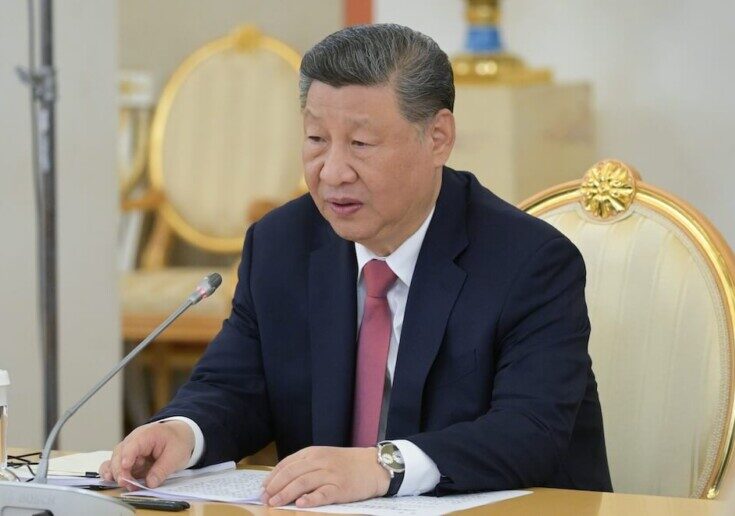
Iran's BeiDou integration and its use of cyber warfare and drones for deterrence serve as an example that reinforces the legitimacy of Beijing's asymmetric defense strategy.
September 2, 2025
I
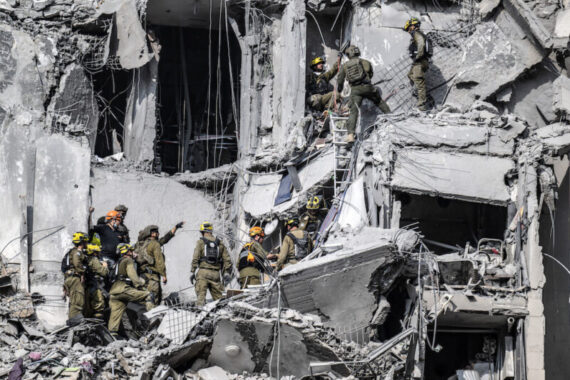
n June, when Tehran’s skies lit up with missile fire and swarms of drones, what unfolded was not just a typical regional conflict between two old adversaries. These scenes vividly demonstrated how advancing technologies are fundamentally transforming the logic of war. The confrontation between Israel and Iran is not just bilateral tension between two countries; it’s a small example of a broader transformation in the global understanding of war.
We are on the threshold of a new era in which conflict by code and geopolitics by algorithm are intertwined. Technologies such as artificial intelligence (AI), drones, and independent satellite navigation systems are becoming decisive in military strategies, blurring the boundary between national warfare and global conflict.
The most revolutionary transformation in the Israel-Iran conflict has been the integration of drones and artificial intelligence into a framework for surveillance, analysis, and precision targeting rather than just weapons of attack. Israel’s “Operation Rising Lion” was not a spur-of-the-moment air strike. It is the result of months of intelligence groundwork. Mossad agents infiltrated Iranian territory, pre-positioned drone platforms, and smuggled first-person view (FPV) drones into the country.
The real lethal factor, however, is not the drones themselves but the intelligence network that controls them. Israeli operators on the ground collected massive amounts of visual, auditory, electromagnetic, and behavioral data. This data was then transferred to advanced AI systems presumably developed by U.S.-based Palantir Technologies. Palantir has deep ties to the Pentagon and operates various systems, including an AI platform called Mosaic. Mosaic is believed to have processed over 400 million data points on Iran’s military personnel, logistics routes, and nuclear facilities.
Using this data, Palantir’s software modeled behavioral patterns, located strategic targets geographically, and categorized high-value individuals and facilities in order of priority. Based on these analyses, Israeli intelligence officials have created attack packages that classify targets with precision.
Once the target list was finalized, the operation moved into its kinetic phase. Earlier deployed drones were guided by AI-assisted machine vision and real-time communication links, enabling Israeli warplanes to carry out precision strikes within seconds of entering Iranian airspace. These FPV drones are not just flying explosives; they are autonomous or semi-autonomous platforms that can identify targets, alter their course, and evade electronic countermeasures during missions.
The drones struck strategic points with precision. Simultaneously, they disabled early warning and communication systems, opening an air corridor for Israeli jets to conduct deep and accurate operations. This operation demonstrated that artificial intelligence determined not only who to target in the war but also when and how to attack. Decision-making processes accelerated, the intelligence cycle tightened, and the boundaries between war planning and execution blurred.
Meanwhile, Iran embraced this new structure through asymmetric means. Drones such as the Shahed were equipped with AI-supported flight control, swarm logic, and autonomous target selection. In 2024, the Islamic Revolutionary Guard Corps (IRGC) developed systems that could operate synchronously over 5G and Long-Term Evolution (LTE) networks. These systems targeted radar, border patrols, and logistics convoys and enabled the simultaneous use of numerous low-cost drones.
Although Iran’s strategy relies on numbers and coordination rather than sophistication, its drones are not as advanced as Israel’s precision-guided, AI-enabled model. During the retaliatory attack in June 2025, Iran launched over 1,100 drones in waves in an attempt to infiltrate Israeli airspace. AI determined the launch sequence and optimized altitude settings to avoid radar detection. It also created fake target simulations to confuse Iron Dome batteries.
The combination of Israel’s AI-supported, surgical-strike drone attacks and Iran’s AI-coordinated swarm attacks reveals the emerging spectrum of drone warfare. It demonstrates that warfare is now shaped more by information superiority and algorithmic decision-making processes than by firepower. Artificial intelligence senses, thinks, and acts at speeds unattainable by humans in real-time feedback loops. In future conflicts, superiority will depend not on the number of weapons but on the effectiveness of intelligent systems.
During the Iran-Israel conflict in June 2025, one of the most critical yet overlooked factors influencing Iran’s ability to retaliate was its reliance on the Chinese-made BeiDou satellite navigation system. Although neither Tehran nor Beijing has confirmed this, the precision of the attacks and the accuracy of the targets suggest that BeiDou played a role in guiding them. Iran secured access to BeiDou through an agreement signed with China in 2021. This marked a turning point for Iran, which had long depended on the U.S. GPS system. Now, Iran has access to jamming-resistant, high-precision targeting systems that operate independently of Western infrastructure.
The implications of this development for sovereignty are profound. A military force dependent on GPS, especially one whose interests frequently clash with those of the U.S., is constantly at risk of signal interruption, jamming, or spoofing. Such interference could lead to failed attacks during wartime, with drones crashing due to missiles missing their targets. However, BeiDou has enabled Iran to pursue its missile and UAV programs with strategic independence and develop immunity against American interference.
According to Iranian media reports, the missiles hit military and civilian targets in Tel Aviv and Haifa with pinpoint accuracy. Such precise, simultaneous strikes are only possible with an advanced satellite guidance system like BeiDou. In fact, BeiDou offers higher accuracy than GPS in some parts of Asia because its satellites focus on the Eastern Hemisphere and are densely and regionally optimized. Had Iran still been solely dependent on GPS, it would not have been able to achieve this capability. Being completely excluded from the system, as China experienced during the 1996 Taiwan Strait crisis, would leave Iran “blind.” This scenario is not hypothetical; it is precisely the fundamental reason behind China’s development of BeiDou.
During the 1996 Taiwan Strait crisis, the U.S. cut off Chinese forces’ access to GPS. The resulting strategic loss of prestige and operational helplessness was recorded in Chinese public consciousness as an “unforgettable humiliation.” This traumatic experience triggered China’s decision to establish a sovereign satellite navigation system, which has since become one of the cornerstones of the country’s global technological influence. Today, China presents BeiDou not only as a navigation tool, but also as a tool for geopolitical alignment. Iran is not alone in this process. There are strong indications that Pakistan used BeiDou during its border conflict with India.
Taken together, these examples demonstrate that the Western-centric nature of the global war infrastructure is unraveling. The monopoly of this system, which was once based solely on GPS as the global standard—controlled by Washington and open to political interference—is coming to an end. A multipolar satellite order is emerging in its place, with BeiDou as the main alternative. For states seeking to secure their digital sovereignty, align with China, or counter Western hegemony, access to BeiDou has become a strategic asset.
Viewing the Israel-Iran conflict solely as a regional event overlooks a much broader transformation currently underway. By June 2025, the battlefield stretching from Tel Aviv to Tehran will have become a testing ground for evolving global military doctrines. The new generation of weapon systems, AI-assisted targeting technologies, unmanned aerial vehicles (UAVs), and cyber warfare elements used on this front offer a glimpse into the future of warfare. The tension between Israel and Iran functions as a “war research laboratory” that transcends classic war paradigms by testing hybrid warfare, multidimensional engagement, and asymmetric force usage.
In reality, the tactical innovations observed in this conflict are not unprecedented in the Middle East. These strategies were refined during Ukraine’s Spider Web Operation. In June 2025, Ukraine launched 117 UAVs in coordinated waves from civilian trucks and urban shelters, secretly infiltrating Russian territory. This was one of the first examples of tactics aimed at overwhelming air defenses. Israel’s tactic of pre-deploying drones into enemy territory and deploying them simultaneously is nearly identical. Israel’s FPV drones, AI-assisted targeting systems, and real-time battlefield analytics bear a strong resemblance to the solutions Ukraine developed against Russian forces. Ukraine improvised these techniques during the crisis, and Israel has industrialized and applied them with surgical precision.
However, Iran has also learned from this process. Just as Russia used swarm drones, mobile guidance systems, and signal jamming techniques to overcome Ukraine’s defenses, Iran has adopted these methods to provide an asymmetric response against Israel. Moreover, these regional actors are not merely copying each other. They are also being closely watched and studied by the two global superpowers, the U.S. and China, who are likely to face off in the future.
Recommended

Currently, the U.S. is the main contributor to Israel’s military AI infrastructure, providing systems such as Palantir’s Mosaic platform. The U.S. draws direct inspiration from the tactical experiences of Israel and Ukraine. The U.S. Department of Defense’s Replicator Program, which aims to produce thousands of autonomous drones, reflects the successes of Israel against Iran and Ukraine against Russia. Real-time intelligence fusion, rapid decision chains from sensor to weapon, and semi-autonomous loitering munitions are now fundamental components of American warfare doctrine.
Conversely, China is observing this process with equal intensity. Iran’s BeiDou integration and its use of cyber warfare and drones for deterrence serve as an example that reinforces the legitimacy of Beijing’s asymmetric defense strategy. In scenarios where achieving conventional air superiority is impossible, such as in Taiwan, drones, cyberattacks, and satellite-based autonomy could play a decisive role in China’s strategy to establish air superiority.
At the same time, China is learning from Russia’s failures. After carefully analyzing the vulnerabilities exposed by Ukraine’s electronic warfare capabilities, Beijing now frequently mentions the following concepts in its military publications: multi-domain AI coordination, decentralized drone production, and resilient battlefield communication networks.
What we are currently witnessing is the emergence of a global war laboratory. Tactical and technological feedback loops are accelerating. No conflict is conducted in isolation; every attack is a signal and every counterattack is a case study. The U.S. and China are producing not only weapons but also training algorithms, testing doctrines, and mapping the future of warfare based on microcosms such as Tel Aviv, Tehran, Kyiv, and Donetsk.
This cycle of mutual learning is the fundamental element that makes today’s conflicts so important geopolitically. The Israel-Iran War may be geographically limited, but its effects are global. It will determine how Beijing and Washington shape their next moves, how allies position their defense industry strategies, and how war itself is redefined.
In short, we are no longer facing isolated conflicts. Rather, we are facing a series of events in a major global competition that will determine who dominates the 21st-century battlefield.
(Orignally published in Turkish by Kriter)

Dr. Gloria Shkurti Özdemir holds a BA in Political Science and International Relations from Albania. She completed her master’s studies at Sakarya
University, presenting a thesis titled “A Lethal Weapon that Became the Cure-all for Terrorism: Discursive Construction of the U.S. Dronified Warfare.”
Her doctorate was obtained at Ankara Yıldırım Beyazıt University, where her research focused on the application of artificial intelligence in the
military, specifically examining the U.S.-China rivalry. Her primary research interests revolve around emerging technologies, particularly artificial
intelligence, and their implications for international relations, U.S. foreign policy, and drone warfare. Dr. Shkurti Özdemir is currently a Researcher
in the Foreign Policy Directorate at the SETA Foundation and Assistant Editor of Insight Turkey. She also serves as a Lecturer and the Director of the Emerging Technologies and Artificial Intelligence (ETAI) Research Center at Khazar University in Baku, Azerbaijan.
You can see how this popup was set up in our step-by-step guide: https://wppopupmaker.com/guides/auto-opening-announcement-popups/

Stay informed by subscribing to
our weekly newsletter.
You can see how this popup was set up in our step-by-step guide: https://wppopupmaker.com/guides/auto-opening-announcement-popups/
You can see how this popup was set up in our step-by-step guide: https://wppopupmaker.com/guides/auto-opening-announcement-popups/
You can see how this popup was set up in our step-by-step guide: https://wppopupmaker.com/guides/auto-opening-announcement-popups/
You can see how this popup was set up in our step-by-step guide: https://wppopupmaker.com/guides/auto-opening-announcement-popups/