Nations Leave Geneva Without Landmark Plastics Agreement
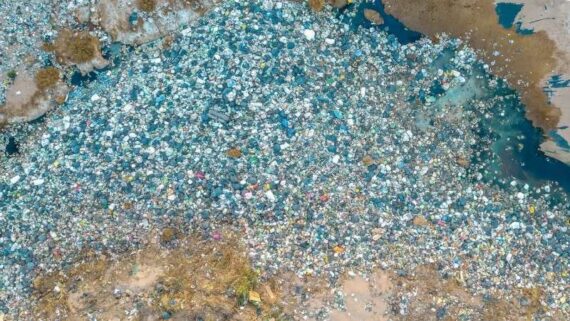
Plastic pollution has become one of the most pressing environmental issues of the 21st century.
August 15, 2025
A
fter 11 days of intense negotiations at the United Nations offices in Geneva, efforts to finalize the world’s first legally binding treaty to tackle plastic pollution ended in failure on Friday, leaving governments and environmental groups expressing frustration and disappointment.
The breakdown marks the second major collapse in talks within a year, following a similar stalemate in South Korea in 2024. The meeting had been billed as the last opportunity to reach an agreement on a “landmark” treaty aimed at curbing the global plastic crisis — but deep divisions over whether to cap production and impose binding limits on toxic chemicals proved insurmountable.
The 184 participating countries remained split on a central question: Should the treaty directly target the exponential growth in plastic production?
A coalition including the European Union, Norway, Australia, and small island nations such as Tuvalu pushed for global, legally binding controls — including reductions in production and tighter chemical regulation — arguing that pollution cannot be solved solely through waste management.
On the other side, countries such as Saudi Arabia and Kuwait, both major petrochemical producers, opposed production caps and sought to narrow the treaty’s scope to waste handling. Saudi negotiators argued that production issues lie outside the agreement’s remit.
Luis Vayas Valdivieso, chair of the negotiating committee, attempted to bridge the divide by presenting two draft texts. Neither included a hard cap on production, though they acknowledged that current production and consumption levels are “unsustainable” and exceed the planet’s waste management capacity. However, both drafts were rejected as the basis for further negotiation.
The mood in Geneva turned sharply critical as the final session closed. David Azoulay, health program director at the Center for International Environmental Law, called the outcome an “abject failure.”
“In the final days of the negotiations, we have clearly seen what many of us have known for some time — some countries did not come here to finalize a text. They came here to block any attempt at advancing a viable treaty,” Azoulay said. “It’s impossible to find common ground between those who are interested in protecting the status quo and the majority who are looking for a functional treaty that can be strengthened over time.”
Jessika Roswall, European Commissioner for Environment, Water Resilience and Competitive Circular Economy, said she was “deeply disappointed” to be leaving without a deal but stressed the EU would continue to push for a strong agreement.
“While the latest text on the table does not yet meet all our ambitions, it is a step forward — and the perfect must not be the enemy of the good,” Roswall wrote on social media.
With no immediate plan for resuming formal talks, some environmental advocates are calling for a radical change in the negotiation process. Azoulay urged pro-treaty nations to form a “treaty of the willing” outside the current consensus model, which allows a small number of countries to block progress.
“We need a restart, not a repeat performance,” he said. “That process must include voting options that deny the tyranny of consensus we have watched play out here.”
Delegates remain in Geneva for informal consultations but have not decided on next steps.
Plastic pollution has become one of the most pressing environmental issues of the 21st century. According to the Organization for Economic Co-operation and Development (OECD), global plastic production has more than doubled in the past two decades, reaching 460 million tones in 2019 — and is projected to triple by 2060 without intervention.
Once produced, plastics are persistent, with microplastics now found in oceans, rivers, the atmosphere, and even human bloodstreams. United Nations Environment Program research shows that mismanaged plastic waste kills hundreds of thousands of marine mammals each year, while also contributing to climate change through its fossil fuel-based production.
Small island states and low-lying nations have been among the strongest advocates for aggressive action, pointing to the devastating effects of marine debris on fisheries, tourism, and coastal livelihoods.
Recommended
Despite the collapse in Geneva, many countries insist that momentum is not lost. Norway’s delegation said they will work with allies to “keep the ambition high” for a binding deal, while Tuvalu called for “courage and leadership” in future rounds.
However, without consensus on production limits, the treaty risks being watered down into a non-binding framework focused mainly on recycling and waste management — measures environmental groups say are inadequate given the scale of the crisis.
The next steps remain uncertain. Options include reconvening the full negotiating body under the current UN framework, attempting a smaller coalition agreement outside the UN, or extending the timeline for negotiations. For now, though, the promise of a historic plastics treaty remains out of reach.
(Source: Euronews)

Politics Today is dedicated to publishing insightful analyses in order to understand the changing nature of contemporary politics. It aims to contribute to the sound and constructive discussion of international affairs.
You can see how this popup was set up in our step-by-step guide: https://wppopupmaker.com/guides/auto-opening-announcement-popups/

Stay informed by subscribing to
our weekly newsletter.
You can see how this popup was set up in our step-by-step guide: https://wppopupmaker.com/guides/auto-opening-announcement-popups/
You can see how this popup was set up in our step-by-step guide: https://wppopupmaker.com/guides/auto-opening-announcement-popups/
You can see how this popup was set up in our step-by-step guide: https://wppopupmaker.com/guides/auto-opening-announcement-popups/
You can see how this popup was set up in our step-by-step guide: https://wppopupmaker.com/guides/auto-opening-announcement-popups/