Report: Artificial intelligence Could Add 13% to Global GDP
AI-enabled trade depends heavily on access to raw materials, semiconductors, and other inputs, which together amounted to $2.3 trillion in global trade in 2023.
September 18, 2025
A
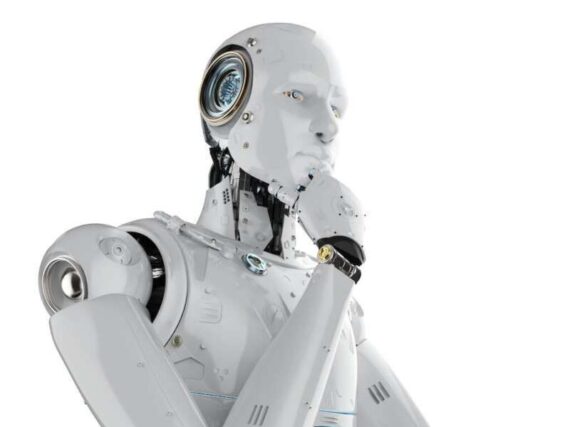
rtificial intelligence (AI) could increase global trade flows by almost 40% by 2040 if governments bridge digital divides and adopt enabling policies, according to the World Trade Organization’s (WTO) flagship World Trade Report 2025.
The study projects that cross-border flows of goods and services could rise by 34–37% in different scenarios, while global GDP could expand by 12–13% over the same period. These gains would come from productivity improvements and lower trade costs driven by AI adoption.
“AI has vast potential to lower trade costs and boost productivity. However, access to AI technologies and the capacity to participate in digital trade remains highly uneven,” WTO Director-General Ngozi Okonjo-Iweala said in her foreword.
The report emphasizes that without major investment in digital infrastructure, workforce skills, and inclusive policies, the benefits of AI could remain concentrated in high-income countries. In a scenario where low- and middle-income economies narrow their digital infrastructure gap with advanced economies by half, their incomes could grow by 15% and 14% respectively.
AI-enabled trade depends heavily on access to raw materials, semiconductors, and other inputs, which together amounted to $2.3 trillion in global trade in 2023. Yet access to these goods is uneven, with bound tariffs reaching up to 45% in some low-income countries. The report warns that growing restrictions on AI-related goods — rising from 130 in 2012 to nearly 500 in 2024 — could hinder inclusive growth.
The WTO warns that AI-driven growth could exacerbate inequality within economies if governments fail to invest in education, retraining, and social protections. “The ongoing political backlash against trade has much to do with underinvestment in education, skills, retraining and social safety nets during past decades of globalization,” Okonjo-Iweala said. “We cannot afford to repeat this mistake with AI.”
The report underscores the WTO’s role as a platform for member states to discuss AI-related trade issues. To date, 80 specific trade concerns have been raised at the WTO on AI, and discussions on inclusive AI adoption are part of its Work Programme on E-Commerce. The report also suggests that broader participation in the Information Technology Agreement and updated commitments under the General Agreement on Trade in Services could make AI more accessible and affordable worldwide.
The World Trade Report 2025 was launched at the WTO Public Forum in Geneva. Deputy Director-General Johanna Hill and WTO economist Marc Bacchetta presented the findings, followed by a panel discussion.
Okonjo-Iweala framed the report as both a warning and an opportunity: “The new report comes amid the worst disruptions the global trading system has experienced in 80 years. Yet amid the risks to trade, growth and development, there are bright spots — and one of them is the potential of artificial intelligence.”
(Source: World Trade Organization)
Recommended

Politics Today is dedicated to publishing insightful analyses in order to understand the changing nature of contemporary politics. It aims to contribute to the sound and constructive discussion of international affairs.
You can see how this popup was set up in our step-by-step guide: https://wppopupmaker.com/guides/auto-opening-announcement-popups/

Stay informed by subscribing to
our weekly newsletter.
You can see how this popup was set up in our step-by-step guide: https://wppopupmaker.com/guides/auto-opening-announcement-popups/
You can see how this popup was set up in our step-by-step guide: https://wppopupmaker.com/guides/auto-opening-announcement-popups/
You can see how this popup was set up in our step-by-step guide: https://wppopupmaker.com/guides/auto-opening-announcement-popups/
You can see how this popup was set up in our step-by-step guide: https://wppopupmaker.com/guides/auto-opening-announcement-popups/