Report: China Flooding Global Markets with Gasoline Cars

December 3, 2025

In Chile, Chinese manufacturers have overtaken traditional car brands, capturing a third of the market and offering gasoline models that undercut US, Japanese and European rivals by thousands of dollars.
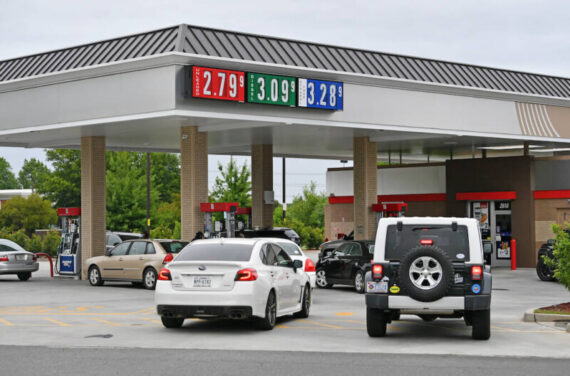
Cars line up to get gasoline after ransomware cyberattack causes Colonial Pipeline to shut down, resulting in shortages in Charlotte, North Carolina, United States on May 12, 2021 Photo by Anadolu Images.

C

hina is exporting millions of gasoline-powered cars to emerging markets as its domestic shift toward electric vehicles (EVs) leaves legacy automakers with collapsing sales, idle factories, and a massive glut of unused combustion-engine capacity, according to a detailed Reuters investigation published Monday.

While Europe and the US have imposed tariffs and voiced concerns over a wave of Chinese-made EVs, the report found that three-quarters of China’s exports since 2020 were in fact gasoline or diesel cars, not electric. Fueled by that surge, China has become the world’s largest auto exporter by volume, shipping more than 6.5 million vehicles in 2024, up from around 1 million in 2020.

Industry analysts say the trend is reshaping global auto competition, especially in developing countries where charging infrastructure is limited and lower-cost gasoline cars remain the dominant option.

“This is an unintended consequence of China’s aggressive push toward EVs,” said Bill Russo, CEO of Automobility. “Excess capacity that can no longer be absorbed domestically is now being aimed outward, flooding foreign markets.”

Falling domestic demand leaves factories idle

The report highlights how China’s breakneck EV transition—driven by massive state subsidies, incentives for consumers, and government pressure on local authorities to favor EV production—has dramatically reduced the market for gasoline vehicles.

Foreign automakers such as Volkswagen, GM, Nissan and Honda, which once dominated the Chinese market, have seen sales collapse by more than 30% over the past five years. But China’s own state-owned giants, including SAIC, BAIC, Changan and Dongfeng, have been even more severely hit as younger buyers rapidly shift to China’s domestic EV brands such as BYD, Li Auto and NIO.

These legacy manufacturers now operate vast plants built for a different era. According to the report, China’s factories have the capacity to build up to 30 million gasoline vehicles annually, far more than Chinese consumers are willing to buy.

Instead of shutting these facilities—an expensive and politically sensitive move—many companies have chosen to send the unsold gasoline models abroad.

Former Vice Minister of Industry Su Bo was quoted warning that the country’s combustion-engine sector faces “a critical survival crisis,” with exports serving as the only workable lifeline.

Emerging markets become top destinations

The bulk of China’s gasoline-car exports are flowing to Latin America, Africa, the Middle East, Southeast Asia and Eastern Europe, where EV adoption remains low.

In Poland, more than 30 Chinese brands have launched or announced sales since 2023, many offering competitively priced gasoline models. Dealers say Chinese cars are arriving at a scale not seen in decades.

“It’s simply madness,” said Marcin Slomkowski, who imports Chinese vehicles for the Polish market. “But it’s happening because they have to sell these cars somewhere.”

Across South Africa, Chinese brands now command around 16% of the market, selling nearly 30,000 gasoline cars but only 11 EVs in the first half of 2025—underscoring the limited demand for electric models in regions with poor charging access.

In Chile, Chinese manufacturers have overtaken traditional brands, capturing a third of the market and offering gasoline models that undercut US, Japanese and European rivals by thousands of dollars.

“This is where the real competition is,” said analyst Felipe Munoz of JATO Dynamics. “The global battle is not in Europe or America—it’s in emerging markets.”


Foreign automakers brace for deeper challenges

Western and Japanese automakers, already losing ground to Chinese models globally, are scrambling to adapt. Volkswagen and GM have recently expanded exports from China to developing markets. Stellantis has launched a strategy focused on cheaper models for Africa and South America.

But analysts warn that Chinese automakers are likely to dominate low- and mid-range combustion-engine markets for years to come.

“These companies cannot afford to leave any opportunity untouched,” said Dongfeng manager Jelte Vernooij. “If you want to be like Toyota, you have to be everywhere.”

(Source: Reuters)

Politics Today is dedicated to publishing insightful analyses in order to understand the changing nature of contemporary politics. It aims to contribute to the sound and constructive discussion of international affairs.