S
audi Arabia is in advanced discussions with the Trump administration to secure a new defense agreement that could see Washington extend formal security guarantees to the kingdom, similar to the U.S.-Qatar pact signed last month, according to officials familiar with the matter.
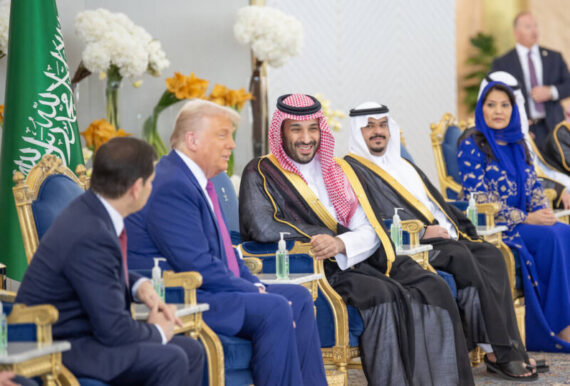
Crown Prince Mohammed bin Salman is expected to visit the White House next month, marking his first trip to the United States since 2018. The visit is anticipated to culminate in the signing of a deal that would deepen military and intelligence cooperation between the two longtime partners.
Sources close to the negotiations said Riyadh hopes the accord will be “robust” and reflect the kingdom’s growing role in regional security, while reinforcing Washington’s long-standing commitment to Gulf stability.
A senior Trump administration official confirmed that “there are discussions about signing something when the crown prince comes, but the details are in flux.” Both the White House and the State Department declined to elaborate, although a spokesperson emphasized that U.S. defense cooperation with Saudi Arabia remains “a strong bedrock of our regional strategy.”
The move comes just weeks after President Donald Trump signed an executive order guaranteeing Washington’s protection of Qatar following a missile strike on Doha by Israel that targeted Hamas’s political leadership. The attack rattled Gulf states and reignited concerns about regional instability.
Under the U.S.-Qatar pact, any assault on the Gulf emirate is to be treated as a threat to America’s peace and security, a commitment that Saudi Arabia now hopes to replicate. The proposed Saudi deal is expected to encompass joint defense planning, intelligence sharing, and enhanced cooperation in missile and air defense.
A Long-sought security guarantee
Saudi Arabia has pursued a formal defense agreement with Washington for years, viewing it as a key pillar of its security doctrine and a foundation for Crown Prince Mohammed’s sweeping Vision 2030 development agenda.
The kingdom previously sought a comprehensive defense treaty with the Biden administration that was linked to plans for normalizing relations with Israel. However, those negotiations collapsed after Hamas’s October 7, 2023, attacks on Israel and the subsequent war in Gaza.
Prince Mohammed has since reiterated that normalization with Israel would only be possible if a Palestinian state were established — a stance at odds with Israeli Prime Minister Benjamin Netanyahu’s firm rejection of Palestinian statehood.
The Saudi leader, who has accused Israel of committing genocide in Gaza, has sought to refocus his country’s diplomacy on achieving greater strategic autonomy, balancing ties with the United States, China, and other powers.
Security concerns
Riyadh’s renewed push for a U.S. defense pact follows a period of heightened regional tension. In recent months, the Middle East has seen missile strikes, proxy conflicts, and shifting alliances.
The Israeli strike on Hamas officials in Doha and the 12-day Israel-Iran war in June — during which Tehran fired missiles at the U.S. military base in Qatar in retaliation for Trump’s bombing of Iranian nuclear sites — have intensified Gulf nations’ concerns over Washington’s reliability.
Saudi Arabia last month signed a “strategic mutual defense” pact with Pakistan, a nuclear-armed ally, in what analysts describe as a signal to both Washington and Tel Aviv that Riyadh is prepared to diversify its security partnerships if necessary.
“There’s an understanding that there’s no real alternative to the U.S. security architecture in the region,” said Firas Maksad, managing director for the Middle East and North Africa at Eurasia Group. “But there are ways Saudi Arabia can plug holes and strengthen its deterrence profile.”
Maksad added that Prince Mohammed’s trillion-dollar economic transformation plans depend heavily on regional stability. “Enhancing security cooperation with the U.S. is absolutely paramount to sustaining investor confidence,” he said.

Recommended
A complicated relationship
While the Trump administration appears receptive to a new pact, obstacles remain. Hussein Ibish, a senior scholar at the Arab Gulf States Institute in Washington, noted that Trump’s continued insistence on Saudi-Israeli normalization could complicate negotiations.
“That doesn’t mean we can’t get past it — because all Trump has to do is decide it’s a good idea,” Ibish said. “But we’re not there yet.”
Prince Mohammed, who forged close personal ties with Trump and his son-in-law Jared Kushner during Trump’s first term, is seen as eager to rebuild that rapport. His upcoming visit will be his first to Washington since the 2018 fallout over the killing of journalist Jamal Khashoggi, an episode that strained U.S.-Saudi relations for years.
Saudi Arabia remains one of the largest purchasers of U.S. weapons. During Trump’s previous tenure, the White House announced a $142 billion arms package for the kingdom, which included missile defense systems, air force modernization, and naval upgrades — a deal the administration described as “the largest defense agreement in history.”
However, Riyadh has grown increasingly wary of Washington’s shifting priorities, particularly after the U.S. failed to respond to a 2019 missile and drone attack — blamed on Iran — that temporarily shut down half of Saudi Arabia’s oil production.
A turning point for the region’s balance of power
Analysts say a formal U.S.-Saudi defense pact could mark a turning point for the region’s balance of power, particularly amid the continuing conflict in Gaza and uncertainty over Iran’s future role.
“The region is in flux, and the Gulf monarchies are recalibrating their strategies,” said Maksad. “For Saudi Arabia, this is about ensuring it remains at the center of any future security framework.”
If finalized, the deal would reaffirm Washington’s role as the region’s primary security guarantor — but also underscore Riyadh’s growing leverage as it navigates a rapidly changing geopolitical landscape.
(Source: The Financial Times)