
Ukrainian Maritime Drones Sink Russian Warship and Strike Cargo Vessel in Libya
According to Ukraine’s intelligence agency, the drone boats were transported to the Mediterranean and deployed from a "mothership."
November 25, 2026
U
krainian naval drones sank a modern Russian warship docked in eastern Libya and disabled a Russian cargo ship nearby, Ukrainian President Volodymyr Zelensky announced Monday, marking a dramatic expansion of Kyiv’s campaign against Moscow’s military and logistical assets far beyond Eastern Europe.
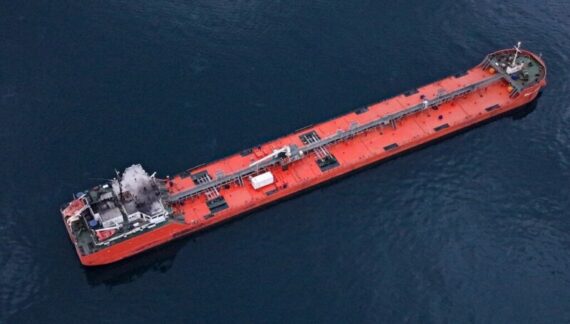
In a statement on Telegram, Zelensky said seven maritime drones struck the 344-foot Russian navy corvette Merkur while it was berthed in the port of Benghazi, sinking the vessel and destroying a combat helicopter on board. Footage released by Zelensky showed sea drones speeding toward the warship before a massive fireball engulfed the dock, while satellite imagery from Vantor later confirmed the vessel was submerged. A second strike disabled the MV Angara, a cargo vessel off the Benghazi coast that Zelensky said Russia was using to transport weapons.
According to Ukraine’s intelligence agency, the drone boats were transported to the Mediterranean and deployed from a “mothership.” The strikes came just days after a high-profile summit among U.S. President Donald Trump, Russian President Vladimir Putin, and Chinese leader Xi Jinping ended without a breakthrough toward ending the war in Ukraine.
Kremlin spokesperson Dmitry Peskov said Monday that Russia had “taken note” of Zelensky’s statement and referred further comment to the Defense Ministry. However, Peskov condemned a separate suspected Ukrainian drone strike that hit the Russian cargo vessel Sparta II in the Gulf of Finland on Saturday—roughly 2,000 miles away in the Baltic Sea—calling it “very dangerous” and warning of regional escalation.
That Baltic Sea strike prompted a rare joint emergency response, with firefighting teams from Russia working alongside crews from Finland and Estonia—both NATO members and staunch allies of Kyiv—to extinguish the blaze aboard the Sparta II.
Commissioned in May 2023, the 1,800-ton Merkury was among the newest vessels in the Russian fleet and featured stealth technology designed to reduce its radar signature. Its loss adds to roughly 40 Russian naval vessels destroyed or disabled since the war began, most notably the Black Sea fleet flagship Moskva in 2022.
Recommended
Libya’s rival administrations both reacted sharply to the strikes on their territory. Eastern Libya’s Government of National Stability (GNS), which controls Benghazi and stated the Merkury had docked to refuel under a maritime cooperation deal, announced a joint investigation with Moscow. The GNS insisted it is not a party to the Russia-Ukraine war and would not allow Libya to become an “arena for settling scores.” In Tripoli, the UN-backed Government of National Unity (GNU) condemned the attack and demanded official clarification from Kyiv.
The operation underscores Ukraine’s growing willingness to target Russian interests across Africa, where Kyiv has previously conducted covert operations against Russian-linked forces in countries across the Sahel and Sudan. A Ukrainian naval drone operator based in Libya told CNN that the Benghazi mission required extensive planning but was straightforward to execute.
Naval analyst Carl Schuster noted that warships in foreign ports are particularly vulnerable because host nations bear primary responsibility for port security, leaving foreign crews hesitant to open fire without absolute certainty of an attack. Pointing to Ukraine’s ability to launch sea drones from discreet commercial vessels, Schuster said the Benghazi strike signals “a new era of maritime unconventional warfare.”
(Source: CNN)

Politics Today is dedicated to publishing insightful analyses in order to understand the changing nature of contemporary politics. It aims to contribute to the sound and constructive discussion of international affairs.
You can see how this popup was set up in our step-by-step guide: https://wppopupmaker.com/guides/auto-opening-announcement-popups/

Stay informed by subscribing to
our weekly newsletter.
You can see how this popup was set up in our step-by-step guide: https://wppopupmaker.com/guides/auto-opening-announcement-popups/
You can see how this popup was set up in our step-by-step guide: https://wppopupmaker.com/guides/auto-opening-announcement-popups/
You can see how this popup was set up in our step-by-step guide: https://wppopupmaker.com/guides/auto-opening-announcement-popups/
You can see how this popup was set up in our step-by-step guide: https://wppopupmaker.com/guides/auto-opening-announcement-popups/