UN: Global Climate Pledges Growing, But Not Enough to Hold 1.5°C Limit
The UN stresses that momentum still lacks sufficient scale to change the global trajectory of warming.
October 29, 2025
T
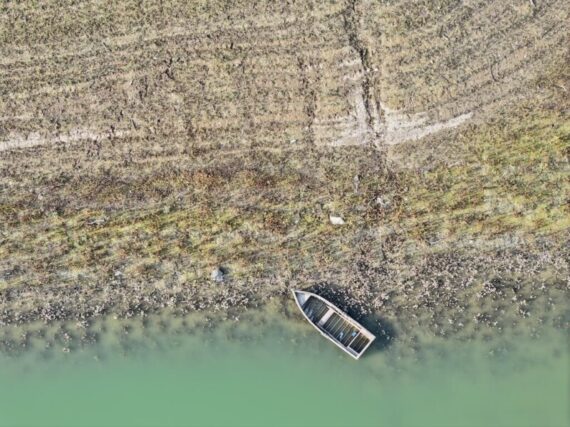
he United Nations warned on October 28, 2025, that the pace of global climate action remains far too slow to prevent dangerous levels of warming, urging governments to significantly accelerate their emissions cuts ahead of next year’s COP30 summit. The warning came as the UN released its latest Nationally Determined Contributions (NDC) Synthesis Report, an overview of the climate plans countries have formally submitted under the Paris Agreement.
UN Climate Change Executive Secretary Simon Stiell said there are encouraging signs that governments are strengthening their climate strategies, broadening their targets across entire economies and taking adaptation more seriously. But he cautioned that the scale of the current crisis far exceeds the scale of the response, and that the window for limiting global temperature rise to 1.5°C is rapidly narrowing.
Stiell told governments that the world is “clearly bending the emissions curve downward for the first time,” pointing to new analyses that suggest global emissions could fall by about 10% by 2035 when taking into account newer pledges announced after the September reporting deadline.
However, he emphasized that such progress, while notable compared to earlier years, is nowhere near large or fast enough. He described the gap between commitments and implementation as “a serious risk to climate stability,” and said the upcoming round of negotiations must move from abstract pledges to real-world delivery. “The direction of travel is improving every year, but we urgently need more speed,” he said. “The Paris Agreement is delivering real progress, but it must work much faster and much fairer than it does today.”
The NDC Synthesis Report reflects climate plans from countries representing only around one third of global emissions, meaning the dataset is still highly incomplete. For that reason, the UN carried out supplementary calculations that take into account newer NDC announcements — including several unveiled at the UN Secretary-General’s Climate Summit in New York last month.
These updated figures suggest momentum is growing, but the UN stresses that momentum still lacks sufficient scale to change the global trajectory of warming. Analysts say that without deeper and earlier emissions cuts, the planet is on track for increasingly severe losses: more frequent and extreme storms, heatwaves, floods, and droughts, as well as growing economic volatility and infrastructure damage.
Despite its warnings, the UN highlighted several areas of improvement. A higher share of countries than ever are now taking a whole-of-economy approach to climate planning, with 89% of submitted NDCs containing broad, economy-wide targets rather than narrower sectoral pledges. Nearly three quarters of plans now include adaptation or resilience components, signaling that governments are beginning to recognize that climate policy is not only about cutting emissions but also protecting societies from inevitable impacts that are already intensifying.
Stiell said one of the most notable developments is the growing integration of loss and damage elements — particularly among small island developing states and climate-vulnerable nations — a sign that countries on the front lines of climate disruption are demanding stronger recognition of the irreversible harm they face.
The UN also reported new evidence that the Paris Agreement’s “ratchet” mechanism – designed to steadily increase ambition every five years – is working, at least procedurally. Roughly 88% of countries said their latest NDC was informed by the outcomes of the Global Stocktake concluded at COP28 last year, suggesting that international peer review is influencing domestic policy choices.
However, experts note that stronger plans still do not necessarily translate into stronger action, particularly in economies that lack financing or institutional capacity to implement them. This is especially relevant for developing countries, which continue to face high borrowing costs, growing climate-linked economic shocks, and insufficient levels of international assistance.
Stiell argued that the world is now approaching what he described as a “positive economic tipping point,” driven by surging investment in clean energy technologies. Renewable power generation surpassed coal as the world’s largest energy source this year, a symbolic milestone that UN officials say demonstrates how the energy transition is beginning to reshape global markets.
The Executive Secretary said the boom in clean energy investment shows that climate action is no longer purely a moral obligation but a clear economic opportunity — one that could generate millions of jobs and unlock trillions of dollars in new investments, particularly in rapidly growing developing economies.
Recommended
Still, Stiell warned that market forces alone will not deliver a fair or equitable transition. Many of the countries most in need of climate adaptation or energy system upgrades are also those with the smallest fiscal space to finance them. “An equitable global transition requires clear policies and more support for many nations, especially those who did least to cause this crisis,” he said. Without such support, the UN fears that existing inequities in climate impacts will become entrenched, widening the gap between industrialized economies and developing states, particularly in Africa, the Pacific, and parts of Asia.
The UN framed COP30, which Brazil will host next year, as a decisive moment for closing these gaps. Stiell said governments must arrive prepared to send a strong signal that they remain committed to multilateral cooperation, even as geopolitical competition intensifies.
He set three priorities for the year ahead: reaffirm global cooperation, accelerate implementation across every sector and region, and ensure that climate action is visibly connected to people’s everyday lives, from jobs and health to energy costs and food security. “We are still in the race,” he said, “but to ensure a livable planet for all eight billion people, we must urgently pick up the pace — at COP30 and every year thereafter.”
(Source: UN)

Politics Today is dedicated to publishing insightful analyses in order to understand the changing nature of contemporary politics. It aims to contribute to the sound and constructive discussion of international affairs.
You can see how this popup was set up in our step-by-step guide: https://wppopupmaker.com/guides/auto-opening-announcement-popups/

Stay informed by subscribing to
our weekly newsletter.
You can see how this popup was set up in our step-by-step guide: https://wppopupmaker.com/guides/auto-opening-announcement-popups/
You can see how this popup was set up in our step-by-step guide: https://wppopupmaker.com/guides/auto-opening-announcement-popups/
You can see how this popup was set up in our step-by-step guide: https://wppopupmaker.com/guides/auto-opening-announcement-popups/
You can see how this popup was set up in our step-by-step guide: https://wppopupmaker.com/guides/auto-opening-announcement-popups/