China Proposes Global AI Governance Framework
As of April 2025, China had more than 5,000 AI companies and a core industry valued at 600 billion yuan (around $84 billion).
August 4, 2025
A
t the 2025 World Artificial Intelligence Conference (WAIC) in Shanghai, Chinese Premier Li Qiang called for the formation of a global AI governance framework, presenting China’s vision for international cooperation and oversight in artificial intelligence. The move comes just days after the United States unveiled its own national AI strategy focused on removing bureaucratic barriers and cementing U.S. leadership in the high-stakes global AI race.
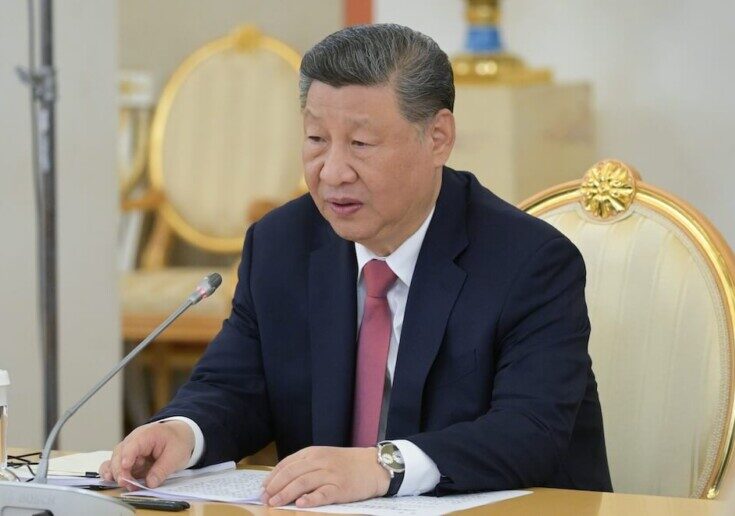
“Global AI governance is still fragmented,” said Li in his opening remarks on July 26.
“Countries have great differences, particularly in areas such as regulatory concepts and institutional rules. We should strengthen coordination to form a global framework that has broad consensus as soon as possible.”
Although Li did not mention the U.S. directly, his remarks came as an implicit critique of the Trump administration’s recent AI action plan, which places heavy emphasis on U.S. innovation and competitive edge. The dueling strategies underscore the intensifying U.S.-China rivalry over AI — a domain both countries view as critical to future economic and geopolitical leadership.
Premier Li warned that AI could become “an exclusive game for a small number of countries and enterprises” if powerful nations engage in technological monopolies and export controls. The comments referenced, without naming, the United States’ restrictions on exports of advanced semiconductors — vital components for training powerful AI models. Such policies have severely impacted China’s domestic chip industry and contributed to a shortage of key AI hardware.
Meanwhile, AI chips have emerged as a bargaining chip in broader trade negotiations between Washington and Beijing. Ahead of the latest round of U.S.-China talks in Stockholm this week, both sides made apparent concessions: the U.S. agreed to ease restrictions on the sale of Nvidia’s high-end AI chips to China, while Beijing suspended an antitrust probe into American chemical giant DuPont.
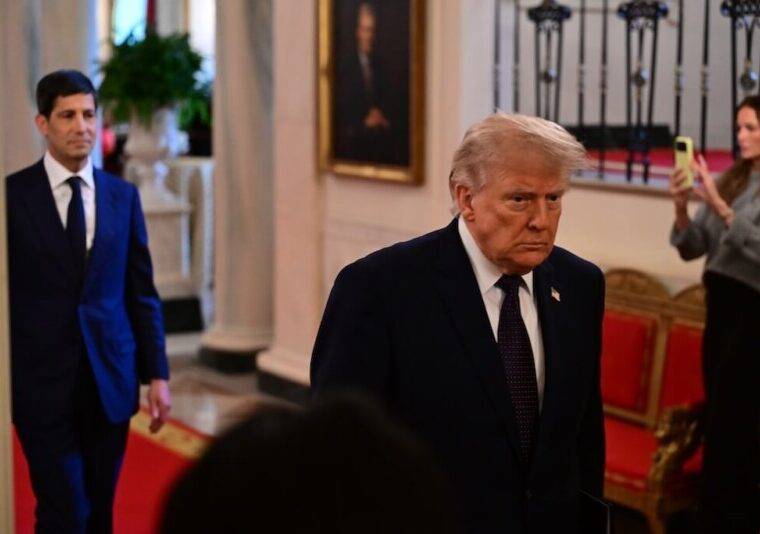
From Scotland, President Donald Trump commented that the U.S. was “very close to a deal with China,” though he provided no further details. The current deadline for a trade deal is August 12.
Despite facing technological restrictions, China is racing ahead in AI development. As of April 2025, the country had more than 5,000 AI companies and a core industry valued at 600 billion yuan (around $84 billion). State and private sector investments are fueling this growth, with public AI spending in 2025 expected to surpass 400 billion yuan ($56 billion).
Though China still lags behind in private AI investment — just $9.3 billion in 2024 compared to $109.1 billion in the U.S. — it has consistently outpaced other nations in AI patent filings. According to the World Intellectual Property Organization, China has published more generative AI patents annually than all other countries combined since 2017.
Chinese startups are also making waves. Earlier this year, DeepSeek, a one-year-old AI firm, shocked markets with its R1 model, which outperformed products by Meta and Anthropic at a fraction of the cost — reportedly just $5.6 million. This month, Moonshot’s Kimi K2 model made similar headlines with its low-cost, high-performance capabilities, rivalling top-tier models from Google and OpenAI.
According to financial services firm Morgan Stanley, China’s AI market is on track to break even by 2030, offering an expected 52% return on investment.
The WAIC also served as a platform for regional and international voices to stress the importance of AI cooperation. ASEAN Secretary-General Dr. Kao Kim Hourn called for robust AI governance to combat the growing threat of misinformation, deepfakes, and cybersecurity risks. He emphasized the potential of AI to boost Southeast Asia’s digital economy, predicting it could increase the region’s GDP by 10–18%.
Echoing that sentiment, former Google CEO Eric Schmidt urged the U.S. and China to collaborate. “As the largest and most significant economic entities in the world, the United States and China should work together,” Schmidt said. “We have a vested interest to keep the world stable and peaceful, and to ensure human control over these tools.”
Prominent AI experts, including Geoffrey Hinton — often called “the godfather of AI” — and French AI envoy Anne Bouverot, also attended and spoke at the conference.
Recommended
Held annually since 2018, WAIC has become a major venue for Chinese firms to showcase new technologies and secure international partnerships. Over 800 companies from more than 40 countries participated this year.
Chinese tech giants like Tencent, Alibaba, Keenon Robotics, and Unitree dominated the exhibition halls with new AI models and robotic innovations. Noteworthy highlights included Alibaba’s first AI-powered smart glasses, dancing robot dogs by China Mobile, and PsiBot’s mahjong-playing humanoid robot. Several major U.S. firms — including Tesla, Alphabet, and Amazon — also attended, signaling continued interest in China’s vast AI market.
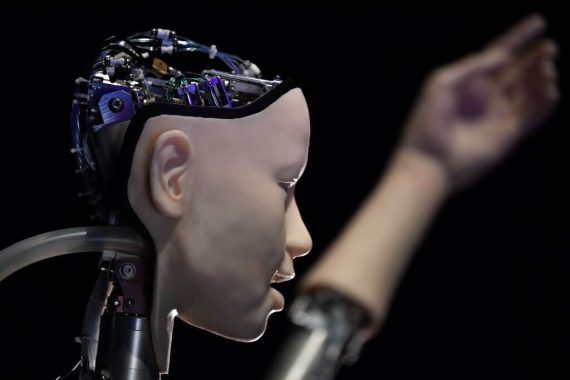
The event even featured more playful innovations, such as popcorn-serving bipedal robots, pet-like robot companions, and cosplaying AI dolls — a reminder that the AI race is as much about public imagination as it is about industrial strategy.
As the United States pushes for national dominance and deregulation in AI, China is positioning itself as a global convener advocating for shared oversight. But with each side pursuing its own vision — one prioritizing control and scale, the other innovation and openness — the future of global AI governance hangs in the balance.
(Source: CNN)

Politics Today is dedicated to publishing insightful analyses in order to understand the changing nature of contemporary politics. It aims to contribute to the sound and constructive discussion of international affairs.
You can see how this popup was set up in our step-by-step guide: https://wppopupmaker.com/guides/auto-opening-announcement-popups/

Stay informed by subscribing to
our weekly newsletter.
You can see how this popup was set up in our step-by-step guide: https://wppopupmaker.com/guides/auto-opening-announcement-popups/
You can see how this popup was set up in our step-by-step guide: https://wppopupmaker.com/guides/auto-opening-announcement-popups/
You can see how this popup was set up in our step-by-step guide: https://wppopupmaker.com/guides/auto-opening-announcement-popups/
You can see how this popup was set up in our step-by-step guide: https://wppopupmaker.com/guides/auto-opening-announcement-popups/