W
hen assessed as a whole across four contexts, the Turkey-Italy-Libya Summit has signaled the first signs of a search for a new balance in the Mediterranean. In the geostrategic sphere, a framework linking the Eastern Mediterranean and Sub-Saharan Africa. In the economic sphere, a development vision supported by energy, integration and logistics routes. In the regional cooperation sphere, technical committees, multilateral formats and a process institutionalized with UN support, and finally, in the context of EU security, common solutions to irregular migration and human trafficking stand out.
The trilateral summit between Turkey, Italy and Libya, held in Istanbul in early August, was a critical meeting where long-term strategic lines for the Mediterranean basin and Africa were discussed. This summit also presents a framework that is coherent in terms of geostrategic, economic, regional cooperation and European security contexts. Each of these contexts exists and functions as interlinked rings. Therefore, it is a fact that this trilateral summit cannot be reduced to a single dimensional parameter.
From the Eastern Mediterranean to Sub-Saharan Africa
One of the most critical aspects of the tripartite summit is the new equation it presents in a geostrategic context. The Eastern Mediterranean has long been at the center of attention due to energy discoveries, disputes over maritime jurisdiction and regional competition. The maritime jurisdiction agreement signed by Turkey with Libya in 2019 invalidated the plans of Greece and the Greek Cypriot Administration (GCA) and suspended projects such as the EastMed pipeline. Today, the fact that Italy, a member of the EU and NATO, is sitting at the same table with Turkey and Libya confirms this agreement. Thus, a geopolitical reality has emerged in which Greece and the GCA are isolated, and the Ankara-Tripoli-Rome axis has been strengthened.
However, in this geostrategic picture, the Turkish Republic of Northern Cyprus (TRNC) and Turkey are dimensions that should not be overlooked. Israel’s rhetoric has recently increased, tending to portray Turkey as a “threat center”. As in the cases of Lebanon, Syria, Iraq and Iran, the reasons cited are the expansion of defense industry capacity, the construction of a nuclear energy reactor for peaceful purposes, and support for Palestine. In particular, allegations are being made that the nuclear power plant in Akkuyu is intended for a nuclear weapons program. Furthermore, Turkey’s UAV base in the TRNC, its signal intelligence facilities and its reconnaissance and surveillance capabilities are being presented by Israel as potential threats. These statements actually reveal that Israel has pursued a strategy of dividing the area into small pieces rather than engaging in a major conflict directly, thereby restricting the opponent’s room for maneuver through rhetoric and alliances.
To this end, Israel is increasing its efforts to build closer ties with the Republic of Cyprus and Greece. It is noteworthy that, despite Turkey not pursuing a policy of hostility towards any actor in its own region or within the global system, various actors share common ground with Israel through their opposition to Turkey. In this context, the Turkey-Italy-Libya cooperation in the Eastern Mediterranean has the potential to act as a balancing factor against new alliance initiatives targeting Turkey, in addition to energy and migration issues and the Cyprus case.

Furthermore, Libya’s position as a gateway to Sub-Saharan Africa is also capable of influencing the course of regional issues. Indeed, the civil war in Sudan and the strategic transformation in the Sahel constitute the most significant sources of migration flows towards the Mediterranean, particularly towards the Italian island of Lampedusa, via Libya. Therefore, the Turkey-Italy-Libya table has the potential to create a two-pronged strategic shield against both the security risks developing in the eastern Mediterranean via Cyprus and the pressure of migration and instability coming from sub-Saharan Africa.
Additionally, the recent meeting between MIT President İbrahim Kalın and General Hafter in Benghazi, along with the visit by a delegation from the Turkish Ministry of National Defense to meet with Lieutenant General Saddam Hafter, Deputy Commander of the Libyan National Army and Commander of the Land Forces, are also significant developments.
Turkey has demonstrated its willingness to establish dialogue with both the Tripoli government and actors in the east of Libya. These contacts reinforce the understanding that lasting stability in Libya is only possible with the goal of ‘One Libya, One Army’. Turkey’s emphasis on this point demonstrates the importance it attaches to Libya’s unity and integrity, while also revealing that concrete steps have been taken both through diplomatic channels and in the military sphere. Thus, Turkey has shown that it has assumed a pragmatic balancing role encompassing all parties in the Libya dossier, rather than projecting an image of being a unilateral actor.
Energy, Integration and Logistics Routes
The economic agenda became a natural complement to the geostrategic picture. At the summit, joint projects in the energy, oil and gas sectors, port investments, infrastructure projects and Libya’s connection to regional projects in the Mediterranean in terms of connectivity were at the forefront. Indeed, these issues serve as tools for economic cooperation and strategic integration. Turkey’s infrastructure and construction experience, combined with Italy’s energy investments through ENI, present a critical opportunity for cooperation in Libya’s reconstruction process.
In terms of logistics routes, the transformation of Libya’s ports into a new bridge to Europe and the interior of Africa is in line with the common interests of the three countries. Thus, it creates an effect that strengthens economic integration, security and geopolitical interests. At this point, the potential of economic development to mitigate the driving factors of migration will also enable energy and infrastructure projects to have a mitigating effect on irregular migration in the future. Therefore, it is considered that the economic agenda is directly linked to the migration and security agendas.
From technical level to multilateralism
On the other hand, the institutionalization of regional cooperation is the third link that completes the economic context. The establishment of technical level committees in a tripartite structure at the Summit enables the committees to begin working on concrete steps. The mechanisms formed by the committees aim to transform cooperation from abstract declarations of intent into action. In addition, the quadripartite format proposed by Libyan Prime Minister Dibeybe, which would include Qatar and involve ministers, demonstrates the intention to broaden the scope of cooperation. Qatar’s financial, humanitarian and logistical contributions are a factor that will increase the feasibility of the projects.
This situation signals that regional coordination will evolve beyond the Mediterranean coastal countries to include the Gulf countries. Furthermore, the political process to be conducted with UN facilitation and the support given to the elections reflect Turkey’s approach to enhancing the role of the UN in the international system. Indeed, in the face of increasing criticism of the UN and the questioning of its role in the international system, Turkey appears to be making a positive effort. Therefore, it can be said that Turkey aims to strengthen the legitimacy of the multilateral system, beyond bilateral and trilateral relations.
Common solutions to common challenges
As the fourth and final link, the migration issue has emerged as one of the most prominent topics of the Summit. Migration is a matter directly related to European Union (EU) security. Italy, as one of the most vulnerable countries on the EU’s southern border, considers limiting migration flows a vital priority.
Meanwhile, Turkey has long been implementing joint projects with Europe to combat irregular migration and human trafficking. Libya, as the main departure point for migration routes, is at the center of this triangle. The Summit was expected to discuss action plans to combat human trafficking networks, prevent irregular movements, and support Libya in managing migration pressures. The important point here is that migration is being addressed both as a security issue and as an economic and humanitarian matter. Italian Prime Minister Meloni’s desire to transfer the cooperation experience with Turkey, which she described as ‘excellent results,’ to Libya can be seen as a sign that the EU will also be indirectly involved in this process.
This context also serves as a reminder that Turkey is an integral part of EU security. Ankara’s role has the potential to counteract the influence of policies within the EU that prioritize the narrow interests of Greece and the Republic of Cyprus. Thus, migration can be seen not only as a crisis issue but also as a basis for establishing a new security architecture between Turkey and Europe.
Recommended
The search for a new balance in the Mediterranean
When assessed across four contexts, the Turkey-Italy-Libya Summit has shown the first signs of a search for a new balance in the Mediterranean. On the geostrategic level, a framework linking the Eastern Mediterranean and Sub-Saharan Africa; on the economic level, a development vision supported by energy, integration and logistics routes; on the regional cooperation level, a process institutionalized through technical committees, multilateral formats and a process institutionalized with UN support, and finally, in the context of EU security, joint solutions to irregular migration and human trafficking. All these topics are like links in a chain, feeding into each other and flowing from one to the other.
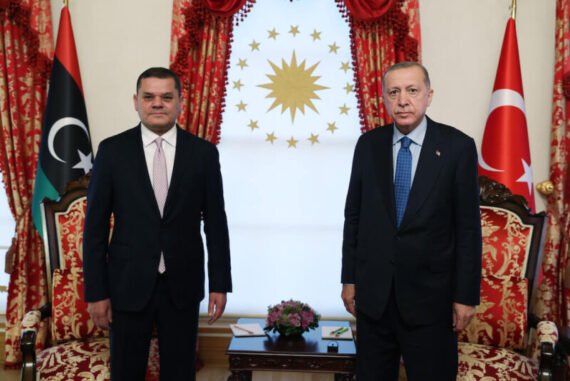
The photograph taken at Dolmabahçe is seen as the announcement of a multi layered geopolitical vision that goes far beyond a symbolic meeting. Turkey’s role in this vision is strengthening both as an element of regional balance and as a mediator or connector in the global system. Italy finds an opportunity to compensate for the EU’s failures through this cooperation, while Libya positions itself as a legitimate and central actor in the international system. In this sense, the Summit represents the beginning of a multidimensional strategic partnership that goes beyond a narrow initiative seeking to address the migration crisis in the Mediterranean.
(Originally published in Turkish by Kriter)