

Japan’s Chief Negotiator Defends Tariff Deal with the US
Under the new deal, U.S. tariffs on Japanese automobiles and auto parts will remain at 15%, sharply higher than the pre-2024 level of 2.5%.
October 2, 2025
J
apan’s top trade negotiator has defended the country’s new tariff agreement with the United States, describing President Donald Trump as a “tough but gracious negotiator” and insisting that the deal — which sets tariffs on most Japanese exports at 15% — represents a fair outcome for both sides despite domestic criticism that Tokyo conceded too much.
Speaking at the Foreign Correspondents’ Club of Japan on Wednesday, Trade Envoy Ryosei Akazawa said that while the agreement was the result of months of tense talks, the final outcome avoided more punishing measures that Washington had initially demanded.
“President Trump was a tough negotiator, but I kept insisting, and he would listen graciously. I have all the respect for him,” Akazawa said. “It was a good round of negotiations.”
The deal, finalized in July after eight rounds of meetings in Washington, fixes tariffs on most Japanese exports to the United States at 15%, aligning with rates agreed between Washington and the European Union earlier this year.
However, Japan notably did not have to reduce its own tariffs on U.S. goods — a key victory Akazawa emphasized — while pledging to invest $550 billion in infrastructure, energy, and technology projects in the United States over the coming decade.
“Unlike the EU, Japan did not have to lower its tariffs on American imports. We found a balanced position that both sides could accept,” Akazawa said.
The final tariff level marks a significant reduction from Trump’s initial proposal to raise duties on Japanese imports to 25%, a move that Tokyo warned would have triggered a retaliatory trade dispute between two of the world’s largest economies.
Talks began under tense circumstances in late 2024, with Akazawa shuttling repeatedly between Tokyo and Washington. Critics at home derided his frequent visits as excessive, joking that he “should pitch a tent on the White House lawn.”
“Talks with Secretary [Howard] Lutnick and others were difficult at first,” Akazawa said, referring to the U.S. commerce chief. “But by the eighth round, we built a rapport, and that made all the difference.”
Despite Akazawa’s assurances, the agreement has faced skepticism from Japanese lawmakers and industry groups who argue that the new tariff regime still threatens the competitiveness of Japan’s key export sectors — especially automobiles, machinery, and consumer electronics.
Japan’s economy depends heavily on exports, and the United States is its second-largest trading partner after China. Recent government data show that exports to the U.S. fell nearly 14% in August year-on-year, marking the fifth consecutive month of decline.
The drop was driven largely by the 25% tariffs the Trump administration had imposed earlier on steel, aluminum, and automobiles, part of a broader campaign to reduce U.S. trade deficits with key partners. Those duties had sent shockwaves through Japan’s manufacturing industry, particularly the auto sector.
Under the new deal, U.S. tariffs on Japanese automobiles and auto parts will remain at 15%, sharply higher than the pre-2024 level of 2.5%. However, Akazawa argued that Japanese automakers’ extensive production networks in North America will cushion the blow.
“Japanese companies already produce most of the cars they sell in the U.S. inside the U.S.,” he said. “So while tariffs are higher, the overall impact will be manageable.”
Still, the strain on exports adds another challenge for Prime Minister Shigeru Ishiba, whose administration has been under fire for its handling of trade frictions and a sluggish domestic economy. Ishiba is set to step down as head of the ruling Liberal Democratic Party (LDP) later this week, as the party faces internal turmoil after losing its lower-house majority for the first time in decades.
The LDP will now require coalition partners to maintain control of parliament and select the next prime minister. Whoever succeeds Ishiba will inherit not only a fragile domestic economy but also the delicate task of managing relations with an unpredictable White House.
Akazawa dismissed speculation that the U.S. and Japan may hold differing interpretations of the agreement.
“Whoever becomes the next prime minister, Japan has an established tradition of honoring international commitments,” he said. “We have always respected agreements forged with our allies.”
The envoy added that Japan’s negotiators had to strike a balance between protecting national interests and maintaining the broader strategic partnership with the U.S., which remains Japan’s top security ally.
“It goes without saying that, with any government negotiation, there will always be someone who says Japan lost out, no matter what,” he said. “But diplomacy is about managing relationships, not just numbers.”
U.S. officials have hailed the accord as proof of Trump’s determination to “level the playing field” in global trade. Commerce Secretary Howard Lutnick said in a statement that the deal “restores fairness” and ensures that “American workers will no longer be undercut by foreign exporters benefiting from unbalanced terms.”
Back in Japan, business leaders offered cautious approval. The Japan Business Federation (Keidanren) said the deal provides “short-term stability” but warned that sustained tariffs could undermine the competitiveness of Japanese exports in the long term.
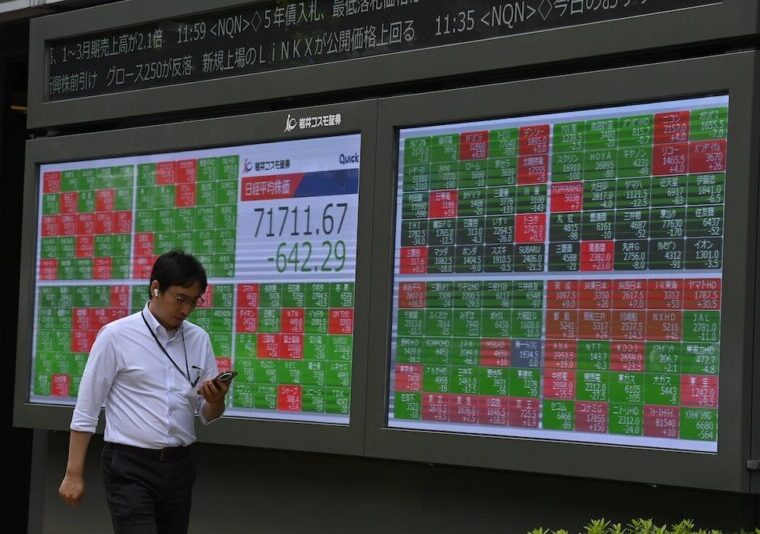
Financial analysts noted that the agreement may help ease uncertainty in financial markets, which had been rattled by Trump’s aggressive tariff rhetoric earlier in the year. “Markets are responding positively because it removes the immediate risk of escalation,” said Miki Tanaka, a Tokyo-based economist at Nomura Securities.
Still, economists warn that Japan’s export-driven economy faces mounting headwinds amid slowing global demand, rising production costs, and a strong yen.
Recommended
The deal underscores the complex relationship between Tokyo and Washington — one marked by deep security cooperation but periodic trade tensions.
“Japan remains one of America’s most important allies,” Akazawa said. “We negotiated from that foundation of trust. The outcome reflects mutual respect and realism.”
As Japan braces for a leadership transition, the outgoing negotiator expressed confidence that his work had safeguarded national interests.
“I believe history will judge this deal fairly,” Akazawa said. “We stood firm, we compromised where necessary, and above all, we preserved the U.S.-Japan partnership.”
(Source: The Associated Press)

Politics Today is dedicated to publishing insightful analyses in order to understand the changing nature of contemporary politics. It aims to contribute to the sound and constructive discussion of international affairs.
You can see how this popup was set up in our step-by-step guide: https://wppopupmaker.com/guides/auto-opening-announcement-popups/

Stay informed by subscribing to
our weekly newsletter.
You can see how this popup was set up in our step-by-step guide: https://wppopupmaker.com/guides/auto-opening-announcement-popups/
You can see how this popup was set up in our step-by-step guide: https://wppopupmaker.com/guides/auto-opening-announcement-popups/
You can see how this popup was set up in our step-by-step guide: https://wppopupmaker.com/guides/auto-opening-announcement-popups/
You can see how this popup was set up in our step-by-step guide: https://wppopupmaker.com/guides/auto-opening-announcement-popups/

