China, ASEAN Sign Upgraded Trade Pact
The trade signing came as ASEAN leaders continue to navigate strategic competition between Beijing and Washington.
October 28, 2025
C
hina and the Association of Southeast Asian Nations (ASEAN) signed an expanded free trade agreement Tuesday, with Chinese Premier Li Qiang urging closer economic cooperation as he positioned Beijing’s economic model as an alternative to what he called rising protectionism from the United States under President Donald Trump.
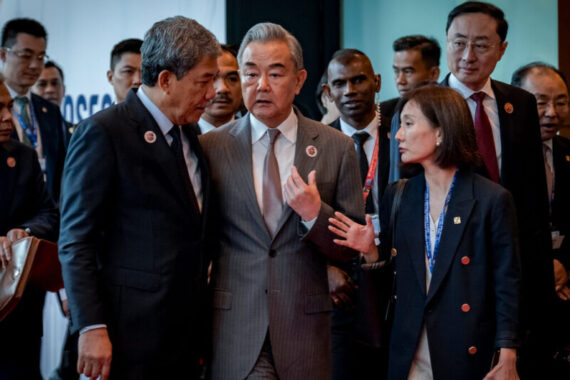
The upgraded deal — known as the ASEAN-China Free Trade Area 3.0 — was signed on the final day of the ASEAN summit and witnessed by Li and Malaysian Prime Minister Anwar Ibrahim, this year’s ASEAN chair. The revision broadens the existing pact to cover digital trade, sustainability, the green economy and support for small and medium-sized enterprises.
Li said deeper integration would help the region withstand global economic headwinds and warned against “confrontation” and “bullying,” in a swipe at U.S. tariff policies. “Unity is strength,” he said, stressing what he described as “mutual reliance” between China and its Southeast Asian neighbors.
But his remarks drew a measured response from Philippine President Ferdinand Marcos Jr., who welcomed the economic benefits of the upgraded pact but insisted that cooperation “cannot exist alongside coercion,” a reference to repeated maritime confrontations between Manila and Beijing in the South China Sea.
The original ASEAN-China free trade pact came into force in 2010 and has helped propel two-way trade from $235.5 billion that year to nearly $1 trillion in 2023. China and ASEAN are now each other’s largest trading partners, and officials hope the expanded deal will help streamline market access and reduce non-tariff barriers.
Analysts say the upgrade reflects a wider trend of non-U.S. economies deepening cross-regional ties amid Washington’s tariff escalation and supply chain restructuring.
“Non-U.S. countries are coming together to strengthen trade relationships for their prosperity even as a recoupling with the U.S. is ongoing,” said Southeast Asia expert Bridget Welsh.
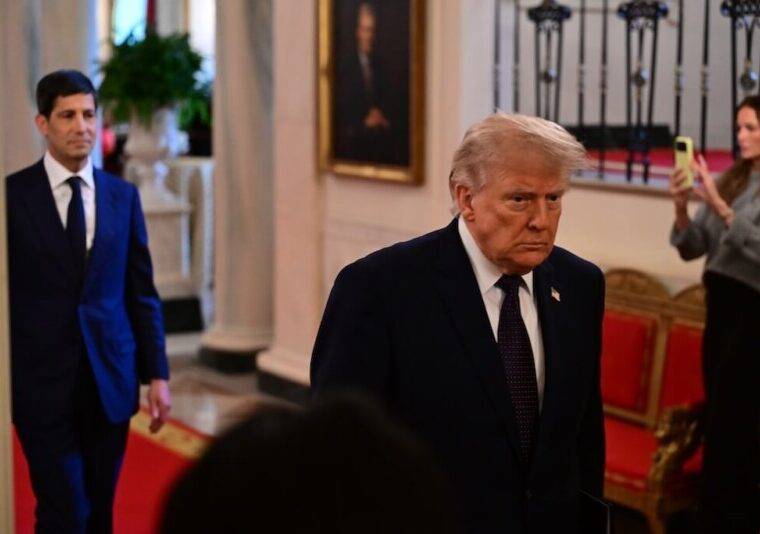
The trade signing came as ASEAN leaders continue to navigate strategic competition between Beijing and Washington. Trump used part of his visit to the summit to announce new economic initiatives with Cambodia, Malaysia, Thailand and Vietnam, even while maintaining his latest round of tariffs.
Anwar said the bloc’s engagement with both powers underscored its desire to avoid forced alignment. “The day before we were with President Donald Trump … and today we are back with China. That reflects ASEAN centrality,” he said.
Tensions between Washington and Beijing appeared to ease slightly ahead of a planned meeting between Trump and Chinese President Xi Jinping in South Korea later this week, which negotiators hope could yield a compromise on trade disputes.
Recommended
Despite the economic diplomacy, territorial flashpoints continue to shadow relations. Marcos accused China of “dangerous actions and harassment” toward Philippine vessels and aircraft, and denounced Beijing’s plan to designate a disputed shoal as a “nature reserve,” calling it a pretext for asserting sovereignty.
Other ASEAN members — including Vietnam, Malaysia and Brunei — also have overlapping claims with Beijing in the South China Sea. China claims almost the entire waterway, one of the world’s most important maritime trade routes.
Marcos reiterated his push to fast-track a Code of Conduct on the South China Sea when the Philippines takes over the ASEAN chairmanship next year.
Chinese foreign ministry officials, meanwhile, accused the Philippines of “deliberate provocations” and said Manila is responsible for recent flare-ups.
(Source: The Associated Press)

Politics Today is dedicated to publishing insightful analyses in order to understand the changing nature of contemporary politics. It aims to contribute to the sound and constructive discussion of international affairs.
You can see how this popup was set up in our step-by-step guide: https://wppopupmaker.com/guides/auto-opening-announcement-popups/

Stay informed by subscribing to
our weekly newsletter.
You can see how this popup was set up in our step-by-step guide: https://wppopupmaker.com/guides/auto-opening-announcement-popups/
You can see how this popup was set up in our step-by-step guide: https://wppopupmaker.com/guides/auto-opening-announcement-popups/
You can see how this popup was set up in our step-by-step guide: https://wppopupmaker.com/guides/auto-opening-announcement-popups/
You can see how this popup was set up in our step-by-step guide: https://wppopupmaker.com/guides/auto-opening-announcement-popups/