O
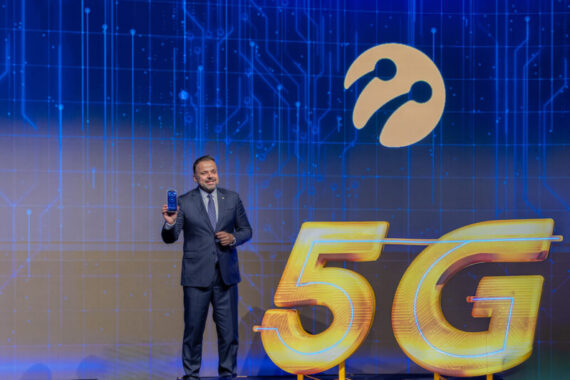
n October 16, 2025, Türkiye reached a historic milestone in its digital transformation. The $3.5 billion 5G spectrum auction marked the country’s formal entry into the next generation of connectivity. Turkcell, Türk Telekom, and Vodafone competed for 11 frequency packages, securing the critical 700 MHz and 3.5 GHz bands, which will influence the country’s communication landscape for decades.
According to the terms of the auction, the operators must begin providing commercial services by April 1, 2026; maintain domestic and national component ratios of 60 and 30 percent, respectively; and pay five percent of their annual revenues to the Information and Communication Technologies Authority (BTK) through 2042.
What may appear to be a technical upgrade is, in fact, a strategic shift. 5G is not just about faster downloads; it is the foundation of a new geopolitical order in which digital infrastructure defines power as much as territory once did.
5G and the new geopolitics of connectivity
Although 5G is often described in terms of speed, its true significance lies in its role as the twenty-first century’s technological infrastructure — a system that enables critical services to function in real time, including logistics, industrial automation, secure communications, and emergency response. Due to its dual civilian and military relevance, 5G has become a central arena of geopolitical competition. This competition is most evident among the United States, China, and the European Union, all of which are seeking to influence the technological standards and supply chains that will govern the next phase of global digitalization.
China’s rise in telecommunications has been deliberate and strategic. Its government recognized early on that securing dominance in communication infrastructure would translate into influence over the global economy and intelligence landscape. Through long-term industrial policy, subsidized financing, and protection of domestic markets, Beijing has empowered its firms to grow quickly, offering 5G equipment at prices that few competitors can match. This model has positioned Chinese vendors as more than just market actors; they are now seen as instruments of state power capable of exporting technology and digital governance norms.
In stark contrast, the United States—builder of the internet and pioneer of 3G and 4G—assumed its leadership was unshakable. Major American firms gradually exited the telecommunications equipment market, leaving the West dependent on just two major European vendors: Ericsson and Nokia. When Washington finally recognized that the backbone of global connectivity was being built primarily with Chinese infrastructure, the U.S. government shifted toward a national security framing. The concern was not only that foreign equipment could enable espionage, but also that the data transported over these networks — a vital input for artificial intelligence — could bolster the military and strategic capabilities of a peer competitor.
The Clean Network Initiative
This concern has been amplified by the intersection of 5G with emerging technologies. Networks handling information from millions of cameras, sensors, and industrial systems could provide unmatched situational awareness to the controlling state. Consequently, the United States has promoted initiatives like the Clean Network to prevent high-risk vendors from accessing allied networks. In contrast, Europe has adopted a risk-mitigation approach through the 5G Cybersecurity Toolbox. Meanwhile, the development of Open RAN architectures aims to diversify the ecosystem by ensuring that network components are interoperable and reducing the dominance of any single actor.
For Türkiye, this landscape presents valuable opportunities and challenges. As a NATO member with strong ties to Europe, a rapidly expanding domestic tech sector, and significant engagement with Asian markets, Türkiye is uniquely positioned among the major players. Instead of becoming dependent on one supplier bloc or exclusive partnership model, its aim should be to leverage relationships across multiple sectors while cultivating its own indigenous technological ecosystem. By anchoring 5G development in domestic capabilities, Türkiye can benefit from global innovation while maintaining resilient, flexible, and secure critical infrastructure.
In this context, Türkiye’s 5G strategy is inseparable from its long-term ambitions: strengthening national sovereignty, enhancing competitiveness, and securing a place among the architects — not merely users — of the future digital order.
Türkiye’s 5G moment
Türkiye’s approach to 5G is guided by a clear strategic ambition: to become a country that designs and exports the technologies of the future rather than merely adopting what others build. The government’s “Uçtan Uca Yerli ve Milli 5G” initiative — a collaborative effort involving TÜBİTAK, leading technology firms, and all major mobile operators — reflects this goal. The initiative aims to provide faster connectivity to end users and ensure that the backbone of Türkiye’s digital infrastructure is rooted in domestic capabilities, including network software, base stations, cybersecurity mechanisms, and data processing technologies.
Transport and Infrastructure Minister Abdulkadir Uraloğlu has repeatedly emphasized that 5G marks a strategic turning point for Türkiye because it has the potential to transform far more than just communication services. With its promise of real-time data processing, ultra-low latency, and massive machine-to-machine communication, 5G will transform how societies produce goods and services, provide healthcare, move people and goods, and respond to crises. Uraloğlu emphasizes that this technology will enable automation, artificial intelligence–driven systems, and intelligent infrastructure — the building blocks of an advanced industrial economy.
This transformation is already visible. Türkiye has begun deploying 5G systems at Istanbul Airport, in large sports venues, and even at the Grand National Assembly. This demonstrates that the implementation of 5G is not a distant aspiration, but rather an active restructuring of national infrastructure. As deployment expands, the impact will be felt across every major sector of the Turkish economy. Production lines will evolve into autonomous factories where smart machines can communicate and adapt instantly, strengthening Turkish industry’s position in global supply chains. Transportation networks will become safer and more efficient as vehicles communicate with each other and the roads on which they travel.
Healthcare services will transcend geographic limitations, making remote surgery and patient monitoring standard practice — a vital capability for an earthquake-prone nation. Agriculture and energy systems will also undergo a digital shift, with interconnected sensors optimizing resource use and supporting sustainable growth. The creative economy, education, and digital culture will also benefit as high-bandwidth, immersive technologies become widely accessible.
Yet, the greatest advantages of 5G for Türkiye lie not only in economic growth but also in sovereign control. By developing its own communication technologies and building networks with significant domestic content, Türkiye can reduce its reliance on foreign suppliers and strengthen the security of its critical infrastructure. This strategy ensures that the data and operational systems supporting national life, including defense, finance, transportation, and public administration, remain resilient in the face of geopolitical uncertainties.
Therefore, Türkiye is not just pursuing 5G as another consumer technology rollout. Instead, Türkiye is restructuring its position in the global technological hierarchy by rejecting the role of passive adopter and stepping forward as a producer and shaper of the digital future. The country’s long-term success in this transition will determine its economic competitiveness and its ability to navigate the intensifying geopolitical landscape surrounding advanced technologies.
From this perspective, 5G is not just a telecom upgrade; it is Türkiye’s strategic investment in power, independence, and the ability to define its place in the world.
How 5G transforms Türkiye’s military capabilities
Beyond its civilian applications, 5G technology has the potential to transform national security. In modern warfare, superiority and vulnerability often depend on the speed and reliability of communication, two areas in which 5G excels. Türkiye’s efforts to develop a network-centric defense architecture under the Milli Teknoloji Hamlesi initiative depend on these capabilities: ultra-low latency, massive device connectivity, and secure, high-bandwidth data transfer. These capabilities allow sensors, radar systems, unmanned vehicles, and command centers to operate in a unified, real-time environment, eliminating the delays and blind spots that once limited situational awareness.
ASELSAN’s Çelik Kubbe (Steel Dome) is the clearest example. It integrates the KORKUT, HİSAR-A/O, and SİPER long-range interceptor systems into a single, coordinated ecosystem. This type of network depends on instantaneous information flow, which is precisely what 5G enables. Its near-zero latency enables split-second threat detection and interception, and network slicing ensures that critical intelligence and targeting channels remain secure, even under electronic attack. Additionally, wide-area device connectivity links thousands of nodes across the country into a resilient tactical web. When paired with edge computing, 5G allows artificial intelligence to classify threats and support decision-making directly at the source without relying on distant data centers.
In this sense, 5G transforms Çelik Kubbe from a traditional missile defense system into a dynamic digital shield by synchronizing land, air, and cyber assets under one coherent command layer. It also paves the way for a National Defense Cloud — a secure, 5G-enabled network that connects satellites, naval units, and air defense grids under one seamless digital umbrella.
Strategically, this shift gives Türkiye greater operational superiority by shortening the “detect-decide-act” cycle and greater technological sovereignty by reducing dependence on foreign infrastructure. This shift also strengthens Türkiye’s position as a defense exporter by offering interoperable, 5G-enabled systems to partners across the Balkans, Central Asia, and the Middle East. In short, 5G is more than just a communications upgrade; it is a force multiplier for Türkiye’s defense modernization, translating digital capability into strategic autonomy.

Recommended
Türkiye’s digital future
The 2025 auction was more than just a regulatory event—it was a defining moment for Türkiye’s digital future. By integrating localization, cybersecurity, and innovation into its 5G rollout, Türkiye has taken a decisive step toward technological independence. However, the true potential of 5G goes beyond faster phones and smart cities. It is the connective tissue that links Türkiye’s economy, governance, and defense into a cohesive digital ecosystem. In this sense, the path from Çelik Kubbe to civilian 5G is a continuum—from protecting airspace to safeguarding the data space.
With sustained investment and vision, 5G will enable Türkiye to progress from connectivity to capability and from capability to sovereignty, marking the beginning of a digital century shaped on Turkish terms.
(Published originally in Turkish by Kriter)