H
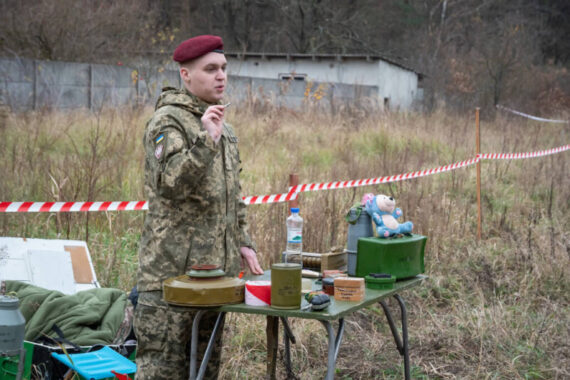
ow is the Ukraine-Russia War going? Who has suffered what losses? Which country is in the stronger position? Is Russia close to victory? Is Ukraine definitely losing? So many years have passed since the war began, and we still do not know…
There is a war between the US-Israel coalition and Iran; what is the situation for each side? How heavy are America’s losses? What is the situation in Israel? Is Iran losing? What is the capacity of the parties to continue the war? Ismail Kaani; has he betrayed Iran, been executed, fled to Israel, or is he still in his post in his country and fighting? Who attacked the girls’ school in Iran? Why are Trump and his team now denying the attack they initially admitted to? Did Iran fire missiles at neighbouring countries, or is it all a Mossad ploy to expand the front?
Once again, attempts are being made to sow seeds of discord between Turkey and Azerbaijan. There is a desire for the war to spread to encompass all countries in the region, and disinformation is being churned out ceaselessly.
It is possible to extend these events and questions to all wars and conflicts. But is it ever possible to obtain the true answers in all their stark reality?
The battle for communication during war
Our region has long been shaped by intense geopolitical tensions, wars, conflicts, proxy wars, civil wars and various forms of inter-state competition. One of the most fundamental challenges facing the public during such periods is the issue of access to reliable information. In an environment where conflicts are taking place, a significant portion of the news, images and commentary circulating are often not merely neutral accounts of events; they are also fragments of information produced, selected, framed or distorted in line with specific strategic objectives.
This situation is directly linked to the nature of modern warfare. This is because contemporary wars involve not only battles fought on physical fronts—such as space, air, land and sea—where military units confront one another, but also a comprehensive communication struggle aimed at shaping public perceptions.
In this context, the information domain has become just as significant as the military dimension of war. States, armed groups, intelligence services, international actors and, in some cases, even private communications companies seek to influence the production and circulation of information in conflict environments. The primary aim of these efforts extends far beyond merely influencing rival military forces; it targets a much broader audience.
Various objectives, such as undermining the morale of rival societies, boosting the morale of one’s own society, gaining the support of the international public, generating diplomatic legitimacy, and obscuring military failures, lie at the heart of these communication activities. Consequently, a significant portion of the information circulating during wartime functions as strategic communication tools.
Historically, it is evident that propaganda and psychological operations have been an integral part of modern states’ war strategies. Propaganda bureaus established in Europe and America during the First World War developed systematic communication techniques to mobilise public opinion. During this process, the communication tools of the era—such as newspapers, posters, cinema and radio—were utilised extensively. Subsequently, during the Second World War and the Cold War, propaganda techniques became even more institutionalised, and states’ communication strategies became an integral part of military doctrine. Today, digital communication technologies have made this process far more complex and rapid.

The impact of evolving communication
The emergence of social media platforms, in particular, has dramatically increased the speed and volume of information circulation during times of war. Whilst information reaches the public via specific editorial processes in traditional media systems, these filtering mechanisms appear to have weakened significantly in the digital environment. Social media algorithms operate not according to criteria of accuracy or reliability, but according to the logic of the ‘attention economy’. This leads to content that is emotionally striking, dramatic or provokes anger spreading much more rapidly. Consequently, the flow of information the public faces during periods of war is not only intense but also highly irregular and difficult to verify.
Another significant reason for the spread of false or distorted information in conflict environments is military secrecy and information control. A significant portion of actual data regarding military operations is naturally classified or restricted. States do not share operational details for security reasons, and the information presented to the public is often filtered to some extent. This situation creates a breeding ground for speculation to fill the gaps. At the same time, the parties to the conflict may be inclined to exaggerate their own successes, inflate their opponents’ losses, or downplay their own losses. Such rhetorical strategies have been frequently observed throughout military history and have become far more visible with the advent of modern communication technologies.
The development of digital technologies has also significantly expanded the technical scope of information manipulation. Image editing software, AI-assisted video production techniques, and visual material taken out of context have introduced new tools that make it difficult to assess the accuracy of war reporting. For example, footage from an old conflict may be presented as evidence of a new incident, or a video filmed in a different geographical location may be linked entirely to a different event. When such content spreads rapidly, particularly on social media, it can provoke strong emotional reactions among the public. However, subsequent verification efforts may reveal that the context of this content is incorrect.
Today, many people believe they are watching wars almost in real time. Footage shot on mobile phones, social media posts and live news feeds create the impression that conflicts are being followed directly and without interruption. Yet this is largely an illusion. The content the public sees is often narratives produced about the events rather than the events themselves. These narratives are presented within specific frames and lead the viewer to perceive the event from a particular perspective. Consequently, there is a significant difference between the war itself and the way it is represented in the media.
It is observed that narratives produced during periods of conflict generally take shape around specific patterns. Whilst narratives of heroism and resistance are highlighted on one side, themes of victimhood and human drama may be emphasised on the other. Furthermore, discourses portraying the opposing side as entirely irrational, barbaric or inhuman are also widely used. Such narrative patterns may be repeated in state propaganda apparatus, individual social media posts and the news language of certain media organisations. This is because people often find it easier to accept and share information that aligns with their own identities, political views, or emotional inclinations.
Recommended
Information in times of war
Under all these conditions, the fundamental problem faced by ordinary citizens is an epistemological one. In other words, the issue is not merely knowing which information is true, but understanding how to access accurate information. In conflict zones, it is often impossible to arrive at absolute truths. Obtaining definitive information regarding military developments, diplomatic negotiations and the actual situation on the ground usually takes time. The true scale of many events may only become apparent months or years later. For this reason, it is important to avoid definitive judgements and to develop a certain intellectual caution when approaching information during times of war.
To make a more informed assessment of information in such an environment, certain methods can be employed. Firstly, comparing different sources is of great importance. Relying on a single media source can lead to a significant narrowing of perspective, particularly when international conflicts are involved. Comparing news reports from media organizations in different countries allows one to see how events are presented within different frameworks. Furthermore, reports from independent research institutions, academic analyses and open-source intelligence studies can also assist in making a more balanced assessment.
(Originally published in Turkish by Kriter)