W
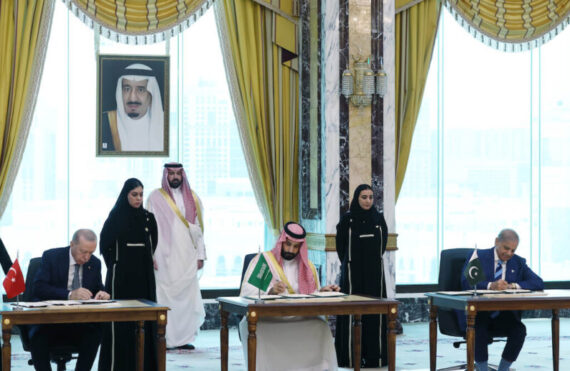
hilst the Middle East region has undergone significant change and transformation as a result of the attacks launched by Israel from 7 October 2023 onwards, the US-Israel–Iran war that began on 28 February 2026 has further fuelled this change, pushing it to a point of no return. For had these events not occurred, the ‘Mecca Joint Defence Agreement’, signed on 7 August 2026 between Türkiye, Saudi Arabia and Pakistan, might not have been possible.
Developments necessitating “regional ownership”
Türkiye’s long-standing stance that the region’s problems should be resolved by the countries of the region themselves – a concept defined by Foreign Minister Hakan Fidan as “regional ownership” – had not received sufficient support from the countries of the region. Whilst the reasons behind this may vary from country to country, ultimately external interventions aimed at resolving the region’s problems have failed to heal the wounds; on the contrary, they have either caused existing wounds to bleed anew or allowed them to simply harden into calluses without being resolved. Consequently, it has become apparent that interventions in the region—particularly from the West and, of course, the US—have failed to produce results and have not brought peace and stability to the region.
However, following the events that began on 7 October 2023, Israel’s adoption of a revisionist policy towards the region—believing that the conditions were favourable—and its subsequent attacks targeting not only Gaza and the West Bank but also Lebanon, Syria and Iran, have led to a shift in the preconceptions held by countries in the region towards Türkiye.
For whilst it is evident that almost all of the Western countries expected to resolve the region’s problems have taken sides in the war between Russia and Ukraine, providing Ukraine with billions of dollars in aid as well as both political and military support; whilst Israel’s razing of Gaza, massacred over 73,000 people and committed a massive genocide; deepened its annexation of the West Bank; gradually sought to alter the status of the Al-Aqsa Mosque; occupied southern Lebanon and attempted to provoke a civil war there; and, as if its decades-long occupation of the Golan Heights—which is Syrian territory —as if that were not enough—it unilaterally suspended the 1974 agreement following the revolution on 8 December 2024, occupied further Syrian territory, and sought to prevent Syria from achieving stability by manipulating the Druze and the SDG/PKK terrorist organisations.
The extent to which external actors remain indifferent to crises or conflicts in our region has once again been exposed in the war against Iran. For just as it is unjust and wrong for an actor such as the US to fall into Israel’s trap and attack Iran, it is equally wrong for other Western countries not to have taken the initiative to dissuade the US from this war, as was the case with Ukraine. Although these countries—the majority of which are also NATO members—were called upon by the US to deploy troops to open the blockaded Strait of Hormuz – although this was not in accordance with NATO regulations – they did not heed this call and, whilst not becoming directly involved in the war, they made their stance clear by expanding sanctions against Iran rather than exerting pressure on Israel to bring the war to an end.
During this war, Iran’s decision to attack Gulf states and other countries hosting US bases on their territory – rather than Israel and the US, which were directly attacking it – both because they were relatively easier targets and with the intention of indirectly exerting pressure on the US, has once again demonstrated the importance of regional ownership.
Israel’s revisionist policies and the perception of threats by regional countries
All these developments have made a mechanism such as the Mecca Joint Defence Agreement imperative, with the aim of thwarting the plans of a country like Israel—which, despite its small size, seeks to destabilize the region and derive benefit from the situation by leveraging its lobbying power in the US and Europe and relying on their support—and to establish a new status quo. Furthermore, whilst Israel recently proposed an alignment strategy—such as the “hexagon bloc”—which has yet to materialize on the ground, the formation of a counter-front by countries outside this bloc that perceive the current developments as a threat to their national interests must be regarded as inevitable.
Despite the security guarantees the US has provided to the Gulf states to date, the fact that these states have been exposed to Iranian attacks during the war against Iran has not only called into question the reliability of US guarantees in the Gulf, but has also inevitably led to a search for alternatives regarding the future of the region’s security architecture. It is therefore highly likely that the Mecca Joint Defence Agreement will address this necessity; in particular, should the US withdraw from the region following the war with Iran, it is conceivable that it might be open to entrusting the region’s security to three key and powerful allies: Türkiye, Pakistan and Saudi Arabia. Indeed, the fact that the US has not made any negative statements regarding the Mecca Agreement to date is interpreted in this light and reinforces the view that there is coordination between the signatory countries and the US.
Why is the agreement so important?
Among the key factors that make the agreement significant are the characteristics and capabilities of the signatory countries. Türkiye, for instance, is not only a NATO member but also a candidate country for the EU and has made significant strides in the defense industry in recent years. It is therefore an indispensable actor for both the Middle East and the European security architecture. Pakistan, meanwhile, is the only Muslim country to possess nuclear weapons and also has a substantial population. As for Saudi Arabia, it stands out as a key player not only due to its abundant energy resources but also because of its strategic location at the crossroads of global trade routes. Furthermore, as a leading figure in both the Organization of Islamic Cooperation and the Arab League, and as the custodian of Islam’s holy sites, it is an actor held in high regard and whose word carries weight among both Arab and Muslim states.
The coming together of these three major powers to form a defense alliance would create a synergy whose effects are likely to extend beyond the region. Furthermore, should this agreement be successfully implemented, it would inevitably create a domino effect, making it likely that other countries in the region would join the agreement. Considering similar initiatives that have been attempted at various times but could never be brought to a conclusion due to both regional and circumstantial conditions, the most significant impact of this agreement, as of today, is that it stands as the sole development capable of curbing Israel’s aggressive, occupying and expansionist regional vision. Not only will the Abraham Accords no longer hold any appeal for countries in the region, but it is also understood that, should the US withdraw from the region following a war against Iran, the new security architecture of the region will be centered on the new pact established by this agreement.
What will the agreement provide for the signatory countries?
This agreement is of a defensive nature, aimed at protecting the signatories from attacks by other countries; in this way, it offers the signatory countries a security guarantee similar to Article 5 of the NATO Treaty. Türkiye’s current capabilities, Pakistan’s nuclear power and Saudi Arabia’s financial support not only demonstrate the agreement’s capacity and potential but also serve as a powerful deterrent to any actors seeking to attack one of the signatory states.
Consequently, in addition to Türkiye’s NATO membership, the Mecca Joint Defence Agreement has now emerged as the sole agreement in the region offering an additional defense guarantee to regional countries, and it has been announced that the agreement remains open to new participants. Although it has been stated in the announcements that no specific country is being targeted, it is clear that a strong deterrent has been created for those with designs on the region – particularly Israel – or those claiming to shape its future.
Whilst there are no doubts regarding the agreement’s deterrent effect, as we do not yet possess detailed information on the nature of the agreement, it is not fully known how a response would be mounted in the event of an attack on any of the signatory states. Furthermore, given the geographical locations of the signatory states—particularly Pakistan’s relatively remote position—it is difficult to predict how such a response would be carried out. However, despite all these uncertainties, the implementation of such an arrangement in our region is of great importance.
Recommended
Israel’s reaction to the Mecca agreement
Following the announcement of the agreement, the actors whose reactions were most eagerly anticipated were Iran and Israel, both of which have been directly or indirectly behind many conflicts in the region. Whilst on the Iranian side there have been no official criticisms or threats regarding the agreement, apart from a few isolated negative statements, on the Israeli side there has been both an effort to discredit the agreement and the use of veiled threats targeting the signatory countries, alongside rhetoric aimed at forming a new bloc against this agreement or deepening existing ones.
In other words, although the parties to the Mecca Agreement specifically emphasized that no country was being targeted by this agreement, Israel—taking into account the tensions between itself and Türkiye and Pakistan—perceived the agreement as a move directed against it and, as in various previous instances, immediately began efforts to discredit the process and, if possible, to dismantle the agreement altogether.
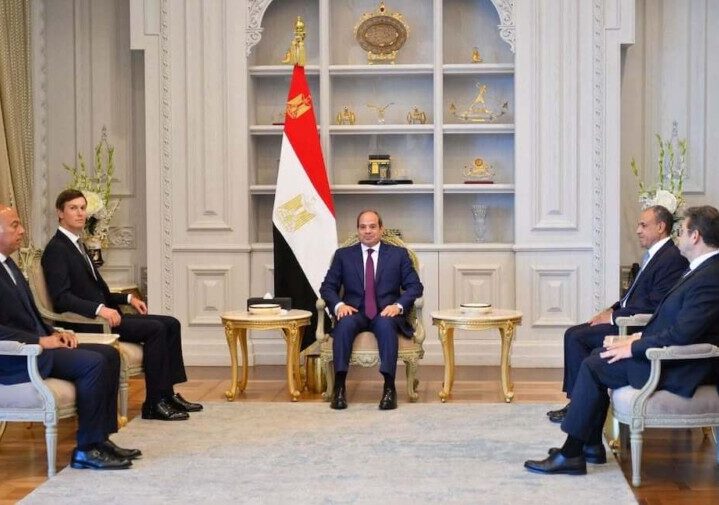
Another move by Israel has been to exert pressure on other regional countries likely to join the agreement, in an effort to prevent the expansion of the Mecca Agreement and its transformation into a security umbrella covering the entire region. In this context, Israel has focused particularly on Egypt; whilst on the one hand spreading the false claim that, due to its existing agreements with Egypt, Egypt cannot be a party to any other security agreement, on the other hand it has been seen to be attempting to prevent Egypt’s participation in the Mecca Agreement through the US and the UAE.
Furthermore, in an effort to prevent regional countries that are parties to the Abraham Accords from also becoming parties to the Mecca Agreement, Israel has, firstly, stoked the disputes between Saudi Arabia and the UAE; and simultaneously, circulated false claims that Türkiye and Pakistan would be unable to provide the protection they have committed to; It is also attempting to prevent countries such as Lebanon, Syria and Iraq – which are going through difficult times – as well as a country like Jordan, which is relatively aligned with the West, from joining the process. Whilst Israel does not appear to be engaged in any specific activities targeting the two Gulf states—Qatar and Kuwait—which are likely to join the Mecca Agreement in the coming days, it is anticipated that it will launch perception operations against these countries as this possibility becomes more likely.
However, what is certain is that Israel interprets the Mecca Agreement as an initiative by Türkiye to curtail Israeli influence in the region and, in order to reinforce the anti-Türkiye stance it has developed in recent times, on the one hand, by seeking to activate the alliance architecture it is attempting to establish in the Eastern Mediterranean with Greece and the Greek Cypriot, and on the other hand, by seeking to activate its so-called ‘hexagon bloc’, which stretches from India through the countries of the region towards Europe. However, it does not appear possible for Israel to achieve this without the overt support of the US, which is also implicitly backing the Mecca Agreement.
In conclusion, the Mecca Joint Defence Agreement is a declaration of intent brought about by the region’s local actors uniting in the face of the threats they face; in this respect, it is the embodiment of the regional ownership narrative put forward by Türkiye. The primary aim of this initiative is to ensure peace and stability in the region by offering the signatory countries more rational and realistic alternatives to the eroding regional security architecture through the deterrence it provides. It is assessed that this objective could be achieved more easily with the participation of other regional countries in the Mecca Agreement.
However, despite the demonstrated resolve, capacity and deterrence, it is assessed that any attempts to undermine the agreement will be met with a firm response, primarily from the hard power of Türkiye and Pakistan, and that all countries in the region will adopt the necessary stance to ensure the continuation of regional stability. For this reason, we hope that no party will attack any of the other parties in an attempt to test the security guarantees provided by this agreement, and that we will not be forced to explore the limits of the agreement.
(Originally published in Turkish by Kriter)