Beyond the Stage: Can Muslim Leadership Move from Conversation to Coordination?
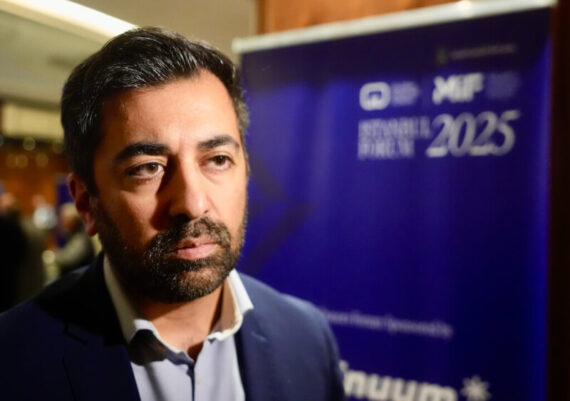
For Hamza Yousaf, the former First Minister of Scotland, the issue is not a lack of capacity in the Muslim World, but a failure to act collectively.
May 7, 2026
I
n late April, Istanbul hosted the Muslim Impact Forum, bringing together political figures, civil society leaders, and organisations from across dozens of countries. Framed as a platform for collaboration, the forum aimed to confront a recurring challenge: how can a fragmented global Muslim landscape respond more effectively to shared political, social, and humanitarian pressures?
It is a question that has become increasingly urgent. From ongoing conflicts in parts of the Muslim world to rising anti-Muslim sentiment in Western societies, the pressures are both external and internal. Against this backdrop, the forum positioned itself not simply as a space for dialogue, but as an attempt to build coordination.
The presence of senior Turkish officials reflected an effort to bridge political leadership with civil society initiatives. Mehmet Şimşek, Türkiye’s Minister of Treasury and Finance, set a high-level tone for the assembly by framing the current geopolitical turbulence as a “new normal” defined by polarization and trade fragmentation.
For Şimşek, the solution to this global instability is structural and proactive. “Can we invest in regional integration as an antidote against fragmentation?” he asked, highlighting that the world is currently suffering from a significant “trust deficit”. By positioning Türkiye as a mediator and an advocate for new trade and energy corridors, Şimşek’s address provided the macroeconomic framework for the forum’s goals: transforming sectarian and ethnic diversity into a “source of richness” rather than a cause for “perpetual conflict”.
Yet the central question remains: can such gatherings move beyond conversation? In an interview on the sidelines of the forum, Humza Yousaf, former First Minister of Scotland, framed the moment in stark terms. “Forums like this are needed now more than ever before,” he said, pointing to the “extremely difficult situations” facing Muslim communities globally.
“How do we use all of the energy, talent, money and expertise that we have as a collective Ummah, not just to solve our problems, but to make the world better for all of humanity?” For Yousaf, the issue is not a lack of capacity, but a failure to act collectively. The distinction matters: representation alone does not guarantee impact. Without access to decision-making power, presence can remain symbolic.
That diagnosis was echoed by Aazim Kidwai, director of the forum, who described fragmentation as the defining challenge. “We see Muslims fragmented. We see organizations all doing their own thing,” he said. Rather than proposing new structures, the forum’s approach is to connect existing actors, on the assumption that cooperation is already possible, but not yet realized.
Recommended
At the core of this approach is a simple but often elusive concept: trust. While Minister Şimşek identified the “trust deficit” as a global barrier, Kidwai noted its impact on an organizational level: “When people have trust, then they sign up to work together”. Partnerships announced during the forum were presented as early steps in that direction, though the durability of such initiatives remains shaped by competing interests and institutional rivalries.
If fragmentation is widely acknowledged, its causes are less often addressed openly. Kidwai pointed to two factors that repeatedly undermine cooperation: ego and fear. “Organisations often want to retain things in their own name… their own brand,” he said. “And there’s also fear, that if they step back, someone else will take over”.
These are not purely organisational issues. They reflect deeper structural dynamics—competition for visibility, funding, and influence—that shape how institutions operate. Yousaf added that to overcome these, “We have to encourage excellence in our young people… to take leadership positions with confidence”.
The significance of the forum will ultimately be measured not by the prestige of its attendees, but by its follow-through. Grand visions of “Middle Corridors” and high-tech integration are essential, yet they remain fragile blueprints. The real test is whether the partnerships announced in Istanbul can survive the transition from the conference hall to the boardroom. The Muslim Impact Forum reflects a growing, urgent awareness that isolated responses are no longer sufficient in a polarized world. However, as the insights from Yousaf and Kidwai suggest, the “skeleton” of infrastructure cannot move without a nervous system of trust.
If global Muslim leadership is to move from conversation to coordination, it must do more than build roads and railways; it must dismantle the internal architecture of ego and fear. Only then can the “trust deficit” be bridged, turning a moment of dialogue into a movement of impact.

Anas Grove is an Iraqi-born journalist and photojournalist specializing in Middle Eastern politics and international affairs. Now based in Istanbul after growing up in South Africa, he is an active member of the Turkish Arab Media Association. His career has been defined by documenting wars and natural disasters across the region, including extensive projects on the ground in Syria. His work currently focuses on the strategic intersection of geopolitics, trade routes, and institutional leadership.
You can see how this popup was set up in our step-by-step guide: https://wppopupmaker.com/guides/auto-opening-announcement-popups/

Stay informed by subscribing to
our weekly newsletter.
You can see how this popup was set up in our step-by-step guide: https://wppopupmaker.com/guides/auto-opening-announcement-popups/
You can see how this popup was set up in our step-by-step guide: https://wppopupmaker.com/guides/auto-opening-announcement-popups/
You can see how this popup was set up in our step-by-step guide: https://wppopupmaker.com/guides/auto-opening-announcement-popups/
You can see how this popup was set up in our step-by-step guide: https://wppopupmaker.com/guides/auto-opening-announcement-popups/