Global Meat Supply Faces Growing Pressure as Cattle Herds Shrink
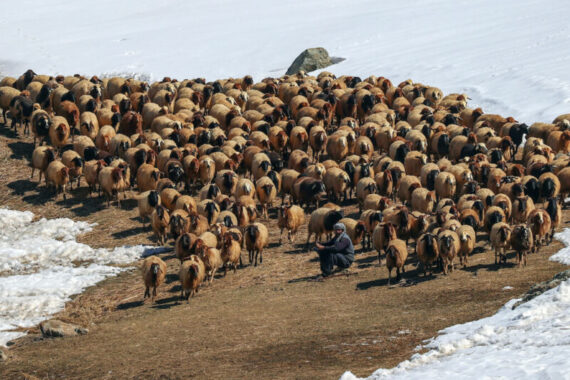
In the United States, drought has affected about 60 percent of cattle-rearing areas, according to S&P Global.
September 29, 2026
B
eef prices are rising sharply in China, cattle farmers in the United States are struggling with higher costs, and poultry producers in India are cutting production as pressures across the global meat industry intensify.
More than 90 percent of the world’s population consumes meat in some form, making developments in livestock and poultry production important for food prices and household diets worldwide. Rising input costs, drought, biological production cycles and trade restrictions are combining to put pressure on meat supplies.
At the center of the problem is a supply chain that depends on resources and time. Cattle require years to reach slaughter weight, while poultry depends heavily on feed made from globally traded grains and soybeans. Farmers also need adequate land, water and favorable weather conditions to maintain their animals.
When one part of the system is disrupted, the effects can spread throughout the wider food market.
Brazil, the United States and China are the world’s three largest beef producers, together accounting for more than half of global beef production. All three, however, are experiencing declines in their cattle populations.
According to a March estimate from the US Department of Agriculture, Brazil’s cattle herd is expected to total about 177.4 million animals in 2026, down nearly 8 percent from 192.5 million in 2024.
The United States is also dealing with historically low cattle numbers. The USDA counted 86.2 million cattle and calves on farms on January 1, 2026. The number of beef cows, which are essential for producing future calves, fell 1 percent from the previous year to 27.6 million. The 2025 calf crop also declined by 2 percent.
China’s cattle herd was estimated at 94 million in January 2026, down from 105 million two years earlier, a decline of about 14 percent.
The shrinking herds are contributing to lower beef production. The USDA forecasts that Brazil’s beef production will fall 2 percent this year, while exports are expected to decline 5 percent. US beef production is projected to fall 4 percent, while China’s total beef supply is expected to be 12 percent lower than in 2024.
China, the world’s largest beef consumer and importer, has already seen prices climb as domestic production declines and imported supplies remain constrained.
The factors behind shrinking herds differ between countries.
In Brazil, restrictions imposed by China and the European Union, two important export markets, have reduced incentives for producers, according to analysis by Augusto Neto of S&P Global.
Brazil is also experiencing what the USDA calls a cattle reversion cycle. Producers reduce slaughter rates and retain female cattle for breeding in an effort to rebuild their herds.
In the United States, drought has affected about 60 percent of cattle-rearing areas, according to S&P Global. Reduced grazing opportunities have contributed to higher feed costs, putting additional pressure on farmers.
The US meat industry is also heavily dependent on immigrant labor. Organizations representing cattle breeders in Texas, Oklahoma and Kansas recently said immigration enforcement raids were disrupting already strained operations.
High beef prices might normally encourage farmers to increase production, but cattle cannot be produced quickly in response to market signals. Kenneth Foster, a professor of agricultural economics at Purdue University, told Al Jazeera that it can take years for producers to expand their herds and for additional cattle to reach the market.
The fastest way to rebuild a herd is often to retain female cattle that could otherwise be sold and use them for breeding. But that requires producers to absorb the costs of keeping the animals while waiting for the next generation.
As a result, high prices can coexist with limited supply for an extended period.
Recommended

Europe illustrates how consumers and producers may adapt as beef and pork become more difficult or expensive to produce.
The European Union produced about 42.7 million tonnes of meat in 2025. Overall meat production is projected to decline by about 3 percent between 2025 and 2035, with beef production expected to fall 10 percent and pork 7 percent.
Poultry production, however, is projected to rise 5 percent, while poultry consumption is expected to increase 9 percent. Chickens can reach market weight within weeks, allowing producers to respond much more rapidly to changes in demand than cattle producers can.
The OECD-FAO Agricultural Outlook expects poultry to be the fastest-growing major meat category globally over the next decade, supported by its relatively low cost and shorter production cycle.
But poultry is not immune to the pressures affecting the wider food system.
In India, poultry producers announced plans in June to cut production by 25 percent after soybean meal prices rose more than 40 percent in a single month. Soybean meal is an important protein source for animal feed, and higher prices can rapidly increase production costs.
Indian producers responded by reducing output and culling parent breeder stocks used to produce future generations of poultry. Soybean meal prices subsequently reached a four-year high, prompting India to cancel export contracts and seek soybean imports from African countries.
The developments in cattle and poultry markets show how climate pressures, rising input costs, trade restrictions and biological limits are increasingly interconnected.
For consumers, the consequences could include higher prices and changing dietary choices. For producers, the challenge is balancing immediate market opportunities against the long-term costs and risks of maintaining livestock populations.
The global meat industry is therefore facing not one single shortage, but a series of pressures moving through an interconnected food system—reshaping how much meat is produced, what type of meat is available and ultimately what consumers can afford to put on their tables.
(Source: Aljazeera English)

Politics Today is dedicated to publishing insightful analyses in order to understand the changing nature of contemporary politics. It aims to contribute to the sound and constructive discussion of international affairs.
You can see how this popup was set up in our step-by-step guide: https://wppopupmaker.com/guides/auto-opening-announcement-popups/

Stay informed by subscribing to
our weekly newsletter.
You can see how this popup was set up in our step-by-step guide: https://wppopupmaker.com/guides/auto-opening-announcement-popups/
You can see how this popup was set up in our step-by-step guide: https://wppopupmaker.com/guides/auto-opening-announcement-popups/
You can see how this popup was set up in our step-by-step guide: https://wppopupmaker.com/guides/auto-opening-announcement-popups/
You can see how this popup was set up in our step-by-step guide: https://wppopupmaker.com/guides/auto-opening-announcement-popups/