E
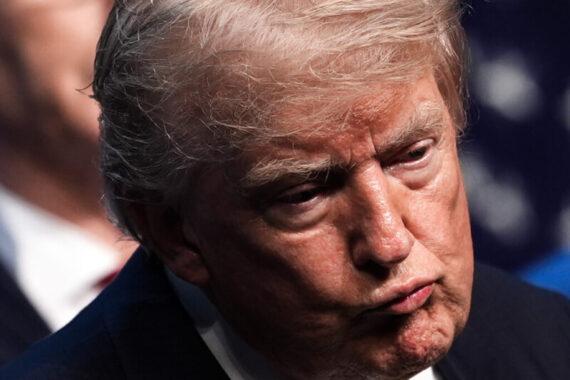
uropean NATO allies fear US President Donald Trump could intensify pressure on the military alliance if Republicans suffer significant losses in Tuesday’s midterm elections, potentially putting transatlantic security arrangements under further strain, Politico reported Sunday, citing five NATO diplomats.
The diplomats, who spoke on condition of anonymity, said a weakened Republican position in Congress could constrain Trump’s domestic agenda and encourage him to pursue a more aggressive foreign policy.
Among the measures under consideration, according to the report, are withdrawing thousands of additional US troops from Europe, reducing Washington’s contributions to NATO’s common funding and restricting weapons purchases for Ukraine through an alliance-backed initiative.
The diplomats also raised concerns that Trump could seek closer ties with Russia, further complicating European efforts to maintain a unified response to Moscow’s war against Ukraine.
A review of US forces stationed in Europe is expected to be completed by December, adding to uncertainty over the future scale of the American military presence on the continent.
European security concerns grow over US troop presence
The prospect of further troop withdrawals has heightened concerns among European governments that Washington could use its military commitments as leverage in negotiations over the war in Ukraine.
Oana Lungescu, a former NATO official and distinguished fellow at the Royal United Services Institute, warned that the Trump administration could link the continued deployment of American forces in Europe to European acceptance of a US-backed peace agreement for Ukraine.
She cautioned against treating troop deployments, the future of Ukraine and Europe’s wider security arrangements as bargaining elements in a broader agreement with Russian President Vladimir Putin.
Such an approach, she said, could create a dangerous situation for European security by placing the continent’s defense arrangements within the framework of negotiations with Moscow.
The concerns come as European NATO members face growing pressure to strengthen their own military capabilities and assume greater responsibility for the continent’s defense. A reduction in US troop numbers or financial contributions could accelerate that process while exposing divisions within the alliance over how to respond to Russia.
The diplomats’ warnings also point to the possibility that the outcome of domestic US elections could have consequences far beyond Washington, affecting NATO’s military planning and the level of Western support available to Kyiv.
Recommended
White House defends Trump’s NATO record
The White House rejected the suggestion that Trump has undermined NATO, defending the president’s record and pointing to increased defense spending commitments among alliance members.
Olivia Wales, an assistant White House press secretary, told Politico that “President Trump has done more for NATO than anyone else.”
She cited NATO allies’ agreement to increase defense spending and Trump’s efforts to end Russia’s war in Ukraine as evidence of his contribution to the alliance.
Wales also reiterated Trump’s criticism of NATO members over the war in Iran, reflecting continuing disagreements between Washington and some European capitals over the extent of allied support for US foreign policy priorities.
However, concerns about a possible American withdrawal from Europe were met with a more measured assessment by Montenegrin Defense Minister Dragan Krapovic.
Krapovic noted that earlier predictions of a US departure from NATO had not materialized. He also emphasized that Congress has a role in decisions concerning American troop deployments, suggesting that the president’s ability to make sweeping changes may be constrained by institutional checks.
Politico reported that NATO and the Pentagon did not respond to requests for comment.
Tuesday’s midterm elections are therefore being closely watched by European officials not only for their implications for US domestic politics but also for what they could mean for Washington’s future role in European security.
Although the diplomats’ concerns remain predictions rather than confirmed policy decisions, the possibility of additional troop withdrawals, reduced funding and restrictions on Ukraine-related arms purchases has added to uncertainty over the future of the transatlantic alliance.
(Source: Anadolu Agency)