Russia Warns NATO of Nuclear Response Over Kaliningrad

October 1, 2026

“Russia will be ready to use the entire arsenal of forces and capabilities at its disposal, including nuclear weapons,” the diplomatic note said, referring to any NATO attempt to isolate Kaliningrad from the rest of Russia.
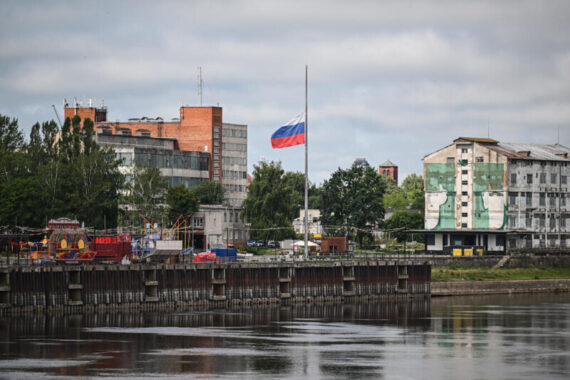
Russia's National flag is pictured in Kaliningrad Oblast, a semi-exclave situated from on the Baltic Sea bordering the Lithuanian town Pagegiai on July 10, 2023 in Pagegiai, Lithuania. Photo by Anadolu Images.

R

ussia has warned NATO that it would be prepared to use nuclear weapons if the Western alliance attempted to isolate Kaliningrad, escalating tensions between Moscow and the alliance over the strategically important Russian exclave on the Baltic Sea.

In a diplomatic note sent to NATO and seen by Reuters, Russia accused the alliance of pursuing a “dangerous and reckless course” that carried a high risk of direct armed conflict. Moscow also warned that any confrontation could involve Russian strikes against decision-making centers in NATO member states from the outset.

“Russia will be ready to use the entire arsenal of forces and capabilities at its disposal, including nuclear weapons,” the diplomatic note said, referring to any NATO attempt to isolate Kaliningrad from the rest of Russia.

Kaliningrad is a heavily militarized Russian territory located between NATO members Poland and Lithuania. Moscow has increasingly highlighted what it describes as threats to the exclave as NATO countries expand military activity in the Baltic region.

The Russian warning comes amid already strained relations between Moscow and Western governments following Russia’s full-scale invasion of Ukraine in 2022.

Russian Foreign Ministry spokeswoman Maria Zakharova separately accused officials from NATO countries of demonstrating what she called “Russophobia” and a willingness to wage war against Russia. She said Moscow hoped its warnings would be taken seriously.

The Kremlin said the message was directed at what spokesman Dmitry Peskov called “hotheads in Europe.”

NATO rejects Russian nuclear threat

NATO Secretary General Mark Rutte rejected Moscow’s warning and said the alliance had responded by emphasizing that it was defensive in nature.

“We are a defensive alliance,” Rutte said. “And stop the nuclear threats. This is absolutely not called for and not helpful.”

In its response to Russia, NATO said none of its exercises or activities posed a threat to Russian territory. The alliance also called on Moscow to end its full-scale invasion of Ukraine and refrain from what it described as increasingly reckless behavior toward NATO members.

Asked whether the risk of Russia using nuclear weapons against the Baltic states was now real, Rutte said it was not. He argued that Russian President Vladimir Putin understood that Russia could not defeat NATO.

The exchange nevertheless comes as European governments and Moscow accuse each other of escalating military and political tensions around the Baltic Sea.

Russian embassies in at least three European countries have issued statements in recent days accusing NATO of increasing tensions through military exercises and scenarios involving Kaliningrad.

European governments, meanwhile, have accused Moscow of conducting a broader “hybrid war” through activities including sabotage and arson. Russia denies those accusations and rejects repeated claims from Western politicians that it is preparing for a military attack against a NATO country.

The latest Russian warning has also raised concerns among analysts about the possibility of miscalculation.

Nikolai Sokov, a Vienna-based nuclear analyst and former Russian diplomat, said it was becoming increasingly difficult for Western countries to expand their support for Ukraine without increasing the risk of direct confrontation with Moscow.

Sokov said Russia could interpret some Western actions differently from European governments. He cited arms supplies to Ukraine, sanctions against Moscow, interceptions of Russian ships, military exercises and intelligence flights near Kaliningrad as developments contributing to the tension.

He said Russia could view a potential blockade of the Baltic Sea as an act of war even if European governments considered it to be below the threshold of direct conflict.

“I see a risk of mutual miscalculation,” Sokov said.

Attempt to intimidate European governments

A NATO diplomat described the Russian message as another attempt to intimidate European governments, while saying the alliance would not be deterred from supporting Ukraine.

A senior European defense official said the warning was serious, describing it as the first time since the Cold War that Russia had threatened Europe in such terms.

The competing statements underscore the increasingly tense security environment around the Baltic Sea, where Russian and NATO forces operate in close proximity. While NATO says its activities do not threaten Russia, Moscow has repeatedly warned that developments involving Kaliningrad could have wider consequences.

The latest dispute highlights the risks created by escalating military activity and increasingly forceful rhetoric between Russia and the Western alliance. With both sides maintaining sharply different interpretations of the security situation, analysts warn that miscalculation could further increase the danger of confrontation.

(Source: Reuters)

Politics Today is dedicated to publishing insightful analyses in order to understand the changing nature of contemporary politics. It aims to contribute to the sound and constructive discussion of international affairs.