A
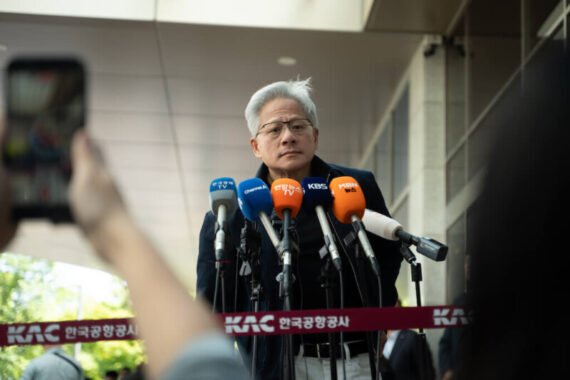
llegations surrounding Nvidia CEO Jensen Huang’s relationship with a former executive suspected of working for Chinese intelligence have intensified pressure in Washington to tighten restrictions on China’s access to advanced artificial intelligence chips, adding a new political challenge for one of the world’s most influential technology executives.
US President Donald Trump said the FBI was examining Huang’s relationship with Alice Huang, a former executive at Megaspeed who was investigated by US authorities and reportedly identified as an asset of Chinese intelligence. The two are not related. Trump said Jensen Huang had told him that he did not know the woman was a spy.
The allegations have prompted renewed calls from lawmakers in both parties for stronger safeguards against the transfer of sensitive semiconductor technology to China. Three proposed measures — the AI Overwatch Act, the Chip Security Act and the MATCH Act — could be included in the legislative package accompanying the Senate’s version of the National Defense Authorization Act for fiscal year 2027.
The controversy has also affected Nvidia’s shares, which fell more than 4 percent following reports about the relationship and the company’s internal response. Nvidia’s board has opened an investigation, while the company has publicly expressed support for Huang.
Neither the allegations concerning the former Megaspeed executive nor questions about Huang’s knowledge of her activities establish that the Nvidia chief engaged in wrongdoing. However, the episode has given national security hawks in Congress another argument for restricting China’s access to advanced computing technology.
Allegations add momentum to proposed chip restrictions
The three legislative proposals target different aspects of the semiconductor supply chain and reflect growing concern among US policymakers that advanced chips and manufacturing equipment could reach China despite existing export controls.
The AI Overwatch Act would give Congress greater authority over decisions concerning exports of advanced artificial intelligence chips. Supporters argue that lawmakers should have a stronger role in determining whether particularly sensitive technology can be transferred to countries considered strategic competitors.
The Chip Security Act would introduce mechanisms to track advanced chips and help prevent their smuggling into restricted markets. The proposal is intended to address concerns that existing export restrictions could be circumvented through intermediaries and complex international supply chains.
The third measure, the MATCH Act, would seek to pressure US allies to impose tighter restrictions on exports of semiconductor manufacturing equipment to China. Its supporters argue that unilateral American controls are insufficient if companies in other countries can continue supplying equipment that enables China’s domestic chip industry to advance.
The House Foreign Affairs Committee has advanced all three measures, and they have been included in a Senate package of proposals being considered as part of the broader defense legislation.
Senators Elizabeth Warren and Jim Banks have argued that the allegations involving Huang and the former Megaspeed executive reinforce the need for stronger national security protections. Representative Bill Foster has also backed the Chip Security Act, emphasizing the importance of preventing restricted technology from reaching unauthorized recipients.
Nvidia, however, opposes the AI Overwatch Act and the Chip Security Act. The company and industry groups have warned that additional restrictions could undermine American competitiveness, disrupt global supply chains and weaken the position of US companies in the international semiconductor market.
The debate reflects a broader disagreement in Washington over how to balance national security concerns with the commercial interests of American technology companies. While some lawmakers favor tighter controls to slow China’s technological development, industry representatives warn that excessive restrictions could encourage foreign customers to turn to alternative suppliers.
Recommended
Nvidia board backs Huang as political pressure mounts
The controversy has placed Huang, one of the most prominent figures in the global AI industry, under increased scrutiny.
According to reports, Huang acknowledged being unfaithful to his wife during an internal communication with employees but did not provide details about the relationship with Alice Huang. Nvidia’s board has launched an internal investigation into the matter, while continuing to express confidence in the company’s chief executive.
The company has not indicated that Huang is preparing to step down. Analysts have also largely dismissed the prospect of his immediate departure, pointing to his central role in Nvidia’s business and its position in the global artificial intelligence market.
Nevertheless, the allegations have generated political and legal consequences. Shareholders have filed a proposed class-action lawsuit accusing Huang and Nvidia of concealing relevant information about the executive’s alleged connections. The claims have added to investor concerns at a time when the company is facing growing scrutiny over its business exposure to China.
Democratic House Minority Leader Hakeem Jeffries has called for answers and supported stronger restrictions on chip sales to China. His intervention underscores the extent to which the issue has become a bipartisan national security concern, even as lawmakers disagree over the scope and economic consequences of additional controls.
China’s Foreign Ministry has rejected the allegations as baseless, adding a diplomatic dimension to a controversy already entangled in US-China technology competition.
Trump’s relationship with Huang has also attracted attention. The president has previously supported policy developments favorable to Nvidia and presented the executive with an award in October. Financial disclosures have also indicated that Trump reported purchases of Nvidia shares worth up to $1.6 million and sales of up to $1 million.
The president’s comments about the FBI investigation have therefore placed the relationship between the White House and the semiconductor industry under additional scrutiny.
At the center of the dispute is Nvidia’s strategic importance. Its advanced processors are essential to the development and operation of many artificial intelligence systems, making the company a major player in the competition between Washington and Beijing.
For US policymakers, the challenge is to prevent sensitive technology from strengthening China’s military and technological capabilities without damaging the American companies that lead the global industry. For Nvidia, the immediate concern is whether the political controversy surrounding its chief executive will translate into new restrictions on its access to international markets.
As Congress considers the proposed legislation, the allegations involving Huang are likely to intensify an already contentious debate over the future of US semiconductor policy and the limits of commercial engagement with China.
(Source: Reuters)