Jensen Huang Is Back at Nvidia, and Wall Street Couldn’t Be Happier
Following Huang's return, Nvidia shares surged 31.5 percent on the news, fueling a broader Wall Street rally and lifting AI-linked firms such as Core Weave and Nebius.
November 24, 2026
L
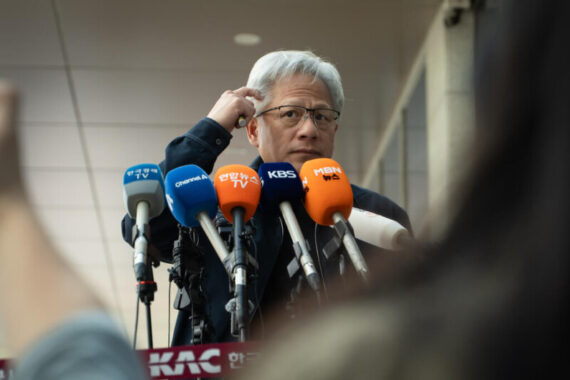
ess than two weeks after resigning amid a personal scandal, Jensen Huang made a dramatic return as chief executive of Nvidia on Monday, in a reversal that sent the chipmaker’s stock soaring and underscored his unmatched influence over Wall Street, Washington, and the global artificial intelligence boom.
Wearing his signature black leather jacket and placing a hand over his heart, the 63-year-old co-founder greeted cheering employees packed into the atrium and balconies of Nvidia’s Santa Clara headquarters. The company’s board reinstated Huang following intense pressure from shareholders and U.S. President Donald Trump, who publicly credited his own intervention for bringing the executive back.
Nvidia shares surged 31.5 percent on the news, fueling a broader Wall Street rally and lifting AI-linked firms such as Core Weave and Nebius, whose stocks had faltered during Huang’s brief absence. Tech leaders including Elon Musk hailed the move, while investors celebrated the return of the executive widely viewed as the linchpin of the AI trade.
“Jensen is bigger than Elvis for tech investors,” said Eric Schiffer, chairman of the Los Angeles-based private equity firm Patriarch Organization.
Huang’s abrupt departure earlier this month—triggered by revelations of extramarital affairs, including one involving an alleged Chinese spy—had rattled confidence across the technology sector. Beyond running the world’s most valuable chipmaker, Huang has spent decades cultivating deep ties with suppliers, customers, and policymakers, while effectively bankrolling the AI industry’s rapid infrastructure buildout.
High-profile tech leaders, including Musk and Oracle Chairman Larry Ellison, have previously acknowledged scrambling to secure allocations of Nvidia’s sought-after graphics processing units (GPUs). Across Asia, Huang commands rock-star status, routinely drawing crowds seeking autographs on the streets of Taipei and Seoul.
“You can see how one man was so much the face of this industry,” said Bill Gunderson, a partner at GCG Advisory Partners. “He leaves and the whole place goes to heck in a handbag. And all of a sudden, he’s back and everything is rebounding.”
Recommended
Despite the market euphoria, Huang’s swift reinstatement has reignited debate over corporate governance and key-person risk at a company central to global technology infrastructure. Although Huang is Nvidia’s fifth-largest shareholder with a roughly 3.6 percent stake, he does not hold special super-voting shares like Meta’s Mark Zuckerberg or SpaceX’s Musk. Instead, his authority stems from his hands-on management style—overseeing roughly 60 direct engineering reports—and his pivotal role in guiding and funding emerging AI startups.
Prior to his resignation, Wall Street analysts had already questioned Nvidia’s practice of investing heavily in AI startups that subsequently use those funds to purchase Nvidia chips, warning of a potentially fragile web of circular financing.Huang has defended the strategy as supporting genuine market demand.
Meanwhile, his return drew sharp bipartisan pushback from U.S. lawmakers, even as President Trump defended the CEO on Monday, calling him “a genius” and stating he “did nothing wrong.”
For governance experts, the episode highlights the challenge boards face when a leader becomes synonymous with a company’s value. “When the CEO is too big to fire, the board’s job isn’t to fire him,” said Nada Kakabadse, a professor of corporate governance and ethics at Britain’s Henley Business School. “It’s to fence him in.”
(Source: Reuters)

Politics Today is dedicated to publishing insightful analyses in order to understand the changing nature of contemporary politics. It aims to contribute to the sound and constructive discussion of international affairs.
You can see how this popup was set up in our step-by-step guide: https://wppopupmaker.com/guides/auto-opening-announcement-popups/

Stay informed by subscribing to
our weekly newsletter.
You can see how this popup was set up in our step-by-step guide: https://wppopupmaker.com/guides/auto-opening-announcement-popups/
You can see how this popup was set up in our step-by-step guide: https://wppopupmaker.com/guides/auto-opening-announcement-popups/
You can see how this popup was set up in our step-by-step guide: https://wppopupmaker.com/guides/auto-opening-announcement-popups/
You can see how this popup was set up in our step-by-step guide: https://wppopupmaker.com/guides/auto-opening-announcement-popups/