All NATO Members Hit 2% Defense Mark, Few Achieve New 3.5% Goal
In 2025, all NATO allies will meet or exceed the 2% minimum, marking a historic first for the alliance as it commemorates its 75th anniversary.
August 28, 2025

A
ll 32 NATO members are set to meet the alliance’s longstanding target of allocating at least 2% of their gross domestic product (GDP) to defense this year, according to new figures released on Thursday. However, only three countries have so far achieved a more ambitious spending benchmark agreed by alliance leaders earlier this summer.
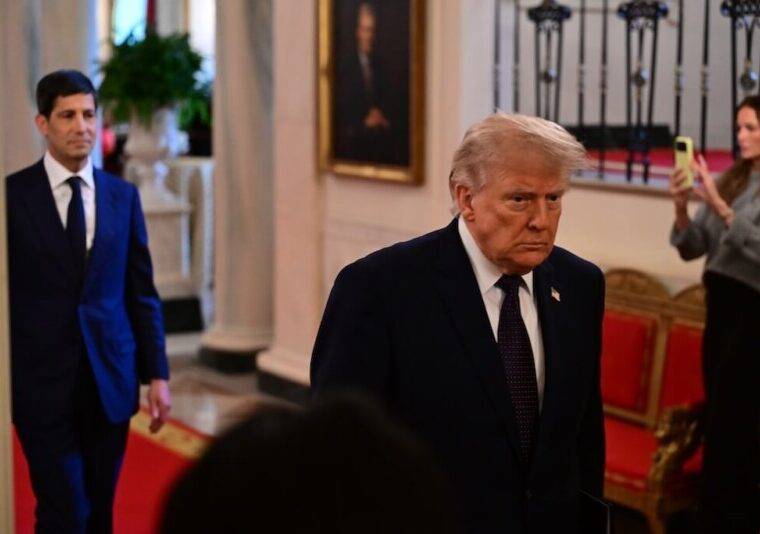
The 2% goal, established in 2014 in the wake of Russia’s annexation of Crimea, had long been a source of tension between the United States and its European allies, with Washington repeatedly urging members to shoulder more of the collective defense burden. Former U.S. President Donald Trump, in particular, pressed European nations to step up military investments during his first term, often criticizing what he described as “free riding” on U.S. security guarantees.
The latest data shows that this pressure, combined with Russia’s full-scale invasion of Ukraine in 2022 and a rapidly evolving security landscape, has produced a significant increase in military expenditures across Europe. As recently as 2024, more than 10 NATO countries were still falling short of the 2% target, sparking concerns about readiness and transatlantic unity.
This year, however, all allies will meet or exceed the 2% minimum, marking a historic first for the alliance as it commemorates its 75th anniversary. Seven members are expected to spend exactly 2.0% of their GDP on defense, while most others hover slightly above that mark.
Poland emerged as the biggest spender in relative terms, dedicating 4.48% of its GDP to defense, followed by Lithuania at 4% and Latvia at 3.73%. These three nations—located on NATO’s eastern flank and among the most vocal about the threat posed by Moscow—are also the only ones to have already met the alliance’s newly introduced target of 3.5% of GDP for defense spending.
That benchmark, agreed at a NATO summit in The Hague in June, represents a major shift in the alliance’s long-term ambitions. Under the new plan, members committed to reaching 3.5% by 2035 as part of an even broader initiative that envisions allocating 5% of GDP to defense and security-related infrastructure over the next decade. This would include not only traditional military spending but also investments in cyber defense, resilient supply chains, and transport networks capable of handling heavy military equipment in times of crisis.
Speaking at the inauguration of a new ammunition production facility in Unterlüß, Germany, NATO Secretary General Mark Rutte welcomed the progress made by allies but stressed that higher budgets must translate into real-world capabilities. “Cash alone doesn’t provide security,” Rutte said, standing beside a newly unveiled production line operated by German arms manufacturer Rheinmetall. “Deterrence doesn’t come from 5%. Deterrence comes from the capability to deter and, if necessary, fight potential enemies.”
Germany, long criticized for its defense underinvestment, is now on track to meet the 2% threshold for the first time in decades, driven by a multi-year €100 billion special fund launched after the war in Ukraine began. France, Italy, and several Southern European nations have also edged past the target amid increasing concerns over Russian aggression, tensions in the Middle East, and the need to secure Europe’s southern flank from irregular migration and terrorism threats.
However, the new spending commitments are not without controversy. Some NATO members, particularly in Western Europe, have expressed reservations about the feasibility of meeting the 3.5% and 5% benchmarks in the face of slowing economic growth, high inflation, and domestic social spending pressures. Critics argue that a sharp increase in defense budgets may come at the expense of investments in climate transition, public health, and education.
Recommended
Supporters of the plan, on the other hand, argue that the world has entered a period of prolonged geopolitical competition that leaves no room for complacency. “The days when Europe could rely on U.S. security guarantees without paying its fair share are over,” said a senior diplomat from a Northern European member state, speaking on condition of anonymity. “If we want to preserve the rules-based international order and deter aggression from Russia or any other adversary, we have to put our money where our mouth is.”
The debate over burden-sharing is expected to intensify ahead of the next NATO leaders’ summit in Warsaw in 2026, where progress toward the 3.5% spending goal will be formally reviewed. With Washington pushing for more equitable transatlantic contributions and Eastern Europe continuing to rearm at a record pace, the alliance faces the challenge of balancing ambition with economic reality.
For now, NATO officials are touting the achievement of full 2% compliance as a major milestone that strengthens deterrence at a critical time. But as geopolitical rivalries deepen and new security challenges emerge, the question remains: will allies sustain this momentum over the next decade—or will the spending surge prove to be a short-lived response to immediate threats?
(Source: Reuters)

Politics Today is dedicated to publishing insightful analyses in order to understand the changing nature of contemporary politics. It aims to contribute to the sound and constructive discussion of international affairs.
You can see how this popup was set up in our step-by-step guide: https://wppopupmaker.com/guides/auto-opening-announcement-popups/

Stay informed by subscribing to
our weekly newsletter.
You can see how this popup was set up in our step-by-step guide: https://wppopupmaker.com/guides/auto-opening-announcement-popups/
You can see how this popup was set up in our step-by-step guide: https://wppopupmaker.com/guides/auto-opening-announcement-popups/
You can see how this popup was set up in our step-by-step guide: https://wppopupmaker.com/guides/auto-opening-announcement-popups/
You can see how this popup was set up in our step-by-step guide: https://wppopupmaker.com/guides/auto-opening-announcement-popups/