Australia, Indonesia Sign Security Deal in ‘Watershed Moment’
Australia and Indonesia signed a landmark security agreement on Friday, deepening defense cooperation.
February 6, 2026
A
ustralia and Indonesia signed a landmark security agreement on Friday, deepening defense cooperation in what Australian Prime Minister Anthony Albanese described as a “watershed moment” in relations between the two neighbors.
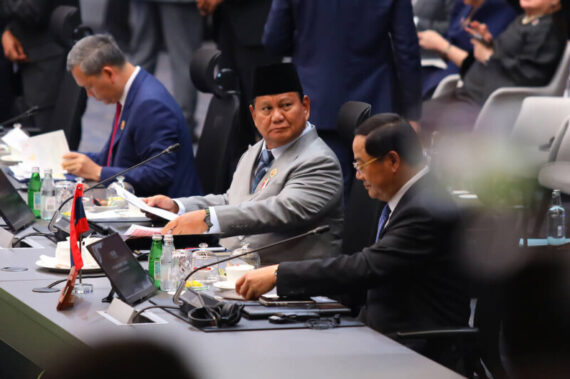
The deal was signed in Jakarta during a meeting between Albanese and Indonesian President Prabowo Subianto, marking a significant expansion of security and defense collaboration between the two Indo-Pacific nations.
“It represents a major extension of our security and defense cooperation and demonstrates that our relationship is as strong as it has ever been,” Albanese said ahead of the visit.
The agreement with Indonesia is part of a broader push by Canberra to strengthen ties across the Pacific region. Since taking office in 2022, Australia’s center-left government has signed multiple defense, police, and aid agreements aimed at reinforcing its regional influence and counterbalancing China’s growing presence.
This effort has intensified under US President Donald Trump, whose administration has encouraged allies to shoulder more responsibility in deterring Beijing’s expanding military power.
Late last year, Australia concluded a security pact with Papua New Guinea, and in January Albanese signed a new aid and support agreement during a visit to East Timor.
“The government can be very pleased with the agreements it signed across the Pacific,” said Sam Roggeveen, director of the security program at the Lowy Institute.
However, he noted that Indonesia stands apart.
“Indonesia is in a different category because of its size and also because of this historic commitment to non-alignment,” Roggeveen said, referring to Jakarta’s long-standing effort to balance relations between major powers.
Recommended
The new pact builds on earlier agreements, including a 1990s security deal signed by former Australian prime minister Paul Keating and Indonesian leader Suharto, as well as the 2006 Lombok Treaty, which laid foundations for defense cooperation.
Relations between Canberra and Jakarta have evolved from Cold War-era tensions to more stable and cooperative ties in recent years, as Indonesia continues to pursue a balanced foreign policy between Western nations and the developing world.
Roggeveen said Indonesia’s rising economic and demographic power is likely to make it a major regional force, potentially surpassing Australia economically.
Canberra, he added, is signaling that Indonesia is as vital to Australia’s security as the United States.
“Indonesia’s interests and China’s ambitions in Southeast Asia are going to clash more directly over time,” Roggeveen said, pointing to existing tensions in the South China Sea.
As China’s maritime reach expands, the new agreement may help Indonesia strengthen its defense capabilities while preserving its strategic independence.
(Source: South China Morning Post)

Politics Today is dedicated to publishing insightful analyses in order to understand the changing nature of contemporary politics. It aims to contribute to the sound and constructive discussion of international affairs.
You can see how this popup was set up in our step-by-step guide: https://wppopupmaker.com/guides/auto-opening-announcement-popups/

Stay informed by subscribing to
our weekly newsletter.
You can see how this popup was set up in our step-by-step guide: https://wppopupmaker.com/guides/auto-opening-announcement-popups/
You can see how this popup was set up in our step-by-step guide: https://wppopupmaker.com/guides/auto-opening-announcement-popups/
You can see how this popup was set up in our step-by-step guide: https://wppopupmaker.com/guides/auto-opening-announcement-popups/
You can see how this popup was set up in our step-by-step guide: https://wppopupmaker.com/guides/auto-opening-announcement-popups/