Ethiopia Hosts Covert Camp Training Sudan’s RSF Fighters
Sudan’s military has long accused Abu Dhabi of arming and funding the RSF, allegations that U.N. experts and some U.S. lawmakers have previously said they find credible.
February 10, 2026
E
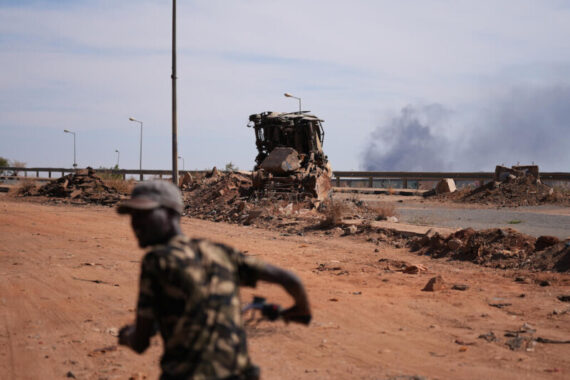
thiopia is hosting a secret training camp for thousands of fighters from Sudan’s Rapid Support Forces (RSF), according to officials, diplomats and satellite imagery reviewed by Reuters, in what analysts say is a major sign that Sudan’s civil war is increasingly pulling in outside powers.
The site lies in the remote western Ethiopian region of Benishangul-Gumuz, not far from the Sudan border. If confirmed, the development would mark the clearest indication yet of Addis Ababa playing a direct role that could significantly bolster the paramilitary group as new fronts open in Sudan’s south.
Ethiopia’s government, its military and the RSF did not respond to detailed requests for comment. Sudan’s army also did not reply.
Eight sources, including a senior Ethiopian government official, said the United Arab Emirates financed construction of the camp and helped provide trainers and logistical assistance. An internal Ethiopian security memo and a diplomatic cable reviewed by Reuters described similar arrangements.
Reuters said it could not independently verify the UAE’s involvement or the exact purpose of the camp. In response to questions, the Emirati foreign ministry denied it was a party to the conflict or involved “in any way” in the fighting.
Sudan’s military has long accused Abu Dhabi of arming and funding the RSF, allegations that U.N. experts and some U.S. lawmakers have previously said they find credible. The UAE has repeatedly rejected those claims.
Imagery indicates the camp was carved from forested land near the district of Menge, roughly 32 km from Sudan. Initial clearing began around April, followed by construction of permanent structures to the north. From October, large numbers of tents began appearing.
By late November, images showed hundreds of small tents, heavy machinery and transport vehicles. A January 22 photo captured further expansion, new earthworks and rows of shipping containers ringing the compound.
Based on tent numbers and size, defense intelligence firm Janes estimated the camp could house several thousand people, though it said imagery alone could not prove the site was military.
As of early January, around 4,300 RSF fighters were undergoing training there, according to the Ethiopian security note. Several officials said the total capacity might be far higher.
Two senior military figures who spoke to Reuters described seeing long truck convoys in November heading toward the camp, each vehicle believed to be carrying dozens of recruits. Reuters could not confirm who was inside the trucks.
Six officials said trainees included Ethiopians as well as Sudanese and South Sudanese nationals. A senior figure from the SPLM-N, a Sudanese rebel movement, denied his forces had any presence at the facility.
According to the sources, many of those trained are expected to reinforce RSF operations in Blue Nile state. Some fighters had already crossed the border in recent weeks, two officials said.
The internal memo identified General Getachew Gudina, head of the Ethiopian National Defense Force’s intelligence department, as the official responsible for establishing the camp. A senior government figure and several diplomatic and security sources confirmed he played a central role.
Getachew did not respond to requests for comment.
Roughly 53 km away, Asosa airport has also seen extensive development since mid-2025. Satellite imagery shows new hangars, paved areas and equipment that outside experts say resembles drone ground-control infrastructure.
Ethiopian officials said the military aims to strengthen air capabilities along its western flank, partly to guard against potential instability spilling over from Sudan and to protect strategic projects such as the Grand Ethiopian Renaissance Dam (GERD).
Other analysts and diplomats, however, said the upgraded airport has become an important hub for supplying the RSF across the frontier.
Some sources alleged Emirati financing for the works, though Reuters said it could not independently verify that.
Recommended
Sudan’s war erupted in 2023 from a struggle between the national army and the RSF during a stalled transition to civilian rule. The conflict has driven millions from their homes, pushed parts of the country toward famine and drawn accusations of ethnically targeted violence.
Both sides are widely believed to receive varying degrees of foreign support, raising fears the war could evolve into a broader regional proxy fight.
In early January, Ethiopia and the UAE issued a joint statement calling for a ceasefire in Sudan while highlighting close security cooperation between the two countries.
Diplomats say the reported emergence of the Menge training camp is likely to intensify scrutiny of that relationship – and heighten concern about how far the conflict may spread.
(Source: Reuters)

Politics Today is dedicated to publishing insightful analyses in order to understand the changing nature of contemporary politics. It aims to contribute to the sound and constructive discussion of international affairs.
You can see how this popup was set up in our step-by-step guide: https://wppopupmaker.com/guides/auto-opening-announcement-popups/

Stay informed by subscribing to
our weekly newsletter.
You can see how this popup was set up in our step-by-step guide: https://wppopupmaker.com/guides/auto-opening-announcement-popups/
You can see how this popup was set up in our step-by-step guide: https://wppopupmaker.com/guides/auto-opening-announcement-popups/
You can see how this popup was set up in our step-by-step guide: https://wppopupmaker.com/guides/auto-opening-announcement-popups/
You can see how this popup was set up in our step-by-step guide: https://wppopupmaker.com/guides/auto-opening-announcement-popups/