Experts Question Israel’s Ability to Achieve Regime Change in Iran
Israeli prime minister renews calls for overthrowing Tehran’s leadership ahead of elections, as analysts warn military superiority alone cannot guarantee political change.
October 23, 2026
I
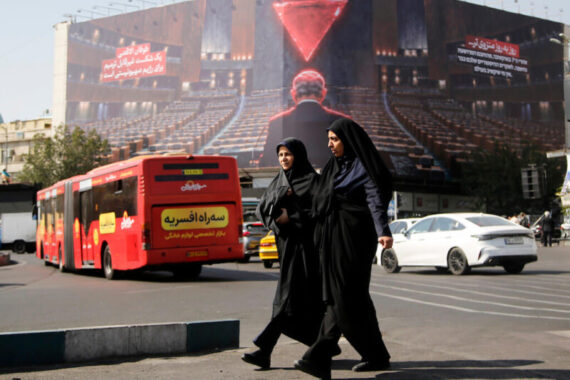
sraeli Prime Minister Benjamin Netanyahu has declared that overthrowing Iran’s government remains Israel’s primary objective, raising the prospect of another military confrontation with Tehran despite growing doubts over whether Israel possesses the capabilities or international backing needed to achieve regime change.
Netanyahu’s remarks come ahead of Israel’s national elections next week, as his government faces declining public support and mounting questions about its regional security strategy.
The Israeli leader reiterated his position following discussions with US President Donald Trump on Sunday and a visit to Israel by US Defense Secretary Pete Hegseth.
However, there has been no indication that Washington has agreed to participate in another offensive against Iran, particularly one explicitly intended to remove its political leadership.
Military analysts say Israel retains considerable offensive capabilities and could inflict substantial damage on Iranian military infrastructure. But they question whether air strikes, covert operations and cyberattacks could translate into the collapse of Tehran’s government.
Israel has demonstrated its ability to strike targets deep inside Iranian territory, supported by advanced weapons systems, intelligence capabilities and aerial refueling assets.
Urban Coningham, a research fellow at the Royal United Services Institute (RUSI), said Israel could potentially reestablish air superiority and launch another campaign against Iranian targets.
Nevertheless, analysts distinguish between weakening a country’s military capabilities and removing its political leadership.
Netanyahu has portrayed Iran as a major security threat since his first term as prime minister in 1996, repeatedly advocating international action against Tehran.
The United States eventually joined Israeli military operations against Iran in June 2025 and participated again in the campaign launched on February 28, 2026.
Despite those interventions, Iran’s government remained in power.
Netanyahu himself acknowledged the limitations of aerial bombardment in March, suggesting that overthrowing the Iranian leadership would require a ground component.
Caglar Kurc, an assistant professor at Abdullah Gul University in Türkiye, said air strikes could weaken Iran’s military infrastructure without completely eliminating its capacity to retaliate.
He argued that achieving regime change would require deploying troops and maintaining a military presence inside Iran for years, a commitment Israel would struggle to sustain.
Experts also questioned whether intelligence operations or support for armed opposition groups could provide a viable alternative.
Although Israel retains intelligence networks inside Iran, deploying covert assets risks exposing them to Iranian counterintelligence operations.
Similarly, Kurdish and Baloch armed groups are not considered capable of independently defeating Iran’s Islamic Revolutionary Guard Corps.
Recommended


A renewed Israeli offensive would also carry substantial military and economic risks.
Sidharth Kaushal, a senior RUSI research fellow, said Iran likely retains significant missile stockpiles despite damage sustained during previous confrontations.
Its antiship missile capabilities remain particularly important, supported by domestic production and mountainous terrain that provides natural protection against aerial attacks.
Iran could also exploit the financial imbalance between inexpensive offensive drones and the considerably more expensive interceptor systems used by Israel.
Previous exchanges have already depleted portions of Israel’s interceptor inventories, potentially complicating its ability to sustain defensive operations during another prolonged confrontation.
Washington’s willingness to participate represents another major uncertainty.
According to a Financial Times report this week, an Israeli proposal for renewed strikes failed to secure Trump’s approval, although the disagreement did not necessarily rule out future American involvement.
With US midterm elections approaching, Trump faces domestic political pressure to avoid another escalation.
Without American participation, Israel would also lack access to certain specialized military capabilities, including the massive GBU-57 bunker-busting bombs deployed by US B-2 bombers against Iran’s Fordow and Natanz nuclear facilities in June 2025.
Analysts suggest Tehran could respond to an independent Israeli offensive by concentrating retaliatory strikes on Israel while avoiding American military installations and disruption to the Strait of Hormuz.
Such an approach could allow Iran to impose significant costs on Israel while reducing the likelihood of direct US intervention.
Ultimately, experts argue that Netanyahu faces a fundamental strategic obstacle: Israel may possess the military power to severely damage Iran, but destroying infrastructure and military installations does not necessarily create the conditions required to overthrow an established government.
Without a credible ground strategy, sustained international backing and a viable political alternative inside Iran, Netanyahu’s declared objective of regime change remains far more difficult to achieve than another round of devastating military strikes.
(Source: Aljazeera English)

Politics Today is dedicated to publishing insightful analyses in order to understand the changing nature of contemporary politics. It aims to contribute to the sound and constructive discussion of international affairs.
You can see how this popup was set up in our step-by-step guide: https://wppopupmaker.com/guides/auto-opening-announcement-popups/

Stay informed by subscribing to
our weekly newsletter.
You can see how this popup was set up in our step-by-step guide: https://wppopupmaker.com/guides/auto-opening-announcement-popups/
You can see how this popup was set up in our step-by-step guide: https://wppopupmaker.com/guides/auto-opening-announcement-popups/
You can see how this popup was set up in our step-by-step guide: https://wppopupmaker.com/guides/auto-opening-announcement-popups/
You can see how this popup was set up in our step-by-step guide: https://wppopupmaker.com/guides/auto-opening-announcement-popups/