Democrats Eye Senate Takeover as Trump’s Falling Popularity Reshapes Key Midterm Races
CNN's polling average places Talarico ahead by 49% to 47%, although the contest remains within the margin of error.
October 23, 2026
D
emocrats are increasingly optimistic about their chances of reclaiming control of the US Senate in November’s midterm elections, as President Donald Trump’s declining popularity and mounting economic concerns reshape competitive races across several traditionally Republican states.
With less than two weeks remaining before the November 3 elections, a new CNN poll conducted by SSRS shows Democrats holding a 10-point nationwide advantage over Republicans in voters’ congressional preferences.
Trump’s approval rating stands at approximately 33%, according to CNN’s Poll of Polls average, as rising living costs and the economic consequences of the US war with Iran weigh heavily on voters.
Despite the favorable national environment, Democrats face a difficult electoral map. They must gain at least four Republican-held Senate seats while defending their existing positions to secure a majority.
More than $300 million in advertising is expected to flow into the 10 most competitive Senate contests during the campaign’s final two weeks, according to AdImpact data cited by CNN.
North Carolina currently represents Democrats’ strongest opportunity to capture a Republican-held Senate seat.
Former Democratic Governor Roy Cooper leads Republican Michael Whatley in polling, prompting Republican-aligned groups to scale back advertising investments in the state.
Democratic groups have reserved approximately $13.2 million in advertising for the final two weeks, compared with just $2.5 million from Republicans.
Ohio has emerged as another crucial battleground, with former Democratic Senator Sherrod Brown seeking to defeat Republican incumbent Jon Husted, who was appointed to replace Vice President JD Vance.
CNN’s polling average places Brown ahead by 49% to 44%, despite Trump’s double-digit victory in Ohio during the 2024 presidential election.
The contest has attracted substantial financial resources, with approximately $75 million in combined advertising scheduled for the campaign’s closing weeks.
In Alaska, former Democratic Representative Mary Peltola is mounting a competitive challenge against Republican Senator Dan Sullivan.
A New York Times/Siena poll released earlier this month showed Peltola leading by seven percentage points, although polling in the state remains limited.
The economic consequences of the Iran war have become an important campaign issue, particularly in Alaska, where high gasoline prices have intensified household financial pressures.
Meanwhile, Republican Senator Susan Collins faces one of her toughest reelection campaigns in Maine against Democrat Troy Jackson.
Recent polling indicates a closely contested race, with Democrats seeking to capitalize on dissatisfaction with Trump in a state won by former Vice President Kamala Harris in 2024.
Collins, however, has previously demonstrated an ability to win elections despite Maine’s preference for Democratic presidential candidates.
Recommended
Texas has also emerged as an unexpectedly competitive battleground, with Democratic candidate James Talarico challenging Republican Attorney General Ken Paxton.
CNN’s polling average places Talarico ahead by 49% to 47%, although the contest remains within the margin of error.
Democrats hope Paxton’s political controversies could help them secure their first statewide victory in Texas in more than three decades.
Republicans, meanwhile, are preparing an extensive advertising campaign, with spending on the state’s Senate contest expected to exceed $380 million across the primary and general election campaigns.
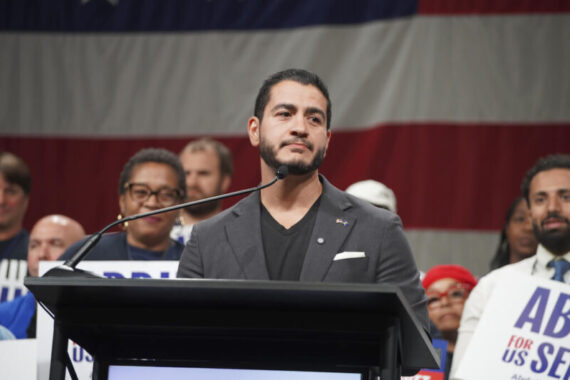
Michigan represents another critical contest, where Democrat Abdul El-Sayed faces former Republican Representative Mike Rogers.
Polling shows El-Sayed at 49% and Rogers at 47%, with neither candidate holding a decisive advantage.
Democrats also face competitive contests in Iowa, where Josh Turek is narrowly ahead of Republican Ashley Hinson, and Kansas, where Adam Hamilton is challenging incumbent Senator Roger Marshall.
Kansas has not elected a Democratic senator in 94 years, but economic dissatisfaction has brought the traditionally Republican state into closer contention.
In New Hampshire, Democrat Chris Pappas appears better positioned against Republican John Sununu, while Democratic Senator Jon Ossoff holds an advantage over Republican challenger Mike Collins in Georgia.
Several additional states, including Nebraska, South Carolina, Minnesota and Mississippi, remain potential sources of electoral surprises.
The expanding battleground map has forced Republicans to devote resources to defending seats previously considered relatively secure.
For Democrats, however, favorable national polling alone will not guarantee victory. Their prospects depend on converting growing dissatisfaction with Trump into victories across several Republican-leaning states while protecting vulnerable Democratic seats.
With Election Day approaching, the outcome could determine whether Trump retains congressional support for his legislative agenda or faces a Democratic-controlled Senate during the final two years of his presidency.
(Source: CNN)

Politics Today is dedicated to publishing insightful analyses in order to understand the changing nature of contemporary politics. It aims to contribute to the sound and constructive discussion of international affairs.
You can see how this popup was set up in our step-by-step guide: https://wppopupmaker.com/guides/auto-opening-announcement-popups/

Stay informed by subscribing to
our weekly newsletter.
You can see how this popup was set up in our step-by-step guide: https://wppopupmaker.com/guides/auto-opening-announcement-popups/
You can see how this popup was set up in our step-by-step guide: https://wppopupmaker.com/guides/auto-opening-announcement-popups/
You can see how this popup was set up in our step-by-step guide: https://wppopupmaker.com/guides/auto-opening-announcement-popups/
You can see how this popup was set up in our step-by-step guide: https://wppopupmaker.com/guides/auto-opening-announcement-popups/