How Did Mexico Hunt the Cartel Leader El Mencho?
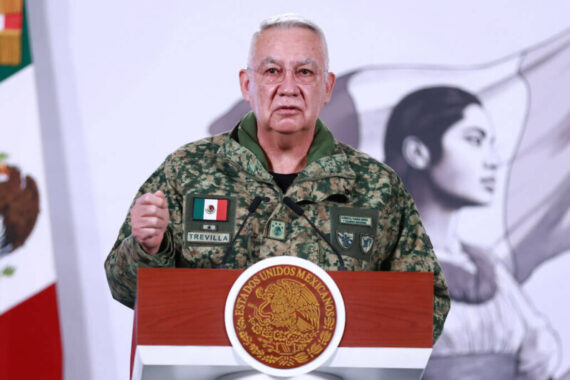
Mexican authorities received what Defense Secretary Ricardo Trevilla Trejo described as a “concrete tip” about Oseguera’s location.
February 24, 2026
M
exican security forces have killed Nemesio “El Mencho” Oseguera Cervantes, the elusive leader of the Jalisco New Generation Cartel, in a dramatic operation that officials say was made possible by a tip from a figure close to his inner circle and intelligence shared by the United States.
The high-stakes raid, carried out Sunday in the hills outside Tapalpa, has triggered a wave of retaliatory violence across western Mexico, underscoring both the symbolic and operational weight of taking down one of the country’s most powerful cartel bosses.
For years, Oseguera evaded capture despite being one of Mexico’s most-wanted fugitives and a central figure in the trafficking of methamphetamine and fentanyl into the United States. His organization grew into a dominant criminal force with a decentralized structure that allowed regional bosses wide autonomy.
The breakthrough came on February 20, when Mexican authorities received what Defense Secretary Ricardo Trevilla Trejo described as a “concrete tip” about Oseguera’s location. Investigators had traced a link through the network of one of the drug lord’s romantic partners. Crucially, a “trusted man” within her orbit provided access that helped authorities narrow in on the hideout.
The following day, the woman reportedly left the secluded cabin complex where Oseguera had been staying. He remained behind with members of his security detail — a window Mexican forces moved quickly to exploit.
The target was a wooded compound near Tapalpa known as Cabañas La Loma, a vacation rental site previously sanctioned by the US Treasury for allegedly providing material support to cartel activities.
To avoid tipping off lookouts, Mexican authorities relied primarily on ground forces, supported by limited helicopter air cover. Units from the army and the National Guard’s Special Immediate Reaction Force established a perimeter before advancing up a long, remote driveway toward the compound.
Eyewitness videos later verified by media outlets showed armored vehicles climbing a slope toward the cabins, followed by bursts of automatic gunfire and plumes of thick black smoke.
As troops closed in, they came under fire from Oseguera’s lieutenants. According to officials, eight cartel members were killed in the initial exchange, and two soldiers were wounded.
Oseguera and several deputies fled into nearby forested terrain. A detachment of Special Forces pursued them through dense undergrowth. After a further firefight, they captured the cartel leader and two bodyguards, all seriously wounded.
Authorities placed Oseguera, his two bodyguards, and a wounded soldier aboard a helicopter bound for a hospital in Guadalajara. However, officials said the three cartel members died during the flight.
Fearing immediate unrest in Guadalajara — a stronghold for the cartel and a host city for the upcoming 2026 FIFA World Cup — authorities diverted the aircraft to Morelia International Airport. From there, an Air Force plane transported the bodies to Mexico City.
News of Oseguera’s death sparked rapid retaliation. Cartel gunmen set up flaming roadblocks, torched vehicles, and clashed with security forces in multiple municipalities across Jalisco and neighboring states. Airlines suspended flights to affected areas, and the US government urged its citizens to shelter in place.
Amid the violence, 25 members of the National Guard military police were reported killed.
President Claudia Sheinbaum confirmed that the United States shared intelligence that aided the operation but emphasized that no US ground forces were involved.
The timing of the operation is politically significant. Sheinbaum has faced mounting pressure from Donald Trump to curb the flow of fentanyl and other narcotics into the United States, amid threats of unilateral cross-border action.
Oseguera had been designated by Washington as a Specially Designated Global Terrorist, with a $15 million reward for information leading to his capture.
Security analysts say the Mexican government likely calculated that the intelligence window — combined with the vulnerability created by the absence of key associates — presented the best opportunity in years to neutralize him.
Recommended
Experts caution that while the killing of Oseguera is symbolically significant, it may not immediately dismantle the cartel he co-founded.
Armando Vargas of the think tank México Evalúa described the move as a calculated risk, arguing that authorities believed they could contain the expected backlash. Meanwhile, political scientist Gustavo López Montiel noted that Oseguera had already ceded some operational control while in hiding.
The cartel’s franchise-like structure, in which regional leaders retain considerable autonomy, could limit short-term fragmentation. Still, analysts warn of possible internal jockeying for power and opportunistic moves by rival organizations.
The operation unfolds at a delicate moment for Mexico. Guadalajara is scheduled to host four group-stage matches of the 2026 FIFA World Cup — an event expected to bring economic benefits but also heightened international scrutiny.
In a public address Monday, Sheinbaum sought to reassure the nation.
“The most important thing right now is to guarantee peace and security for the entire population of all of Mexico,” she said. “People can be assured that peace, security, and normalcy are being maintained in the country.”
Whether the death of “El Mencho” ultimately stabilizes or destabilizes the security landscape remains to be seen. For now, Mexico has struck a decisive blow against one of the hemisphere’s most notorious cartel leaders — with help from an insider in his personal life and critical intelligence from abroad.
(Source: CNN)

Politics Today is dedicated to publishing insightful analyses in order to understand the changing nature of contemporary politics. It aims to contribute to the sound and constructive discussion of international affairs.
You can see how this popup was set up in our step-by-step guide: https://wppopupmaker.com/guides/auto-opening-announcement-popups/

Stay informed by subscribing to
our weekly newsletter.
You can see how this popup was set up in our step-by-step guide: https://wppopupmaker.com/guides/auto-opening-announcement-popups/
You can see how this popup was set up in our step-by-step guide: https://wppopupmaker.com/guides/auto-opening-announcement-popups/
You can see how this popup was set up in our step-by-step guide: https://wppopupmaker.com/guides/auto-opening-announcement-popups/
You can see how this popup was set up in our step-by-step guide: https://wppopupmaker.com/guides/auto-opening-announcement-popups/