How Does Turkey View the Iran–Israel Conflict?
At first glance, the Iran–Israel confrontation falls beyond the contours of Turkey’s immediate security architecture
August 20, 2025
F
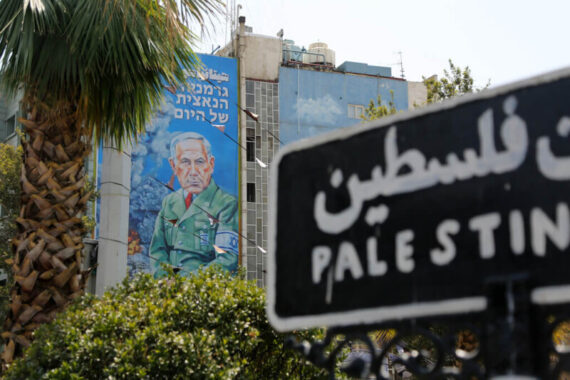
rom Turkey’s perspective, the Iran–Israel conflict is both instructive and cautionary. The rapid escalation of long-standing hostilities between Tehran and Tel Aviv –one of the Middle East’s most persistent fault lines– has once again underscored the risks of unchecked confrontation. The ceasefire may have halted the fighting, but the underlying dangers remain unresolved.
For Ankara, the most pressing concern lies in the prospect that Iran, in the aftermath of the conflict, might inject a non-peaceful dimension into its nuclear program. Such a move would not only deepen regional insecurity but also complicate Ankara’s own strategic calculus, adding strain to already fragile diplomatic and security balances.
Turkey was among the governments that monitored the twelve-day conflict with utmost attention. Beginning in the early hours of June 13, Ankara had repeatedly warned that the policies of both Tel Aviv and Tehran –compounded by Washington’s posture– risked fueling a broader destabilization. By reaffirming its principled commitment to diplomacy, Turkey assumed an active facilitating role in de-escalation efforts that helped bring the confrontation to an end.
Turkey’s position was also shaped by its longstanding critique of Israel’s conduct. Since October 7, Ankara has consistently described Israel’s campaign in Gaza as genocide. Against this backdrop, it stressed that Israel’s strikes against Iran represented a further breach of international law. President Recep Tayyip Erdoğan issued a stark warning that such provocations could ignite a wider conflagration across the region, declaring:
“Israel’s attacks against our neighbor Iran are a blatant provocation that disregards international law. These strikes, carried out at a time when negotiations concerning Iran’s nuclear program are intensifying and international pressure is mounting in response to the inhumane acts in Gaza, clearly reflect Israel’s lawless mindset. The Netanyahu administration, through its reckless, aggressive, and unlawful actions, is striving to drag our region and the entire world into calamity. The international community must finally take a stand and draw a line to Israel’s rogue conduct that threatens both global and regional stability.”
From the begining, Turkey has consistently underscored that Iran’s nuclear file must be resolved through negotiations anchored in international law. While affirming Tehran’s right to self-defense, Ankara has urged Iranian leaders not to foreclose the path of diplomacy. At the same time, Turkish officials have been candid about the risks of further escalation. President Recep Tayyip Erdoğan remarked that Ankara “has made, and is making, preparations for every possible negative development and scenario.”
That resolve was reflected in a high-level meeting convened at the Ministry of Foreign Affairs on June 13, the very day the conflict erupted. Foreign Minister Hakan Fidan, National Defense Minister Yaşar Güler, then–Chief of General Staff Metin Gürak, and National Intelligence Organization (MİT) Chief İbrahim Kalın gathered to map out contingency planning. The group’s central conclusion was clear: diplomacy remained the only viable alternative to war.
Ankara moved quickly to put that principle into practice. President Erdoğan launched a campaign of intensive telephone diplomacy, reaching out to both regional and global counterparts. His efforts included two separate calls with U.S. President Trump and two with Iranian President Pezeşkiyan. By maintaining open channels with adversaries as well as allies, Turkey positioned itself as a crucial facilitator in the conflict. These initiatives bore fruit when, on June 24, a ceasefire took effect –an outcome to which Ankara’s diplomatic activism had directly contributed.
At first glance, the Iran–Israel confrontation falls beyond the contours of Turkey’s immediate security architecture. Tehran and Tel Aviv operate within threat perceptions largely detached from Ankara’s. Yet geography has its own logic: proximity ensures that even conflicts not directly involving Turkey inevitably reverberate across its strategic landscape. With the fighting unfolding at its doorstep, Ankara is being forced to reckon with a set of urgent and interlocking risks:
The ceasefire has not erased these concerns. Of particular worry to Ankara is Iran’s nuclear trajectory. Iranian leaders continue to insist that Tehran is not pursuing a weapons program –a claim they maintained even after the June conflict. Yet the absence of robust international oversight keeps suspicion alive.
This unease deepened when, on June 25, the Iranian parliament passed the Suspension of Cooperation with the International Atomic Energy Agency bill, with 221 votes in favor and a single abstention. Ratified by the Guardian Council the following day and signed into law by President Pezeşkiyan on July 2, the legislation restricts cooperation with the IAEA. While Tehran insists the move is merely a response to Director General Rafael Grossi’s posture –and not a withdrawal from the Nuclear Non-Proliferation Treaty– the decision has opened the door to fresh uncertainty. For Ankara, it raises pointed questions about whether Iran’s post-war trajectory will intensify instability in an already fragile region.
Recommended
The prospect of a second Israeli strike on Iran lingers in the background. Its likelihood remains limited, but absent renewed U.S.–Iranian negotiations –even an interim understanding– the risk cannot be dismissed. Ankara sees such a scenario as disastrous, potentially igniting a broader conflagration, and has urged both sides back to the table. Yet Turkish officials also recognize that U.S.–Iran tensions, particularly under the Trump administration, have reached a depth where meaningful diplomacy risks indefinite paralysis.
Equally troubling is the question of regional entanglement. Iran has repeatedly spotlighted the role of its neighbors in facilitating Israeli operations –most recently accusing Azerbaijan of allowing Israeli aircraft and drones to traverse its airspace. Hardline voices in Tehran have gone so far as to demand “punishment” of Baku. Ankara views such rhetoric with alarm. After years of painstaking diplomacy in the South Caucasus –including normalization steps between Baku, Yerevan, and Ankara, and progress on the long-contested Zangezur Corridor– fresh instability is the last thing Turkey wants. President Recep Tayyip Erdoğan underscored this in a June 18 address to parliament: “We have no aspirations or desires other than peace, stability, and tranquility in our region. We want only cooperation, stability, and security throughout the Middle East.”
For Ankara, the lessons are unambiguous. Israel’s readiness to escalate carries consequences that threaten to engulf the region, while Iran’s opaque nuclear posture presents questions that no responsible state can afford to dismiss. Yet Turkey resists the idea that Middle Eastern security should be reduced to an Iran–Israel binary. To frame the region’s future through that lens alone, Ankara argues, is to condemn it to a cycle of instability dictated by two rival powers. Instead, it calls for accelerating wider regional and international initiatives –an agenda Ankara maintains is not only aligned with its own national interest but indispensable to the stability of the Middle East as a whole.
(Originally published in Turkish by Kriter)

Serhan Afacan holds a BA in history and international relations. He also has a PhD in Iranian studies. His research focuses on the modern Iranian history and politics.
You can see how this popup was set up in our step-by-step guide: https://wppopupmaker.com/guides/auto-opening-announcement-popups/

Stay informed by subscribing to
our weekly newsletter.
You can see how this popup was set up in our step-by-step guide: https://wppopupmaker.com/guides/auto-opening-announcement-popups/
You can see how this popup was set up in our step-by-step guide: https://wppopupmaker.com/guides/auto-opening-announcement-popups/
You can see how this popup was set up in our step-by-step guide: https://wppopupmaker.com/guides/auto-opening-announcement-popups/
You can see how this popup was set up in our step-by-step guide: https://wppopupmaker.com/guides/auto-opening-announcement-popups/