In the Mirror of the Ceasefire: Fatigue, Legitimacy and Forgetting in Israeli Society
Israeli society no longer wants to hear grand statements. Words like "victory," "revenge," and "peace" have become meaningless.
November 13, 2025

From October 7 to 10, 2023, Hamas attacked southern Israeli settlements, killing 1,200 Israelis and taking 251 hostages. Subsequent Israeli army counterattacks killed 77,000 Palestinians (186,000 according to The Lancet). Contrary to mainstream discourse, this was not a war. Rather, it was the systematic destruction of the Gaza Strip—a placecide. Indeed, the UN states that over 70 percent of buildings in Gaza have been destroyed. Schools, hospitals, mosques, museums, archives, and parks were destroyed. These places were all carriers of identity and memory. No reconstruction process will heal the wound inflicted on collective memory anytime soon.
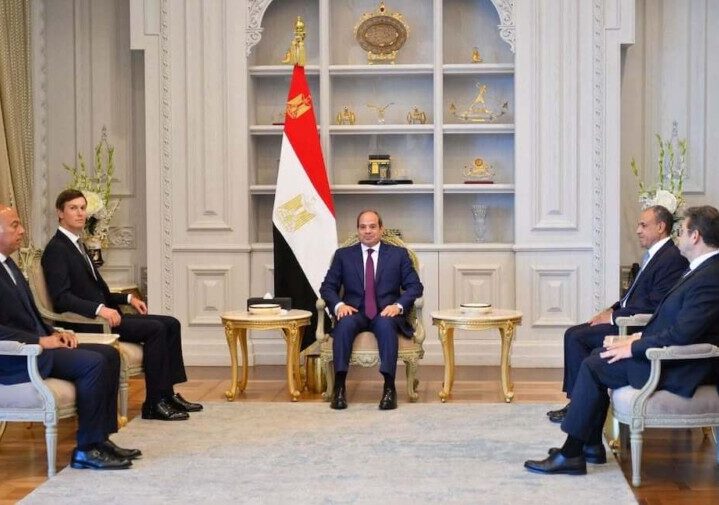
On October 9, 2025, the ceasefire—achieved through Trump’s coercive efforts—allowed both sides to breathe a sigh of relief, as if they had been holding their breath for two years. Palestinians, the direct victims of Israel’s destructive operation, were relieved knowing they would not wake up to bombs and destruction the next morning. Israelis, especially the families of hostages, welcomed the announcement with joy because they would finally be reunited with their loved ones, dead or alive.
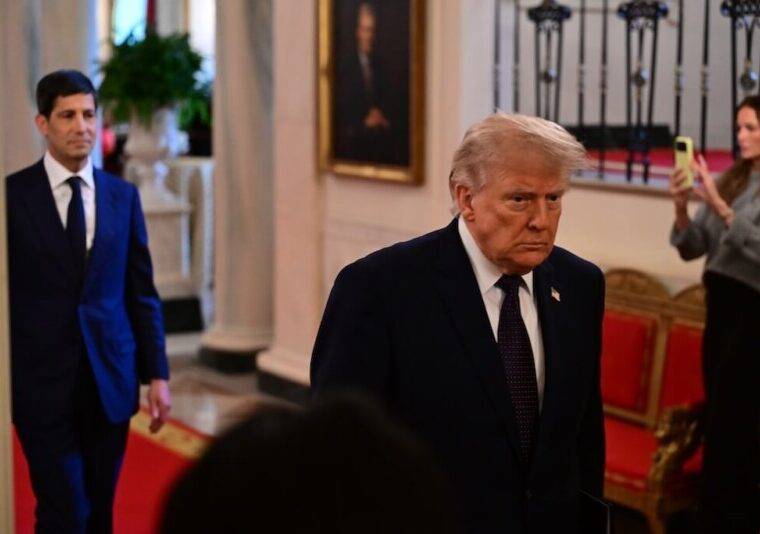
However, the communities’ joy was calm and measured, in keeping with the gravity of their situation. Unfortunately, this dignity was absent from Trump’s speech at the Knesset before the official summit to sign the ceasefire in Egypt. This dignity was absent from Trump himself and the members of parliament present, except for Ayman Odeh and Ofer Cassif. This recklessness, like the two years of systematic destruction, was etched into everyone’s memory.
The ceasefire, release of hostages, exchange of Palestinian prisoners, and diplomatic efforts that culminated in Trump’s Knesset speech undoubtedly provided some relief to Israeli society. However, this relief stemmed from weariness, not peace. For Israelis, the ceasefire was not the end of the war but rather a brief reprieve. It was a period in which traumas, feelings of guilt, and questions of legitimacy were temporarily frozen.
This article discusses three phenomena reflected in the social mirror of the ceasefire: fatigue, legitimacy, and forgetting. Together, these phenomena define Israel’s current state in political and moral terms. Fatigue relates less to the burden of war than to the exhaustion of self-belief. Legitimacy has reached a point at which the government and the concept of the state itself are being questioned. Forgetting functions as a defense mechanism.
The security narrative that initially protected the state’s legitimacy during the military operation against Gaza has gradually given way to a collective sense of exhaustion. According to the latest “Israeli Voice Index” data from the Israel Democracy Institute, 64 percent of the public considers the government’s crisis management to be unsuccessful, and only 46 percent say they trust Netanyahu. This is one of the lowest figures since 2023. The fatigue here is not just physical, but also moral. Living in a constant state of alert has narrowed the horizon of meaning in Israel, both individually and collectively. People no longer know what to believe in, and the criteria for victory, security, and peace have disappeared.
This situation can be understood through the concept of exhaustion politics. When a society lives in a constant state of alarm, politics itself becomes a form of exhaustion. Indeed, over the last two years, war has become the norm rather than the exception. Consequently, many Israelis do not perceive a ceasefire as a respite but as a rehearsal for renewed tension.
The ceasefire marked a turning point that shook the internal balance of the Netanyahu government. Since taking power in December 2022, the government has faced protests from secular segments of society, and its legitimacy was already shaky. Netanyahu tried to portray the destructive operation in Gaza as a unifying force that would rally the nation behind him, but he failed. For the past two years, the same groups have taken to the streets, continuing to protest and demand an end to the war and the return of the hostages. Indeed, after the ceasefire was declared, Steve Witkoff, a U.S. representative, mentioned Netanyahu’s name in his speech to the hundreds of thousands gathered in Hatufim Square in Tel Aviv.
The boos and whistles that followed have become one of the most memorable moments of the prime minister’s long political career. Conversely, the fragmentation within this already highly fragile coalition has weakened Netanyahu’s image as a “savior” leader. Trump’s standing ovations and empty compliments failed to provide Netanyahu with a legitimate basis for writing a heroic narrative, disturbing anyone with a conscience in the process.
However, according to a poll published by the Israeli newspaper Maariv after the ceasefire, the applause and victory speeches will not lead to political success. Although Likud remains the leading party, it will be unable to maintain its coalition majority. Some coalition parties are unlikely to pass the 3.25 percent threshold. Thus, the first polls conducted after the ceasefire predict that the Netanyahu bloc will win 48 to 51 seats in the 120-seat parliament, while the Zionist anti-Netanyahu bloc is expected to secure 57 to 59 seats. Netanyahu’s rhetoric of diplomatic victory is struggling to hold society together.
Some view the potential normalization of relations with Saudi Arabia and Indonesia as a historic opportunity, while others see these moves as a distraction from the Palestinian issue. At this point, legitimacy becomes not only a political concept but also a social belief system. When people lose faith in the state’s moral and political legitimacy, the rhetoric of unity gives way to silent alienation.
For the families of fallen soldiers, activists who refuse to forget their losses, and civil society groups, the ceasefire symbolizes not justice but forgetting. In such an atmosphere, every new diplomatic move is seen as an attempt to restore legitimacy. However, these attempts are becoming less and less credible among certain segments of society.
As Omer Bartov, an Israeli-American historian has noted, Israel’s collective memory is selective. Bartov interprets this as “an existential apology of the state.” In other words, Israel views forgetting as an ideological reflex that ensures the state’s continuity. While the 1948 Nakba meant ethnic cleansing, expulsion, and spatial genocide for Palestinians, Israel viewed it as a process of establishing a regime of forgetting. This process includes destroying villages, renaming cities, and creating an official historical narrative that deliberately erases this period in Palestine’s history. The goal is to erase Palestinians’ spatial memory.
Today, this policy of forgetting has taken on a new form. After the ceasefire, Israeli society wants to forget its traumas and responsibilities. The release of hostages is celebrated as a moral victory, but this victory is overshadowed by the destruction in Gaza and the deaths of thousands of civilians. The visual memory of the war is rapidly fading from the media; the focus is shifting toward concepts such as “reconstruction,” “economic recovery,” and “diplomatic opening.”
This state of denial has become a kind of social self-preservation mechanism. Rather than confronting its responsibilities, Israeli society has chosen to indulge in the warmth of forgetting. However, this approach only brings temporary peace and fosters a lasting sense of injustice. Since October 9, therefore, Israeli society has identified with both guilt and victimhood. It protects itself with a sense of victimhood while suppressing its role as the perpetrator.
Another striking element of public discourse after the ceasefire is the prevalence of silence. Street protests have diminished, the media has softened its tone, and even critical intellectuals have adopted a wait-and-see approach. Nevertheless, it would be unrealistic to call this democratic maturity. It is more likely the result of collective exhaustion.
Israeli society no longer wants to hear grand statements. Words like “victory,” “revenge,” and “peace” have become meaningless. Instead, Israelis are preoccupied with establishing small areas of everyday security. In fact, war fatigue has turned into a political ideology: the desire and discourse of “just let it end.”
Deep down, however, everyone knows that this will never end because forgetting will never bring lasting peace. As Bartov says, “Denial is a form of continuity.” This form of denial postpones, but does not eliminate the Israeli society’s confrontation with its conscience.
The Netanyahu government is trying to offset internal fatigue by achieving successes in foreign policy. However, the systematic destruction caused by the Israeli army in Gaza over the past two years is not seen as a sign of Israel’s righteousness. Rather, it is seen as proof of its disproportionate aggression. The public conscience in many countries, from east to west, has rejected Israel’s narrative of victimhood. It has become apparent that Israel’s hasbara, or public diplomacy, is losing its effectiveness.
Sympathy for Israel has declined, while solidarity with Palestinians has grown, particularly among younger generations. In other words, while Israel may have won militarily, its strategy to win hearts and minds has suffered a major blow. Israel’s diplomatic isolation at the end of the two-year period of genocide is indicative of this. Just as Israel’s rhetoric and influence regarding its legitimacy on the international stage were waning, Trump imposed a ceasefire—perhaps a twist of fate! As with every U.S. president, Trump used his power to shape reality, deciding that the time had come to end the war. Thus, Trump acted as a deus ex machina and saved Israel from itself.
The potential normalization steps with Saudi Arabia and Indonesia mentioned in the post-ceasefire process could yield diplomatic and economic benefits. The main objective, however, is to send the message to the domestic public that “we are not alone.” It should be noted, though, that such agreements’ capacity to generate legitimacy is limited.
Indeed, a significant portion of Israeli society views such initiatives as mere “PR stunts.” Furthermore, far-right parties vehemently oppose any potential concessions. This highlights the growing gap between diplomatic success and social peace. Polls conducted by the Israel Democracy Institute immediately after the ceasefire revealed that only one-third of the public harbors hopes for lasting peace. This data is not merely political; it is also an existential indicator. In other words, Israeli society now struggles to imagine life without war.
Recommended
In light of these thoughts, I don’t view the October 9 ceasefire as the end of the war. Rather, I view it as a suspension of meaning. Today, Israel stands on the threshold of its own trauma and moral blindness. At this juncture, fatigue, legitimacy, and forgetting are intertwined.
Israeli society wants to return to normal, yet it cannot remember what that means. Avoiding confrontation is the catalyst for this. As the saying goes, “The more a society avoids confronting its past, the more fragile its future becomes.” For Israel, the ceasefire merely postpones this confrontation. On the surface, there is an illusion of peace; deep down, however, there is silence and denial. Perhaps the real question is: Can a society achieve peace by forgetting? Or does forgetting merely obscure the moment when peace becomes impossible?

Tuğçe Ersoy-Ceylan graduated from Galatasaray University and continued her studies at the Center for Middle Eastern and Mediterranean Studies at Université Lyon II in France. She received her M.A. degree from the Middle East Studies program at Middle East Technical University (METU) and her Ph.D. from the Middle East Research Institute at Marmara University. In 2015, she conducted field research at the University of Haifa in Israel. In 2022, she was a visiting scholar at the Schusterman Center for Israel Studies at Brandeis University.
Tuğçe Ersoy-Ceylan works as an associate professor in the Department of International Relations at İzmir Kâtip Çelebi University. Her book Conflicting Identities in Israel: Palestinians and Jews was published in 2020. Her edited volume Israel: Identity, Politics, Foreign Policy, Security—the first comprehensive reference book on Israel Studies in Turkish—was published in 2022 and released its second edition in 2025.
You can see how this popup was set up in our step-by-step guide: https://wppopupmaker.com/guides/auto-opening-announcement-popups/

Stay informed by subscribing to
our weekly newsletter.
You can see how this popup was set up in our step-by-step guide: https://wppopupmaker.com/guides/auto-opening-announcement-popups/
You can see how this popup was set up in our step-by-step guide: https://wppopupmaker.com/guides/auto-opening-announcement-popups/
You can see how this popup was set up in our step-by-step guide: https://wppopupmaker.com/guides/auto-opening-announcement-popups/
You can see how this popup was set up in our step-by-step guide: https://wppopupmaker.com/guides/auto-opening-announcement-popups/