India, EU Agree on “The Mother of All Trade Deals”
Brussels expects EU exports to India to double by 2032. Bilateral trade in goods already reached €120 billion ($139bn) in 2024, with services trade accounting for an additional €60 billion ($69bn).
January 28, 2026
I
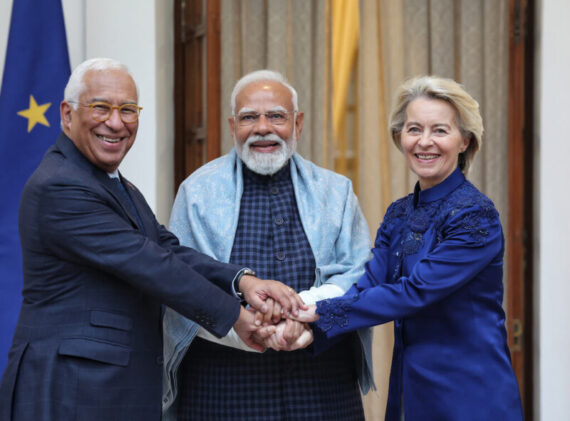
ndia and the European Union have reached a landmark free trade agreement that will create one of the world’s largest economic zones, covering nearly two billion people and accounting for about a quarter of global GDP.
European Commission President Ursula von der Leyen and Indian Prime Minister Narendra Modi announced the deal on Tuesday during von der Leyen’s visit to New Delhi, describing it as a historic breakthrough after nearly two decades of intermittent negotiations.
“We have concluded the mother of all deals,” von der Leyen said in a post on X. “We have created a free trade zone of two billion people, with both sides set to benefit.”
Modi hailed the agreement as a milestone for India and the EU, calling it a source of “many opportunities” for India’s 1.4 billion people and millions across Europe.
According to Indian officials, the agreement will cover roughly 25 percent of global economic output and is expected to significantly boost Indian exports in sectors such as textiles, gems and jewelry, and leather goods.
EU officials described the pact as the most ambitious trade deal India has ever concluded. Under the agreement, tariffs on 96.6 percent of EU goods exports to India will be eliminated or reduced, saving European companies up to €4 billion ($4.74bn) annually in duties.
Key European exports benefiting from tariff reductions include machinery, chemicals, pharmaceuticals, aircraft and spacecraft. Tariffs on cars will be gradually reduced to 10 percent under an annual quota of 250,000 vehicles.
Tariffs on wine, spirits and beer will also be lowered, while duties on fruit juices and processed foods will be eliminated.
Recommended
The deal grants EU service providers enhanced access to India’s market in areas such as financial and maritime services, while India sees Europe as a crucial source of investment and advanced technology.
Brussels expects EU exports to India to double by 2032. Bilateral trade in goods already reached €120 billion ($139bn) in 2024, with services trade accounting for an additional €60 billion ($69bn).
“The EU stands to gain the highest level of access ever granted to a trade partner in India’s traditionally protected market,” von der Leyen said.
The agreement comes amid rising global trade tensions, including US tariffs and Chinese export controls, prompting both India and the EU to diversify economic partnerships.
Formal signing of the deal is expected after legal vetting, a process likely to take five to six months, with implementation anticipated within a year, according to Indian government officials.
Alongside the trade pact, India and the EU also announced the launch of a security and defence partnership, underscoring what both sides described as a growing strategic relationship.
Trade talks between India and the EU were first launched in 2007 but gained renewed momentum in 2022 following Russia’s invasion of Ukraine and shifting global trade dynamics.
(Source: Aljazeera English)

Politics Today is dedicated to publishing insightful analyses in order to understand the changing nature of contemporary politics. It aims to contribute to the sound and constructive discussion of international affairs.
You can see how this popup was set up in our step-by-step guide: https://wppopupmaker.com/guides/auto-opening-announcement-popups/

Stay informed by subscribing to
our weekly newsletter.
You can see how this popup was set up in our step-by-step guide: https://wppopupmaker.com/guides/auto-opening-announcement-popups/
You can see how this popup was set up in our step-by-step guide: https://wppopupmaker.com/guides/auto-opening-announcement-popups/
You can see how this popup was set up in our step-by-step guide: https://wppopupmaker.com/guides/auto-opening-announcement-popups/
You can see how this popup was set up in our step-by-step guide: https://wppopupmaker.com/guides/auto-opening-announcement-popups/