Istanbul Conference Highlights Rising Maritime Energy Risks from Baltic to Black Sea
The two seas, the Baltic and the Black seas, have become “the center of Europe’s strategic map.”
December 4, 2025
O
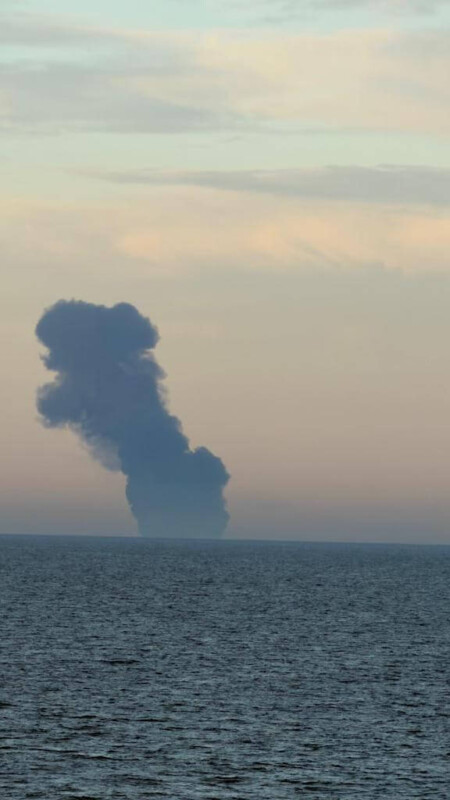
fficials, diplomats, analysts and industry leaders from Türkiye and across Europe convened in Istanbul on Wednesday to assess growing vulnerabilities in two of the continent’s most critical maritime energy regions — the Baltic Sea and the Black Sea — amid escalating hybrid threats and intensifying geopolitical tensions.
The conference, titled “Maritime Dimension of Energy Security in the Baltic Sea and the Black Sea – Shared Challenges, Shared Horizons,” was co-organized by the Embassy of Poland in Ankara, the Polish Consulate General in Istanbul and the Turkish Economic Development Foundation (IKV). Discussions emphasized that Europe’s maritime space has become increasingly contested as both traditional and emerging risks reshape the strategic environment.
Opening the event, IKV Secretary-General Çiğdem Nas underlined the rising strategic importance of maritime domains for regional and global energy security. Her remarks set the tone for a conference focused on the intersecting pressures of hybrid warfare, energy diversification and the accelerated transition away from Russian hydrocarbons.
Poland’s ambassador to Türkiye, Maciej Lang, said security would be one of Poland’s central priorities during its EU Council Presidency between January and July 2026. He highlighted the need to reinforce the resilience of energy supply chains and the protection of critical infrastructure, including undersea cables and pipelines.
“As old friends, solid partners and reliable allies, Poland and Türkiye can contribute significantly to strengthening connectivity and interoperability along NATO’s eastern flank,” Lang said.
IKV Chair Ayhan Zeytinoğlu warned of escalating hybrid activities — from airspace incursions and cyber intrusions to undersea cable disruptions — that have reshaped the threat perceptions of states bordering both seas. He cited recent incidents involving Russian tankers near Türkiye’s exclusive economic zone (EEZ) as “a dangerous escalation.”
In a video message, Gustav Lindstrom, director general of the Council of the Baltic Sea States (CBSS), described the Baltic as “a chessboard for disruptive hybrid operations.” He listed shadow fleets, GPS jamming and cable sabotage as growing concerns, stressing the economic stakes: a single damaged pipeline can cost up to $87 million (€75 million) per day and take months to repair.
Lindstrom also noted that World War II-era munitions continue to complicate offshore wind expansion, illustrating the wide range of non-military hazards affecting the region.
Representing Poland’s Economic Cooperation Department, Rafał Hryniewiecki emphasized the deep and historic nature of Poland–Türkiye relations, describing the partnership as “remarkable and resilient.” He outlined Warsaw’s maritime energy strategy — expanding LNG capacity, scaling offshore wind and strengthening coordination with NATO and the CBSS.
Poland’s new Secure Baltic Act, he said, enhances the Navy and Air Force’s authority to defend essential offshore assets. “Shared risks demand shared responses,” he added.
From the EU Delegation to Türkiye, Maja Urbańska detailed the EU’s tri-pillar Black Sea strategy — resilience, connectivity and environmental protection — including work on a regional Maritime Security Hub combining satellite imagery, vessel tracking and coastal radar. She said the EU is tightening restrictions against the 556 vessels identified as part of Russia’s shadow fleet.
Maciej Filip Bukowski, head of the Energy and Resilience Program at the Casimir Pulaski Foundation, argued that the two seas have become “the center of Europe’s strategic map.”
He warned that threats to pipelines, cables and offshore platforms “are evolving faster than institutional reflexes,” and stressed the strategic interdependence of the Baltic and Black Seas, which together support roughly half of Europe’s energy security.
The first panel, moderated by Karol Wasilewski of the Center for Eastern Studies, explored parallels between the two basins.
Zuzanna Nowak of the Opportunity Institute for Foreign Affairs noted Poland’s growing dependence on Baltic energy infrastructure, now at 48% and projected to surpass 60% as offshore wind and nuclear projects develop. “The Baltic has transformed into the densest energy-infrastructure hub,” she said, warning that a single cable failure could destabilize the entire EU-linked grid.
From Türkiye, Mitat Çelikpala of Kadir Has University said the Black Sea’s vulnerabilities cannot be understood without considering active conflict dynamics. He pointed to Russian interdiction risks, drifting mines, drone warfare and the exposure of ports and pipelines. “Policy for the region cannot be shaped without Türkiye and other littoral actors at the core,” he stressed.
Aylin Ünver Noi of Beykoz University outlined Türkiye’s evolving maritime posture, noting that recent natural gas discoveries now account for 10% of domestic consumption. Protecting subsea assets, she said, is becoming “a top priority” due to the proliferation of naval drones and hybrid operations.
Representing the Polish Institute of International Affairs, Tymon Pastucha described the Baltic as a zone of “continuous hybrid confrontation,” where Russia uses shadow fleets, cyber tools and autonomous drones to raise insurance costs, disrupt investments and sustain uncertainty.
Recommended
A second panel, moderated by Daniel Piekarski from Poland’s Foreign Ministry, examined best practices for safeguarding LNG routes, offshore wind platforms and subsea cables.
Pınar İpek of TOBB University highlighted global chokepoints such as the Bab el-Mandeb strait and the Suez Canal, warning of bottlenecks as Europe accelerates its transition away from Russian gas. She predicted that Black Sea states may eventually shift from gas corridors to green electricity exports via subsea cables extending from the Caspian basin.
Cybersecurity was identified as an increasingly urgent concern. Özgün Erler Bayır of Istanbul University said maritime cyber resilience remains under-addressed despite past incidents like the 2017 NotPetya attacks. Even minor intrusions, she warned, can trigger cascading disruptions in global energy markets.
Energy analyst Wojciech Jakóbik urged Europe to prepare for deliberate escalation scenarios targeting offshore assets. Poland’s resilience, he said, rests partly on its long-term LNG diversification strategy extending to 2043.
From Türkiye’s private sector, Cansu Ünal Ongören of Reges Elektrik stressed that offshore wind investment requires at least 15 years of predictable security. She advocated more AI-driven maritime monitoring: “The sea is a more unknown space than land, so early detection is crucial.”
Experts also highlighted gaps in current international law. İpek noted that despite the 1988 SUA Convention and its 2005 protocol, recent UN Security Council debates show the Law of the Sea remains insufficient for countering hybrid threats to subsea energy assets.
Across all sessions, speakers delivered a unified message: the Baltic and Black Seas have become central not only to Europe’s energy security but also to its most vulnerable geopolitical frontlines.
As Ambassador Lang summarized, the discussions should “spark new ideas and contribute to valuable recommendations” as Türkiye, Poland and their European partners work to protect maritime energy corridors stretching from the Baltic to the Black Sea — corridors whose security is increasingly tied to Europe’s political and economic stability.
(Source: Anadolu Agency)

Politics Today is dedicated to publishing insightful analyses in order to understand the changing nature of contemporary politics. It aims to contribute to the sound and constructive discussion of international affairs.
You can see how this popup was set up in our step-by-step guide: https://wppopupmaker.com/guides/auto-opening-announcement-popups/

Stay informed by subscribing to
our weekly newsletter.
You can see how this popup was set up in our step-by-step guide: https://wppopupmaker.com/guides/auto-opening-announcement-popups/
You can see how this popup was set up in our step-by-step guide: https://wppopupmaker.com/guides/auto-opening-announcement-popups/
You can see how this popup was set up in our step-by-step guide: https://wppopupmaker.com/guides/auto-opening-announcement-popups/
You can see how this popup was set up in our step-by-step guide: https://wppopupmaker.com/guides/auto-opening-announcement-popups/