Japan Moves to Defuse Diplomatic Spat with China Over Taiwan

November 17, 2025

Chinese Consul General in Osaka, Xue Jian, posted — and then deleted — a social-media message declaring that “the dirty neck that sticks itself in must be cut off,” prompting Japan to lodge an official protest and summon China’s ambassador.
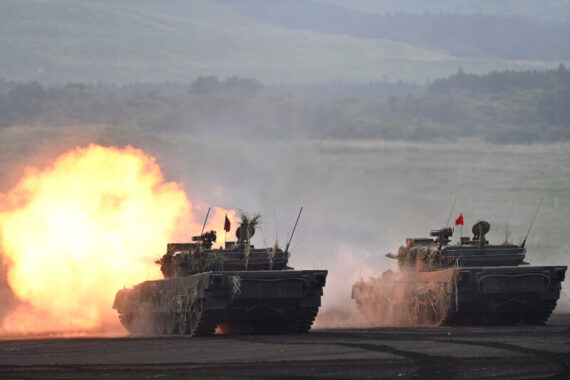
Japanese Self-Defense Forces soldiers take part in an annual military exercise at the Gotenba training ground, beneath Mount Fuji on June 8, 2025, in Gotenba, Shizuoka Prefecture, Japan. Amid rising regional tensions, driven by China’s growing assertiveness, North Korea’s continued ballistic threats, and strategic uncertainty surrounding Taiwan, Japan is steadily shifting its defense posture. Photo by Anadolu Images.

J

apan is scrambling to contain a rapidly escalating dispute with China after comments by Prime Minister Sanae Takaichi about the possible use of military force in a Taiwan conflict triggered a fierce backlash from Beijing, rattling markets and raising fears of deeper geopolitical instability in East Asia.

The diplomatic row erupted after Takaichi told lawmakers earlier this month that a Chinese attack on Taiwan that threatened Japan’s survival could, under existing security laws, pave the way for a Japanese military response. The remarks, unusually explicit for a Japanese leader, touched one of the most sensitive nerves in regional politics: Japan’s potential involvement in a cross-strait conflict.

Previous Japanese administrations have avoided publicly discussing the circumstances under which Japan might intervene, wary of provoking China, which claims Taiwan as part of its territory. But Takaichi, who became Japan’s first female prime minister in 2025 and has taken a firmer security stance than her predecessors, insisted she was simply describing a scenario already embedded in Japan’s legal framework.

“Strategic recklessness”

Beijing, however, reacted sharply. China’s foreign ministry accused Tokyo of “strategic recklessness” and warned Japan against “dangerous provocations.” Its Consul General in Osaka, Xue Jian, posted — and then deleted — a social-media message declaring that “the dirty neck that sticks itself in must be cut off,” prompting Japan to lodge an official protest and summon China’s ambassador.

The rift deepened last week when China issued an unusually blunt travel warning urging its citizens to avoid travel to Japan due to “security risks.” Japanese officials said the advisory had no factual basis and risked undermining the “mutually beneficial strategic relationship” that both countries publicly committed to restore during recent high-level exchanges.

In an effort to de-escalate tensions, Japan is dispatching Masaaki Kanai, director general of the Foreign Ministry’s Asia and Oceania bureau, to Beijing this week. According to Japanese media, Kanai will clarify that Takaichi’s remarks do not reflect a change in Japan’s security policy and will call on Chinese officials to refrain from steps that further damage the relationship.

“Various channels of communication are open,” Chief Cabinet Secretary Yoshimasa Hayashi told reporters on Monday. He added that China’s travel warning was “incompatible” with the direction both governments had agreed to pursue.

The Group of 20 summit in South Africa

Takaichi may also have an opportunity to speak directly with Chinese Premier Li Qiang during the Group of 20 summit in South Africa later this week—an encounter that could determine whether the diplomatic freeze begins to thaw or hardens further.

Taiwan’s newly inaugurated president, Lai Ching-te, waded into the dispute on Monday, urging China to “exercise restraint” and accusing Beijing of launching a “multifaceted attack” on Japan. Taiwan, located just over 110 kilometers from Japan’s southwestern islands and surrounded by key shipping routes, sits at the centre of Japan’s strategic concerns.

Japan also hosts the largest concentration of U.S. military forces outside the United States, making the country a critical forward base in any potential conflict over Taiwan. Washington has so far limited itself to pointed but measured comments. U.S. Ambassador to Japan George Glass criticised Xue’s remarks on social media, calling them “unprofessional” and adding over the weekend that the episode should now be put to rest.

But the rhetoric from China has continued to intensify. On Friday, Beijing warned that Japan would face a “crushing” defeat if it intervened militarily in a Taiwan war, and criticized Tokyo’s “ambiguity” on its longstanding pledge not to possess or host nuclear weapons. A recent Reuters investigation found growing political debate in Japan over potentially revising that pledge, long considered taboo in the country that suffered the world’s only wartime atomic bombings.


The Senkaku Islands

Tensions spilled onto the seas on Sunday when a formation of Chinese coast guard vessels sailed through waters near the Senkaku Islands — known as the Diaoyu in China — a contested chain in the East China Sea. Japan said its coast guard drove the ships away, echoing a pattern of maritime confrontations that have surged since Japan nationalised the islands in 2012.

The diplomatic fight is already having economic repercussions. Analysts warn that if Chinese tourist arrivals were to fall by 25% — the scale seen during the 2012 Senkaku dispute — Japan could face a significant shock. Takahide Kiuchi of the Nomura Research Institute said such a decline would dampen growth by “more than half of Japan’s annual expansion.”

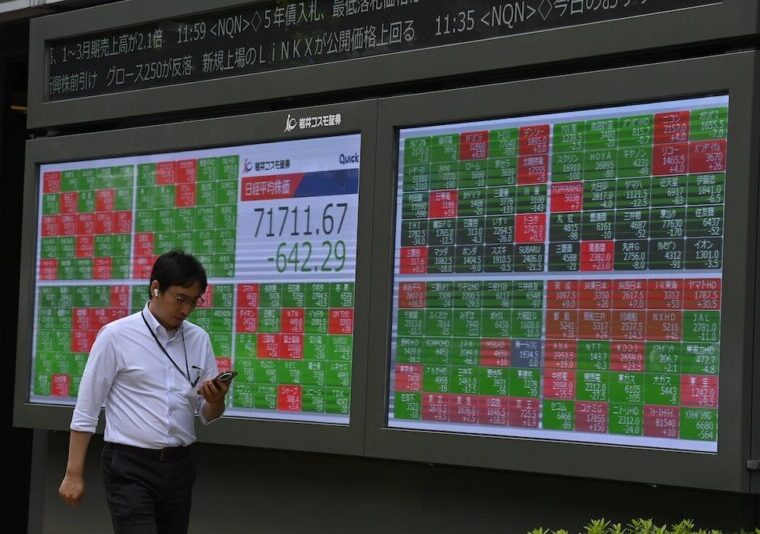
Investors braced for that possibility on Monday. Shares of tourism-sensitive companies slumped, with department store chain Isetan Mitsukoshi plunging more than 10% in early trading and Japan Airlines falling over 4%. Retail and leisure stocks also slid amid fears of a prolonged downturn in Chinese visitor numbers, a key pillar of Japan’s post-pandemic economic recovery.

While both Tokyo and Beijing say they want stable relations, their worsening dispute over Taiwan underscores how quickly East Asia’s strategic environment can deteriorate. With China increasing military pressure on Taiwan and Japan adopting a more assertive defense posture, the diplomatic turbulence may prove difficult to reverse — unless both sides seize upcoming opportunities to step back from the brink.

(Source: Reuters)

Politics Today is dedicated to publishing insightful analyses in order to understand the changing nature of contemporary politics. It aims to contribute to the sound and constructive discussion of international affairs.