T
aiwan’s President Lai Ching-te announced on Thursday that the island is fast-tracking development of a new “T-dome” missile defense network, a system designed to intercept high-altitude threats amid escalating military pressure from China.
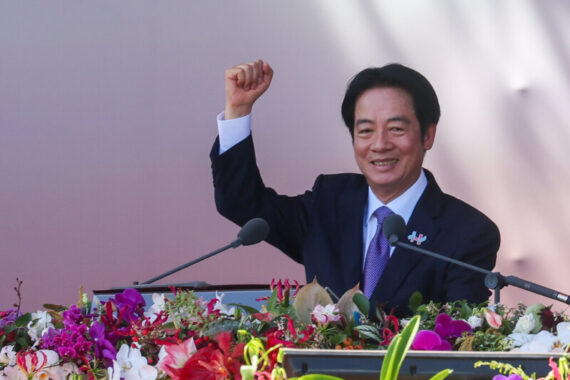
Delivering his National Day address in Taipei, Lai described the project as a “multi-layered safety net” capable of detecting and neutralizing incoming missiles. He said the initiative was central to his government’s broader effort to boost defense spending and strengthen Taiwan’s domestic defense industry.
“Increasing defense investment is both a clear necessity to counter enemy threats and a driving force for developing our own defense industries,” Lai said, pledging to raise military expenditure to 5 percent of GDP by 2030.
The “T-dome” concept — widely viewed as a nod to Israel’s Iron Dome — is expected to integrate a range of missile systems and radar technologies capable of intercepting targets at multiple altitudes.
While Lai offered few technical details, Taiwan’s defense ministry last month unveiled a new indigenous air defense missile designed to hit medium-range ballistic targets and reach higher altitudes than the U.S.-made Patriot batteries currently in service.
Responding to a rising threat
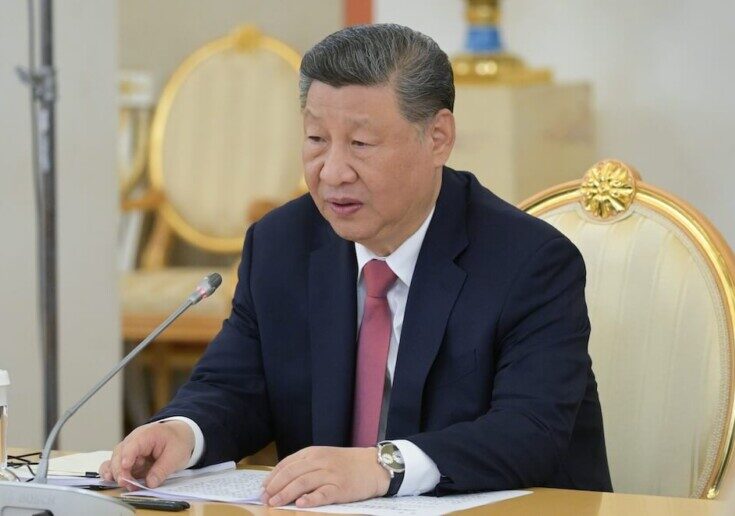
The acceleration of the missile shield comes as U.S. and regional defense experts warn that Beijing is preparing to achieve full military capability to attack or blockade Taiwan by 2027, following orders reportedly issued by President Xi Jinping.
China, which claims Taiwan as part of its territory, has repeatedly vowed to take the island by force if Taipei indefinitely resists unification. Lai reiterated in his speech that China must act as a “responsible great power” and “renounce the threat of force to change the status quo.”
Referencing the lessons of the Second World War, Lai said the world must ensure that such suffering is never repeated, while affirming Taiwan’s resolve to “preserve peace through strength.”
Beijing’s reaction and regional context
In previous years, similar remarks by Lai have provoked military responses from Beijing. After he described China as a “foreign hostile force” in March, the People’s Liberation Army (PLA) launched extensive drills encircling Taiwan, involving live-fire exercises and naval patrols around the island.
A Taiwan defense ministry report published Thursday detailed Beijing’s expanding use of cyberattacks, cognitive warfare, and joint combat readiness patrols, describing them as part of a “comprehensive threat” campaign against the island.
The report also warned of China’s increasing ability to conduct targeted strikes designed to pressure Taiwan into political concessions without triggering a full U.S. military response.
U.S. and diplomatic reactions
A foreign diplomat in Taipei told reporters that Lai’s speech appeared aimed in part at reassuring the Trump administration, which has pressed U.S. allies and partners in Asia to take greater responsibility for their own defense.
“Lai’s message sends a clear signal to Washington that Taiwan is investing heavily in deterrence,” the diplomat said, adding that the president had “avoided inflammatory rhetoric” — a likely relief to both Washington and Beijing ahead of a possible Xi-Trump meeting later this month.
Taiwan’s 2026 defense budget, presented in August, allocates 3.3 percent of GDP to military spending — a record figure that includes major investments in missile production, radar systems, and cybersecurity.
Lai said these efforts are part of a long-term vision to make Taiwan more self-reliant in defense technology. “The future of our security lies in our own hands,” he told the crowd gathered outside the Presidential Office in Taipei.
Recommended
Balancing deterrence and diplomacy
While details of the T-dome missile network remain under wraps, analysts say its multi-layered structure will likely link early-warning radar with mobile launchers and interception batteries, forming a defensive dome over key urban and military zones.
“Taiwan is clearly preparing for a more contested future,” said Dr. Mei-ling Wu, a defense analyst at National Chengchi University. “The T-dome concept signals not only technological innovation but also strategic independence.”
Despite growing military investments, Lai emphasized that Taiwan’s goal remains peaceful coexistence. “We do not seek confrontation,” he said. “But we will never surrender our freedom or democracy.”
Beijing has not yet officially responded to Lai’s latest remarks, though state media in China routinely labels him a “separatist.”
For now, Taipei appears to be moving swiftly to reinforce its defenses while maintaining delicate diplomatic balance — preparing for the worst, while hoping for peace.
(Source: The Financial Times)