Lebanon: Between Normalization and Confrontation with Israel
Once Lebanon has crafted a defense agreement with Turkey, it should negotiate with Hezbollah, offering the group clear political guarantees in exchange for disarmament.
September 23, 2025
T
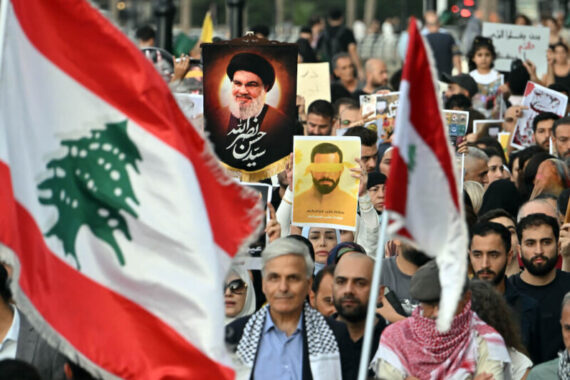
he U.S. is pushing for Hezbollah’s disarmament. In May, Yechiel Leiter, the Israeli ambassador to the United States, said he believes Syria and Lebanon could join the Abraham Accords and normalize relations with Israel before Saudi Arabia does, as war last year changed the power balance and greatly weakened Hezbollah.
The U.S. supposedly has big plans for Lebanon once Hezbollah is gone. The alleged plan includes an economic zone in the south and a joint defense agreement. However, the details of this economic zone are still unknown, including whether it will resemble the Gaza Riviera or be something else entirely. Regardless of American ambitions for Lebanon, now is definitely not the time for normalization with Israel.
Any talk of normalization could create unrest and threaten the fragile coexistence among Lebanon’s different sects. The best possible outcome that would satisfy both Israel and Lebanon and receive the approval of regional powers is a non-aggression pact. Such a treaty would not endanger the fragile entente between Lebanon’s different factions and would provide the necessary security guarantees for both Lebanon and Israel.
To have a stable and prosperous country, Lebanon must ensure the following, in addition to structural and administrative reforms of state institutions: 1) Hezbollah and other groups must surrender their arms to the state to establish its authority.
2) Israel must withdraw from Lebanon, including the five points.
3) Israel must stop attacking Lebanon.
4) The reconstruction of the south must be initiated under state control. To achieve these objectives, Lebanon must negotiate with Israel.
However, Lebanon faces a problem: it has no leverage, while Israel has all of it. Lebanon needs leverage; otherwise, it will not be able to negotiate. Although Hezbollah undermined the state, it deterred Israel. Hezbollah created some leverage, though it was not controlled by the Lebanese state. Now, given the imbalance of power, Lebanon needs to acquire leverage before negotiating with Israel. This leverage can be acquired by forming the right alliances.
Similarly to Syria, Lebanon should seek a defense treaty with Turkey. The treaty will likely be accepted domestically. The pro-Iran domestic faction will accept it because they see it as a balancing factor against American influence and as potential protection from Israeli bombs. The “sovereign” factions in the Saudi camp are also likely to accept it if they receive approval from Saudi Arabia. Saudi Arabia could acquiesce because such a treaty would contribute to stability in Lebanon and Syria.
Turkey’s defense cooperation agreements with various countries have ranged from broad memorandums of understanding, such as those with Oman and Kuwait, which revolve around training and equipping, to more assertive engagements, such as the agreement with Qatar, where Turkey has a base and deploys soldiers. A general MOU with Turkey could give Lebanon the flexibility and leverage necessary to negotiate with Israel. Israel does not want Turkey, a NATO country, to deploy troops on its border. Therefore, Lebanon could use this leverage to negotiate with Israel, secure a withdrawal, and prevent an Israeli attack.
Recommended

Once Lebanon has crafted a defense agreement with Turkey, it should negotiate with Hezbollah, offering the group clear political guarantees in exchange for disarmament. Hezbollah can continue operating as a political group as long as it relinquishes its arms and affirms its status as a Lebanese party, not an extension of the Islamic Revolutionary Guard Corps (IRGC). The Lebanese government should pair Hezbollah’s commitment with a clear verification mechanism.
The Lebanese army has already presented a disarmament plan, which the Lebanese government agreed to on September 5. However, the disarmament plan was not coupled with any political settlement or guarantees for the group. Either the plan will be executed by force, leading to a clash, or it will not be executed, leading to more American pressure on the fragile state. This is why the state should seek an agreement with Hezbollah.
Once an agreement is reached with the group, the Lebanese state should lobby regional powers for their support in pressuring Israel. This pressure, coupled with the backing that Lebanon could receive from a defense agreement with Turkey, would make Lebanon eligible to negotiate with Israel.
This will give Lebanon agency when negotiating with Israel. Thus far, the Lebanese state has delegated the U.S. to negotiate with Israel on its behalf. Domestically, the state has been unable to put any real pressure on Hezbollah, nor has it been in a position to offer Hezbollah any guarantees. Any of the suggestions start with the Lebanese state having the political will to show agency and start making decisions.

Dr. Dania Koleilat Khatib is a specialist in U.S.-Arab relations with a focus on lobbying. She is co-founder of the Research Center for Cooperation and Peace Building, a Lebanese nongovernmental organization focused on Track II diplomacy. She is a weekly columnist for Arab News.
You can see how this popup was set up in our step-by-step guide: https://wppopupmaker.com/guides/auto-opening-announcement-popups/

Stay informed by subscribing to
our weekly newsletter.
You can see how this popup was set up in our step-by-step guide: https://wppopupmaker.com/guides/auto-opening-announcement-popups/
You can see how this popup was set up in our step-by-step guide: https://wppopupmaker.com/guides/auto-opening-announcement-popups/
You can see how this popup was set up in our step-by-step guide: https://wppopupmaker.com/guides/auto-opening-announcement-popups/
You can see how this popup was set up in our step-by-step guide: https://wppopupmaker.com/guides/auto-opening-announcement-popups/