NATO Chief Dismisses Concerns over US Commitment to Ukraine
The Trump administration is expected to unveil its updated troop plans for Europe in early 2026.
December 5, 2025
N
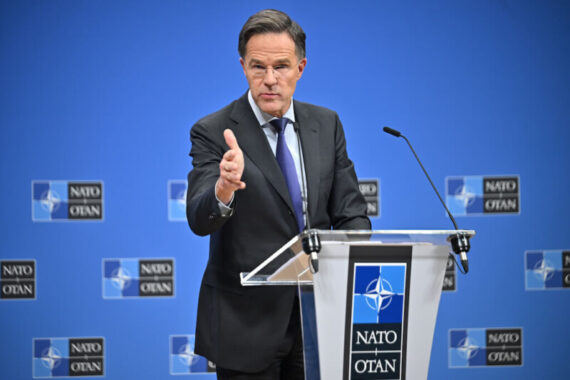
ATO Secretary-General Mark Rutte on Tuesday rejected renewed concerns about the United States’ long-term commitment to the alliance, saying Washington remains engaged despite U.S. Secretary of State Marco Rubio’s expected absence from a key meeting of allied foreign ministers.
The Brussels gathering on Wednesday comes at a critical moment for the 32-member alliance, as Russia’s war on Ukraine approaches its fourth year and high-stakes negotiations continue in Moscow and across Europe about Kyiv’s political and territorial future.
Rubio will not attend the meeting, an unusual move given Washington’s central leadership role in NATO. His absence follows U.S. President Donald Trump’s 28-point draft proposal for ending the war, which unsettled European allies last month by suggesting Ukraine would not join NATO and that the alliance would halt further expansion.
Speaking to reporters, Rutte sought to calm fears, stressing that the top U.S. diplomat’s schedule is overloaded.
“He’s working extremely hard to take care not only of the situation in Ukraine, but many other issues which are on his plate,” Rutte said. “I totally accept him not being able to be here tomorrow, and I would not read anything in it.”
A senior U.S. State Department official, speaking anonymously, echoed that view, saying Rubio had already held dozens of engagements with NATO counterparts this year and that it is “impractical” to expect his presence at every meeting.
Deputy Secretary of State Christopher Landau will represent Washington instead, and is expected to press allies to meet the Trump administration’s demand that all NATO members spend 5% of their GDP on defense — a sharp increase from the current 2% guideline.
Trump’s initial peace plan suggested a freeze on NATO enlargement and excluded Ukraine from eventual membership — despite repeated alliance commitments that Kyiv has a place in NATO once conditions allow.
Rutte acknowledged the political reality: “Right now, as you know, there is no consensus on Ukraine joining NATO,” he said, noting opposition not only from the Trump administration but from Hungary and Slovakia.
Still, he insisted that Ukraine remains on an “irreversible path” toward eventual membership, as NATO leaders affirmed at their 2024 Washington summit.
The NATO chief also said controversial elements of Trump’s early proposals have been revised significantly following European input.
“You need to start somewhere. You need to have proposals on the table,” Rutte said, adding that NATO-related issues in any future settlement “will be dealt with separately, and that obviously will include NATO.”
The upcoming foreign ministers’ meeting takes place as European officials warn that Russian President Vladimir Putin could threaten another European country within three to five years if Moscow prevails in Ukraine.
European leaders view Russia’s invasion as an existential threat, and fear that uncertainty over U.S. leadership and NATO unity risks undermining deterrence at a decisive juncture.
The Trump administration maintains that European allies must shoulder greater responsibility for their regional security, especially as Washington reorients part of its strategic focus toward challenges in the Asia-Pacific.
Recommended
Concerns about a potential U.S. military drawdown have intensified. Romania announced in October that the United States would reduce its troop presence there by up to 3,000 personnel as part of a broader global force review.
The administration is expected to unveil its updated troop plans for Europe in early 2026.
Trump has also unsettled NATO officials with recent remarks describing the alliance in transactional terms — emphasizing U.S. arms sales to member states and implying that Washington stands somewhat apart from the organization it has led for 75 years.
“We’re selling a lot of weapons to NATO, and that’s going, I guess, to Ukraine for the most part,” Trump said during an October meeting with Finnish President Alexander Stubb. “That’s up to them, but they’re buying weapons from the U.S.”
Wednesday’s session in Brussels will center on strengthening support for Ukraine, coordinating deterrence measures across NATO’s eastern flank, and assessing the long-term security implications of the war.
Rutte underscored that the alliance remains united despite political pressures on both sides of the Atlantic.
“At this pivotal moment, NATO’s strength lies in its shared commitment,” he said. “The work continues, with or without any single individual at the table.”
(Source: The Associated Press)

Politics Today is dedicated to publishing insightful analyses in order to understand the changing nature of contemporary politics. It aims to contribute to the sound and constructive discussion of international affairs.
You can see how this popup was set up in our step-by-step guide: https://wppopupmaker.com/guides/auto-opening-announcement-popups/

Stay informed by subscribing to
our weekly newsletter.
You can see how this popup was set up in our step-by-step guide: https://wppopupmaker.com/guides/auto-opening-announcement-popups/
You can see how this popup was set up in our step-by-step guide: https://wppopupmaker.com/guides/auto-opening-announcement-popups/
You can see how this popup was set up in our step-by-step guide: https://wppopupmaker.com/guides/auto-opening-announcement-popups/
You can see how this popup was set up in our step-by-step guide: https://wppopupmaker.com/guides/auto-opening-announcement-popups/