A
merican President Donald Trump’s newly announced 20-point plan to end Israel’s genocide in Gaza and release hostages has sparked mixed reactions across the Middle East, with key regional allies backing its ceasefire goals but rejecting elements that were not part of their proposals.
The announcement came just days after Trump publicly declared that he would not allow Israel to annex the West Bank, a statement marking one of his sharpest breaks with Israeli Prime Minister Benjamin Netanyahu since returning to office.
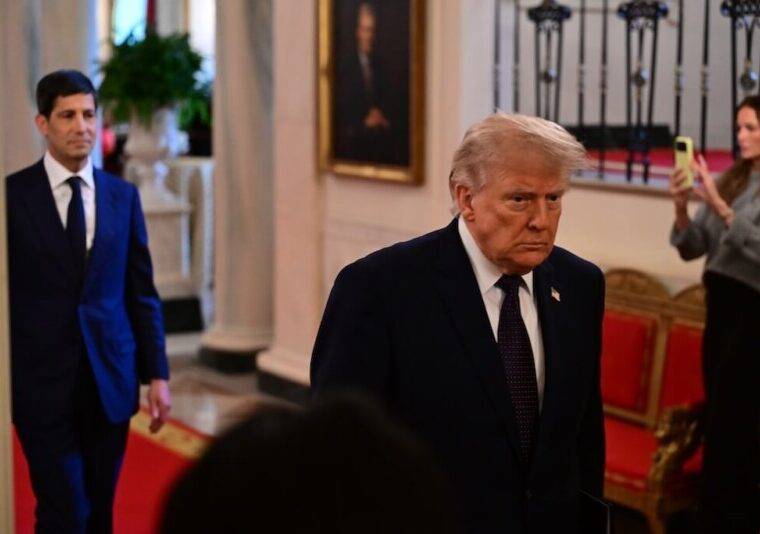
“I will not allow Israel to annex the West Bank. It’s not going to happen,” Trump said on Thursday at the White House, calling the idea a “red line” opposed by Arab and Muslim leaders. “It’s been enough. It’s time to stop now,” he added, saying he had personally discussed the issue with Netanyahu.
Trump made the pledge during a closed-door meeting on the sidelines of the UN General Assembly in New York, where leaders and senior officials from Saudi Arabia, the United Arab Emirates, Qatar, Egypt, Jordan, Türkiye, Indonesia, and Pakistan met with him to discuss a framework for peace in Gaza.
The 20-point “board of peace” plan
On Monday, Trump formally unveiled what he called the “Principles for Peace”, a 20-point plan intended to halt Israel’s nearly two-year genocide in Gaza and secure the release of all hostages. The proposal, which Trump described as the product of “extensive consultation with friends and partners throughout the region,” was announced at a joint press conference with Netanyahu at the White House.
Under the plan, hostilities would end immediately upon acceptance by both parties. Israeli forces would withdraw to agreed positions, and all military operations would be frozen pending the implementation of a phased ceasefire. Within 72 hours, all hostages — both living and deceased — would be returned, and Israel would in turn release 250 life-sentence prisoners and 1,700 Gazans detained after Oct. 7, 2023.
Hamas members who agree to disarm and “commit to peaceful co-existence” would receive amnesty, while those wishing to leave Gaza would be granted safe passage to third countries.
During the announcement, Netanyahu reiterated Israel’s opposition to a Palestinian state, calling recognition of one “a mistake.” Trump appeared to agree, saying some European allies had “foolishly recognized the Palestinian state” out of fatigue rather than strategy.
Reactions: support and skepticism
Reactions to Trump’s initiative have been cautious. While Arab leaders welcomed the effort to stop the bloodshed, several signaled unease over key details.
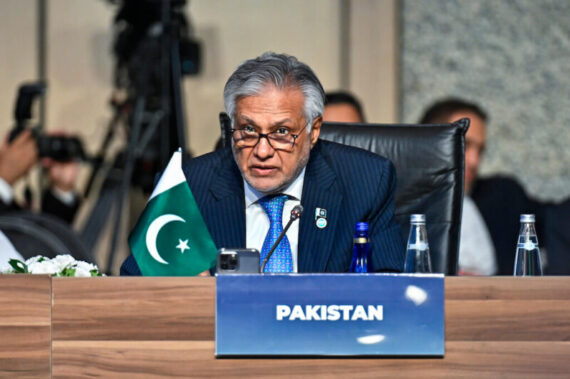
Pakistan’s top diplomat Ishaq Dar told reporters on Tuesday that the plan released by the White House was “not our document.”
“This is not our document, which we sent to them. There are some key areas that we want covered. If they are not covered, they will be covered,” Dar said at a news conference in Islamabad. He emphasized that the joint Muslim proposal prioritized “a ceasefire, humanitarian aid, and an end to forced displacement.”
Dar said the eight Muslim nations — Türkiye, Pakistan, Saudi Arabia, Qatar, the UAE, Egypt, Jordan, and Indonesia — were committed to continuing diplomatic coordination, even if differences remained.
Later, speaking to Geo News, Dar reiterated that the published U.S. version “does not include all of our proposals,” adding that Islamabad would continue discussions to ensure their priorities were incorporated.
His comments echoed concerns voiced by Qatari Prime Minister Sheikh Mohammed bin Abdulrahman Al Thani, who told Al Jazeera that Trump’s plan achieved “a key objective by ending the war” but that “some issues require clarification and negotiation.”
“We hope everyone will look at the plan constructively and seize the opportunity to end the war,” Al Thani said, noting that Doha had not yet received Hamas’s response.

Recommended
Mounting pressure on Israel
Trump’s initiative comes amid mounting international pressure on Israel to halt its offensive, which has left over 66,000 Palestinians killed, most of them women and children, since October 2023. Gaza’s infrastructure has been devastated, and widespread famine and disease have taken hold, according to the UN.
For months, global outrage over civilian suffering and the displacement of millions has forced Washington to recalibrate its public stance, even as the U.S. continues to provide Israel with military and diplomatic backing.
Arab and Muslim leaders, while wary of Trump’s political motives, see the plan as a potential opening to reassert their influence over a post-war Gaza — provided it does not compromise Palestinian sovereignty or legitimize Israeli control.
As one senior Arab diplomat told regional media, “If Trump wants to be the chair of peace, he must first prove he can deliver justice.”
(Source: Anadolu Agency)