Report: Trump Draws Red Line on Israeli Annexation of West Bank
Analysts say Trump’s declaration that he will not allow Israel to annex the West Bank could reshape the dynamics of Middle East diplomacy if followed by concrete U.S. action.
September 26, 2025
P
resident Donald Trump said on Thursday that he would not allow Israel to annex the West Bank, setting a clear “red line” as Arab and Muslim leaders intensify diplomatic efforts to end the nearly two-year-long war in Gaza.
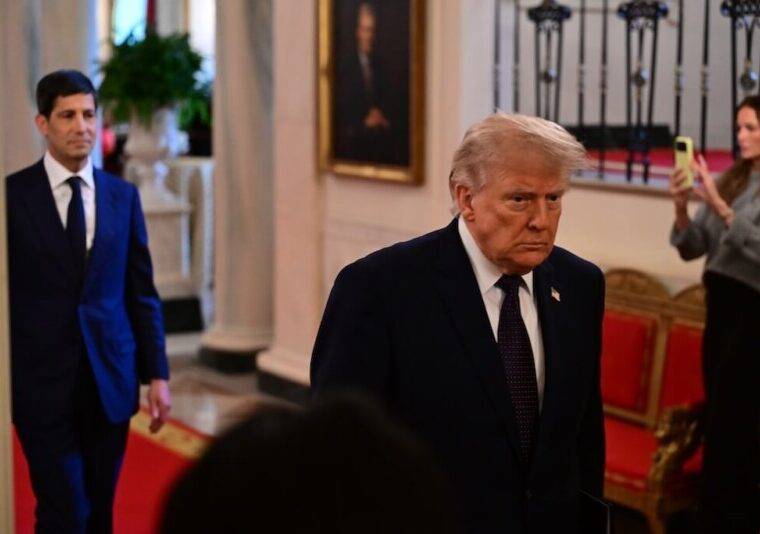
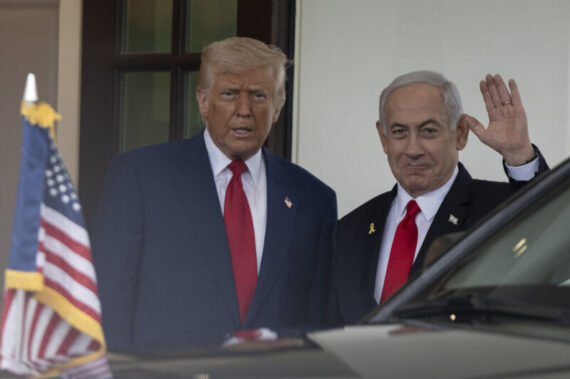
“I will not allow Israel to annex the West Bank. I will not allow it. It’s not going to happen,” Trump told reporters at the White House, emphasizing that he had conveyed his stance directly to Israeli Prime Minister Benjamin Netanyahu. “It’s been enough. It’s time to stop now,” he said.
The remarks came just days after Trump met Arab and Muslim leaders on the sidelines of the United Nations General Assembly in New York, where he pledged that the United States would oppose any Israeli move to formally annex Palestinian territories. According to Politico, the meeting produced a 21-point plan for achieving a ceasefire in Gaza and establishing a new, non-Hamas administration to govern the territory.
Leaders and senior officials from Saudi Arabia, the United Arab Emirates, Qatar, Egypt, Jordan, Turkey, Indonesia, and Pakistan attended the closed-door meeting with Trump. Arab diplomats have long viewed the prevention of Israeli annexation of the West Bank as a non-negotiable demand — or, as Emirati officials described it, a “red line” — in any future regional framework for peace.
Trump’s commitment marks one of the strongest U.S. statements yet on the matter since the outbreak of the Gaza genocide in 2023. It also represents a significant political gamble for Trump, who has long maintained close ties with Netanyahu and once endorsed Israel’s sovereignty over the Golan Heights during his first term.
But facing mounting international criticism over Israel’s conduct in Gaza and increasing pressure from Arab allies, the U.S. administration now appears to be recalibrating its approach. “The president understands that the war in Gaza and the idea of annexation are destabilizing the region,” a senior U.S. official familiar with the talks said. “This is about preventing an even larger regional conflict.”
Despite Trump’s assurances, progress toward a ceasefire remains slow. The Politico report, citing sources familiar with the discussions, said negotiators were “nowhere close” to a breakthrough, with both Israel and Hamas refusing key conditions demanded by the other side.
Under the Arab leaders’ proposal, Israel would commit not to annex or occupy parts of Gaza, not to expand settlements in the West Bank, and to respect the current status quo at Jerusalem’s Al-Aqsa Mosque compound. In exchange, Arab states would work to support a postwar governing body in Gaza that excludes Hamas but includes representatives of the Palestinian Authority and technocrats backed by regional governments.
The plan also calls for an immediate and large-scale increase in humanitarian aid to Gaza, where the situation has reached critical levels. According to United Nations data, over 66,000 Palestinians have been killed since the start of the genocide, while more than 2 million remain displaced and dependent on emergency assistance.
The humanitarian situation in Gaza continues to deteriorate as genocide continues into its 23rd month. Aid agencies have warned of mass starvation, the collapse of medical infrastructure, and what some international legal experts have described as “genocidal conditions.”
The International Criminal Court (ICC) and the International Court of Justice (ICJ) have both received submissions alleging war crimes and possible crimes against humanity committed during the Gaza genocide by Israel. Several human rights organizations have urged the U.S. and other major powers to use their leverage to bring about a ceasefire and prevent further escalation.
Speaking alongside Turkish President Recep Tayyip Erdoğan at the White House earlier Thursday, Trump said his administration was working closely with regional partners to secure both a ceasefire and the release of Israeli hostages held by Hamas. “We’re close to getting some kind of a deal done,” Trump said. “We want to get the hostages back — we want them all back at one time.”
Recommended
Trump’s remarks are likely to draw sharp criticism from Netanyahu’s right-wing coalition, many of whose members have openly called for extending Israeli sovereignty over parts of the West Bank. Israeli officials have yet to formally respond to the president’s comments, but senior members of Netanyahu’s Likud party have previously rejected any limits on settlement expansion.
For years, annexation has been a rallying cry among hardline Israeli politicians, who argue that the West Bank — which Israel captured in 1967 — is an integral part of the Jewish homeland. Palestinians, backed by the majority of the international community, consider the territory part of a future independent state.
While Trump’s earlier policies were seen as heavily pro-Israel, his latest statements indicate a desire to balance U.S. support for Israel with the need to preserve ties with Arab allies and manage escalating global outrage over the war in Gaza.
Analysts say Trump’s declaration could reshape the dynamics of Middle East diplomacy if followed by concrete U.S. action. “It’s a pivotal moment,” said Maha Khalil, a regional affairs expert at Georgetown University. “If Trump enforces this red line, it may restore some U.S. credibility among Arab and Muslim nations that have grown disillusioned by Washington’s one-sided approach.”
Still, skepticism remains. “Words are not enough,” said Khalil. “Arab leaders will be watching closely to see if the U.S. can translate this pledge into meaningful pressure on Israel.”
As the Gaza genocide grinds on, the road to peace remains uncertain. Yet Trump’s statement — that he will not allow Israeli annexation of the West Bank — may signal the beginning of a new phase in U.S. engagement with the Middle East’s most entrenched conflict.
(Source: Xinhua, Politico)

Politics Today is dedicated to publishing insightful analyses in order to understand the changing nature of contemporary politics. It aims to contribute to the sound and constructive discussion of international affairs.
You can see how this popup was set up in our step-by-step guide: https://wppopupmaker.com/guides/auto-opening-announcement-popups/

Stay informed by subscribing to
our weekly newsletter.
You can see how this popup was set up in our step-by-step guide: https://wppopupmaker.com/guides/auto-opening-announcement-popups/
You can see how this popup was set up in our step-by-step guide: https://wppopupmaker.com/guides/auto-opening-announcement-popups/
You can see how this popup was set up in our step-by-step guide: https://wppopupmaker.com/guides/auto-opening-announcement-popups/
You can see how this popup was set up in our step-by-step guide: https://wppopupmaker.com/guides/auto-opening-announcement-popups/