Report: China’s Rare Earth Magnet Exports Fall
China’s ability to throttle rare earth exports is an exceptionally powerful tool.
October 20, 2025
C
hina’s exports of rare earth magnets fell in September, stoking renewed concern among U.S. and European policymakers that Beijing could again leverage its near-monopoly over critical minerals as a bargaining chip in escalating trade tensions with Washington.
Chinese customs data released on Monday showed magnet shipments fell 6.1% in September from August levels, dropping to 5,774 tons and ending a three-month streak of gains. The decrease came even before China announced a significant expansion of its export licensing regime this month – a development analysts say could foreshadow deeper controls in the coming weeks.
Beijing supplies more than 90% of the world’s rare earth magnets, which are vital for electric vehicles, smartphones, wind turbines, medical devices and precision-guided weapons. The United States has repeatedly warned that China’s control over extraction, processing and downstream manufacturing represents a strategic vulnerability, particularly for the Pentagon and aerospace industries.
In April and May this year, Beijing temporarily squeezed global automakers and defense-linked industries with abrupt licensing delays on a range of rare earth products, at the same time U.S. negotiators were pushing back against proposed Chinese tariff retaliation. The episode rattled global manufacturers and sent commodity prices surging.
“The sharp swings in rare earth magnet exports show that China knows it holds a key card in international trade talks,” said Chim Lee, senior analyst at the Economist Intelligence Unit. “Beijing understands very clearly how powerful its leverage is.”
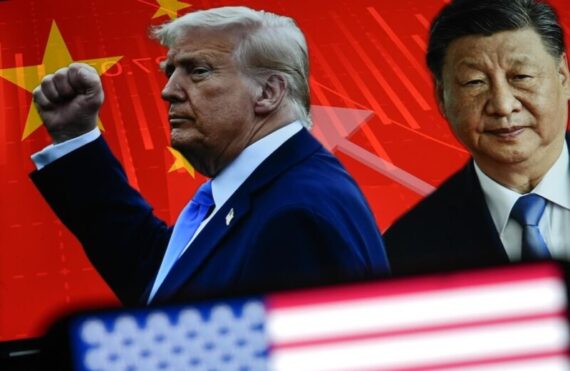
The latest export drop comes as Washington and Beijing revive threats of new tariffs, just weeks before Chinese President Xi Jinping meets U.S. President Donald Trump in South Korea. With the current 90-day tariff truce expiring on November 10, both sides appear to be signaling willingness to escalate if talks falter.
President Trump told reporters aboard Air Force One last week that he “did not want China to play the rare earth game with us,” hinting he might soften tariff hikes if Beijing commits to a major soybean purchase deal. But Chinese officials show no sign of retreating.
China’s commerce ministry said the United States was “deliberately misunderstanding” its licensing measures and insisted that approvals would continue for civilian commercial uses. Still, analysts warn that Beijing could – as it did earlier this year – entangle civilian users while targeting defense-linked supply chains more surgically.
“China’s ability to throttle rare earth exports is an exceptionally powerful tool,” said Dan Wang, China director at Eurasia Group. “It doesn’t simply disrupt production – it injects uncertainty into global planning cycles and reminds Western governments how dependent they are on Beijing.”
Over the first nine months of 2025, rare earth magnet exports totaled 39,817 tons, down 7.5% from the same period in 2024, underscoring a longer-term tightening trend even before new measures fully take effect.
Exports to the United States fell sharply in September – down 28.7% from the previous month – reinforcing U.S. fears of supply chain exposure in the midst of tariff brinkmanship. Meanwhile, shipments to Vietnam rose 57.5%, suggesting Chinese exporters are redirecting flows to third-party hubs that could later re-export components to Western buyers.
The Netherlands, home to the port of Rotterdam, recorded a 109% month-on-month jump. Analysts say the figure is likely inflated by trans-shipment volumes headed for other European destinations.
Germany, South Korea, Vietnam, the United States and Mexico were the top five magnet export destinations last month.
Economists say the latest decline is less about market fundamentals and more about calibrated political pressure.
“China’s management of rare earths is increasingly strategic rather than purely commercial,” said Lee of the EIU. “After easing controls during the summer to lower tensions, Beijing appears to be tightening again as it heads into high-stakes talks with the U.S.”
Recommended
The rare earths squeeze underlines a wider strategic shift: policymakers no longer view resource controls as a last-resort tool, but as a routine part of statecraft in a world of fracturing supply chains.
“Western countries have not fully adapted to the reality of a monopolistic supplier that is willing to weaponize advantage,” Wang said. “This is the world adjusting to China’s management style.”
With Beijing’s expanded licensing regime taking effect days before the tariff ceasefire expires, analysts warn that the next phase of U.S.-China trade friction may move beyond rhetoric toward deeper structural decoupling.
Even if Xi and Trump strike a handshake agreement in South Korea, economists caution that neither side is likely to roll back leverage tools that have now proven effective – and that rare earths will stay at the center of the geopolitical chessboard.
(Source: Reuters)

Politics Today is dedicated to publishing insightful analyses in order to understand the changing nature of contemporary politics. It aims to contribute to the sound and constructive discussion of international affairs.
You can see how this popup was set up in our step-by-step guide: https://wppopupmaker.com/guides/auto-opening-announcement-popups/

Stay informed by subscribing to
our weekly newsletter.
You can see how this popup was set up in our step-by-step guide: https://wppopupmaker.com/guides/auto-opening-announcement-popups/
You can see how this popup was set up in our step-by-step guide: https://wppopupmaker.com/guides/auto-opening-announcement-popups/
You can see how this popup was set up in our step-by-step guide: https://wppopupmaker.com/guides/auto-opening-announcement-popups/
You can see how this popup was set up in our step-by-step guide: https://wppopupmaker.com/guides/auto-opening-announcement-popups/