Rubio Presses Israel for Gaza Roadmap After Qatar Strike
Rubio’s two-day visit to Israel and Qatar highlights the Trump administration’s difficult balancing act.
September 15, 2025
U
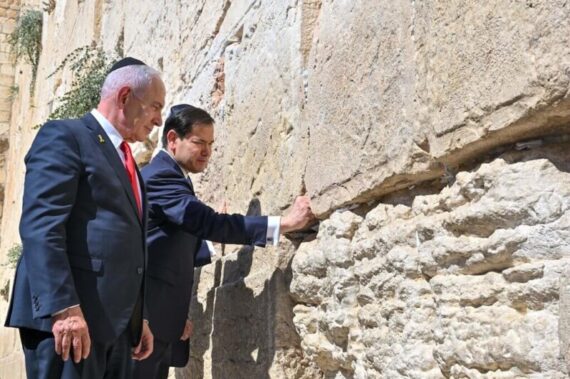
.S. Secretary of State Marco Rubio arrived in Israel on Sunday seeking clarity on the country’s war strategy in Gaza, days after an Israeli strike on Hamas leaders in Qatar upended fragile ceasefire negotiations and intensified global outrage over genocide in the Palestinian enclave.
The Doha strike, which killed five Hamas members — including the son of senior official Khalil al-Hayya — and a Qatari security officer, was condemned by governments across Europe and the Middle East as a violation of sovereignty and international law. It has further complicated Washington’s efforts to mediate a ceasefire and secure the release of Israeli hostages, even as international bodies, including a growing number of academic and legal associations, accuse Israel of pursuing policies amounting to genocide in Gaza.
Rubio told reporters before leaving Washington that President Donald Trump was “not happy” with the Qatar strike but stressed U.S. support for Israel remained firm. “We’re going to talk about what the future holds, and I’m going to get a much better understanding of what their plans are moving forward,” Rubio said. “Obviously we’re not happy about it … now we need to figure out what comes next.”
The Israeli airstrike in Doha marked a rare extension of the Gaza war beyond Palestinian territory, hitting Hamas officials as they discussed a U.S.-backed ceasefire plan. The timing effectively collapsed negotiations, leaving hostages in limbo and prompting anger from Qatar, Saudi Arabia, the UK, France, and Turkey.
“This attack shows Israel has adopted terrorism as state policy,” Turkish President Recep Tayyip Erdoğan said, warning that the strike risked deepening regional instability. Qatar called the bombing “cowardly,” while France described it as “unacceptable.”
Critics say the operation reflects a broader strategy that has already left more than 64,000 Palestinians killed in Gaza since October 2023, with rights groups and legal experts accusing Israel of genocide through indiscriminate bombardment, forced displacement, and the deliberate destruction of civilian infrastructure. Israel denies the charge, insisting its campaign targets Hamas.
Rubio’s two-day visit highlights the Trump administration’s difficult balancing act. On Friday, he and Vice President JD Vance met Qatar’s prime minister in Washington, while Trump later hosted him in New York in an attempt to reassure Doha of its central mediation role. Yet, the decision to send Rubio to Jerusalem signals that Washington still stands by Israel, even amid accusations of genocide.
Trump himself has publicly distanced from the strike, calling it a move that “does not advance Israel or America’s goals.” The U.S. also supported a U.N. Security Council statement condemning the attack without directly naming Israel. Still, Trump has vowed to continue backing Israel militarily while pressing for an end to the war.
“Trump wants Hamas defeated, he wants the war to end, he wants all 48 hostages home, and he wants it all at once,” Rubio said. “The events last week have complicated that goal.”
Recommended
Rubio will hold meetings with Israeli Prime Minister Benjamin Netanyahu and senior officials on Sunday and Monday. The discussions are expected to be tense, as Netanyahu has rejected international pressure to halt the war or accept Palestinian statehood, even as Britain, France, and Canada prepare to recognize it at the U.N. General Assembly later this month unless Israel changes course.
The secretary also plans to visit the City of David, an archaeological site in east Jerusalem often criticized for displacing Palestinians while bolstering nationalist narratives.
As Rubio landed in Tel Aviv, the question remained: can the U.S. salvage a path to peace after a strike that fractured negotiations, deepened Israel’s isolation, and intensified global condemnation?
(Source: The Associated Press)

Politics Today is dedicated to publishing insightful analyses in order to understand the changing nature of contemporary politics. It aims to contribute to the sound and constructive discussion of international affairs.
You can see how this popup was set up in our step-by-step guide: https://wppopupmaker.com/guides/auto-opening-announcement-popups/

Stay informed by subscribing to
our weekly newsletter.
You can see how this popup was set up in our step-by-step guide: https://wppopupmaker.com/guides/auto-opening-announcement-popups/
You can see how this popup was set up in our step-by-step guide: https://wppopupmaker.com/guides/auto-opening-announcement-popups/
You can see how this popup was set up in our step-by-step guide: https://wppopupmaker.com/guides/auto-opening-announcement-popups/
You can see how this popup was set up in our step-by-step guide: https://wppopupmaker.com/guides/auto-opening-announcement-popups/