Russia and China Settle 99% of Trade in National Currencies
Russia and China are working to link their banking systems, promote mutual investment funds, and increase the use of digital financial technologies.
November 6, 2025
R
ussia and China now conduct more than 99% of their bilateral trade using their national currencies — the ruble and yuan — marking a major milestone in their shared effort to reduce dependence on the U.S. dollar and euro. Russian Finance Minister Anton Siluanov announced the figure on Tuesday, underscoring the deepening financial integration between the two powers as Western sanctions continue to reshape global trade patterns.
“If we talk about settlements, 99.1% are carried out in rubles and yuan,” Siluanov said in an interview with the Rossiya-1 television channel, echoing similar remarks by Deputy Prime Minister Alexander Novak earlier this year. The announcement came during the 11th Russia-China Financial Dialogue held in Beijing, where officials from both nations emphasized the need to strengthen cooperation in banking, finance, and cross-border payment systems.
Siluanov said that both governments are focused on safeguarding their financial infrastructure from external disruptions and ensuring that businesses and citizens can trade and invest without obstacles. “It is essential to create favorable conditions for business and provide a clear and accessible payment mechanism for citizens of Russia and China,” he noted, adding that such mechanisms could also foster tourism, cultural exchanges, and scientific collaboration.
The rapid expansion of ruble-yuan trade is one of the most visible outcomes of Moscow and Beijing’s response to Western sanctions. After Russia’s invasion of Ukraine in 2022, Western powers cut Moscow off from major parts of the global financial system, including the SWIFT payment network. In response, Russia turned to China and other non-Western partners to develop parallel systems that would allow trade to continue without using the dollar-dominated infrastructure.
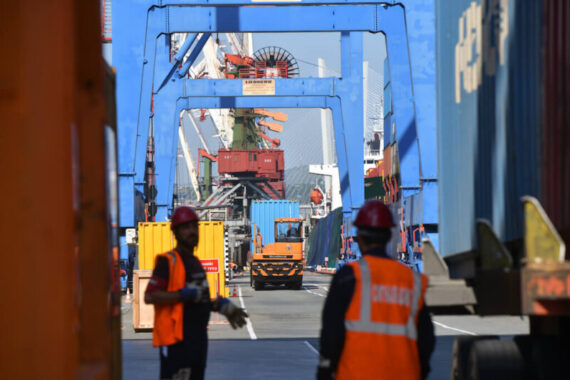
Over the past three years, Russian banks and companies have increasingly adopted China’s Cross-Border Interbank Payment System (CIPS) and alternative clearing channels. Meanwhile, energy, raw materials, and agricultural trade between the two nations have surged to record levels, exceeding $250 billion in 2024. Much of this trade is now conducted directly in yuan and rubles, insulating transactions from Western oversight and currency volatility.
“The economic relationship between Moscow and Beijing has transformed from one of convenience into one of strategic necessity,” said Alexei Maslov, a Russia-China relations expert at Moscow State University. “This 99% milestone symbolizes not only financial adaptation but the emergence of a new geopolitical bloc where the dollar is no longer dominant.”
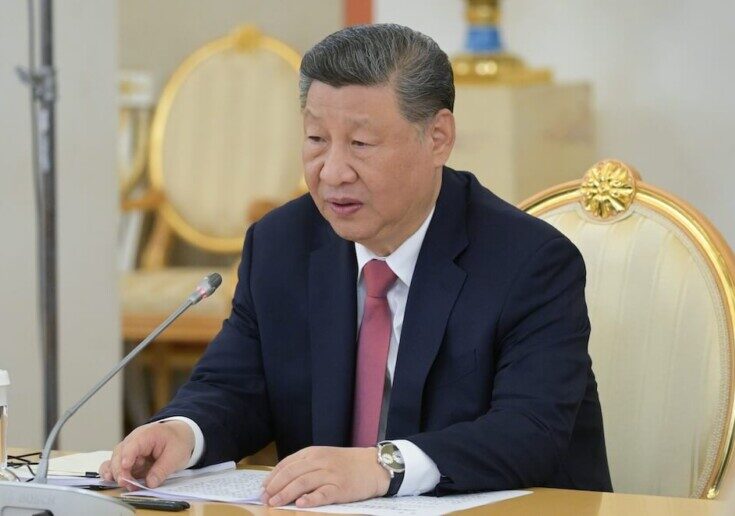
Chinese Finance Minister Lan Fo’an, who co-chaired the dialogue, called for closer alignment of macroeconomic policies and cooperation in financial regulation, accounting, and taxation. “Both China and Russia are constructive forces in maintaining global strategic stability and improving global governance,” Lan said, according to state news agency TASS.
Beijing has balanced its partnership with Moscow carefully, seeking to expand its influence in global finance without drawing direct confrontation with the United States. However, the yuan’s increasing use in Russian trade underscores China’s broader ambition to internationalize its currency and establish it as a stable alternative to the dollar in Asia, Africa, and the Global South.
Analysts say that the growing use of local currencies among BRICS members — Brazil, Russia, India, China, South Africa, and new entrants like Saudi Arabia and Iran — could accelerate global de-dollarization. The BRICS bloc, which represents nearly half of the world’s population and over 30% of global GDP, has repeatedly called for creating alternative payment systems and even a common reserve currency.
“The Russia-China financial partnership is becoming the foundation of a larger movement to build a post-dollar global economy,” said Yaroslav Lissovolik, chief economist at the BRICS+ Research Group. “It’s not just about avoiding sanctions — it’s about rewriting the rules of international trade.”
Moscow and Beijing’s cooperation now extends far beyond trade settlements. The two countries are working to link their banking systems, promote mutual investment funds, and increase the use of digital financial technologies. Russia has expressed interest in integrating its upcoming digital ruble system with China’s digital yuan infrastructure, potentially enabling direct central bank-to-central bank transfers.
“The creation of a fully independent financial infrastructure between Russia and China would represent a turning point,” said Elena Likhacheva, a researcher at the Russian Academy of Sciences. “It would mean that sanctions or external pressure from Western countries would have diminishing impact on their economies.”
Still, challenges remain. While trade in national currencies has reached near-total levels, convertibility issues and fluctuating exchange rates continue to pose risks. Moreover, China remains cautious about exposing its financial institutions to potential secondary sanctions from the United States or the European Union.
Recommended
For both Moscow and Beijing, the move toward local currency trade is as much political as it is economic. It symbolizes defiance of Western dominance in global finance and a shared commitment to a multipolar world order.
As Siluanov concluded during the Beijing meeting, “Our cooperation has proven its resilience even under the toughest external conditions. Russia and China’s partnership has become a key stabilizing factor during this period of global transformation.”
With nearly all trade now conducted in rubles and yuan, Russia and China are not merely adapting to a new financial reality—they are helping shape it.
(Source: Anadolu Agency)

Politics Today is dedicated to publishing insightful analyses in order to understand the changing nature of contemporary politics. It aims to contribute to the sound and constructive discussion of international affairs.
You can see how this popup was set up in our step-by-step guide: https://wppopupmaker.com/guides/auto-opening-announcement-popups/

Stay informed by subscribing to
our weekly newsletter.
You can see how this popup was set up in our step-by-step guide: https://wppopupmaker.com/guides/auto-opening-announcement-popups/
You can see how this popup was set up in our step-by-step guide: https://wppopupmaker.com/guides/auto-opening-announcement-popups/
You can see how this popup was set up in our step-by-step guide: https://wppopupmaker.com/guides/auto-opening-announcement-popups/
You can see how this popup was set up in our step-by-step guide: https://wppopupmaker.com/guides/auto-opening-announcement-popups/