Russia’s War Games with Belarus Escalate Tensions
Military analysts warn that Oreshnik’s warheads forward deployment in Belarus effectively restores a Cold War-style “nuclear fortress” on NATO’s doorstep.
September 16, 2025
R
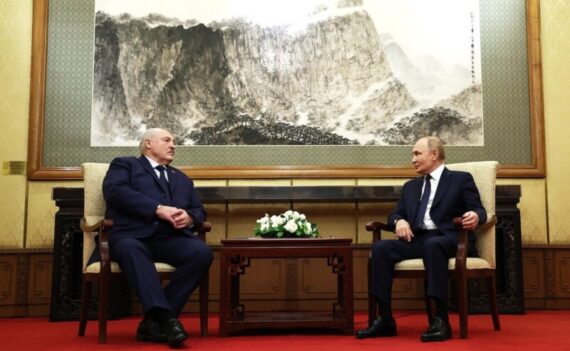
ussia has staged one of its largest military exercises since the invasion of Ukraine, showcasing nuclear-capable weapons alongside conventional forces in drills with Belarus that NATO officials say mark a dangerous escalation of Europe’s security crisis.
The Zapad-2025 maneuvers, which began last week, involved thousands of troops, warships, nuclear-capable bombers, and hundreds of combat vehicles. Moscow highlighted scenarios that included the potential use of tactical nuclear weapons and unveiled deployment options for its new Oreshnik intermediate-range ballistic missile, which it says will soon be stationed in Belarus.
The display came just days after about 20 Russian drones breached Polish airspace, which Warsaw condemned as a “provocation” and NATO described as reckless. In response, the alliance announced a new “Eastern Sentry” initiative to reinforce air defenses across Poland and the Baltic states. “Within this alliance of 32 countries, we all live on the eastern flank,” NATO Secretary-General Mark Rutte said in Brussels, underscoring that the threat extends far beyond frontline states.
The exercises are the first since Moscow revised its nuclear doctrine in 2024, declaring that any conventional attack on Russia involving a nuclear-armed ally of Ukraine would be treated as a joint nuclear strike. Analysts say this change significantly lowers the threshold for nuclear use. Belarus, now formally under Russia’s nuclear umbrella, has already hosted Russian tactical nuclear weapons and is expected to receive Oreshnik systems later this year.
Russian President Vladimir Putin has boasted that Oreshnik’s warheads can reach speeds of Mach 10 and strike European capitals within minutes, making it impossible to know whether they carry conventional or nuclear payloads until impact. Military analysts warn that their forward deployment in Belarus effectively restores a Cold War-style “nuclear fortress” on NATO’s doorstep.
The alliance’s rapid announcement of Eastern Sentry reflects growing fears of miscalculation. Germany, France, and the Netherlands are contributing aircraft and missile defense systems, while Poland is closing sections of its eastern airspace and accelerating its military modernization program. “This brings us closer to open conflict, closer than ever since World War II,” Polish Prime Minister Donald Tusk warned.
Defense experts caution that NATO faces a costly dilemma: intercepting Russia’s low-cost drones with advanced fighter jets is unsustainable. Calls are growing for investments in layered counter-drone defenses, a lesson drawn from Ukraine’s battlefield experience.
For Russia, the drills send a political message as much as a military one: that it retains escalation dominance despite its grinding war in Ukraine. For NATO, the challenge is to reinforce deterrence without triggering direct confrontation.
“This is a dangerous moment,” a senior NATO official told reporters. “We must be firm, but we must also avoid giving Moscow the escalation it is trying to provoke.”
With the U.N. General Assembly set to meet later this month, the Zapad exercises and drone provocations ensure that Russia’s confrontation with the West will dominate the agenda — and keep Europe on edge as the war in Ukraine drags into its fourth year.
(Source: The Associated Press)
Recommended

Politics Today is dedicated to publishing insightful analyses in order to understand the changing nature of contemporary politics. It aims to contribute to the sound and constructive discussion of international affairs.
You can see how this popup was set up in our step-by-step guide: https://wppopupmaker.com/guides/auto-opening-announcement-popups/

Stay informed by subscribing to
our weekly newsletter.
You can see how this popup was set up in our step-by-step guide: https://wppopupmaker.com/guides/auto-opening-announcement-popups/
You can see how this popup was set up in our step-by-step guide: https://wppopupmaker.com/guides/auto-opening-announcement-popups/
You can see how this popup was set up in our step-by-step guide: https://wppopupmaker.com/guides/auto-opening-announcement-popups/
You can see how this popup was set up in our step-by-step guide: https://wppopupmaker.com/guides/auto-opening-announcement-popups/