South Africa: Genocide Case against Israel Will Proceed Despite Ceasefire
Under ICJ timelines, Israel’s response is due by January 12, 2026, with oral hearings expected in 2027. A final judgment could come as late as 2028.
October 16, 2025
S
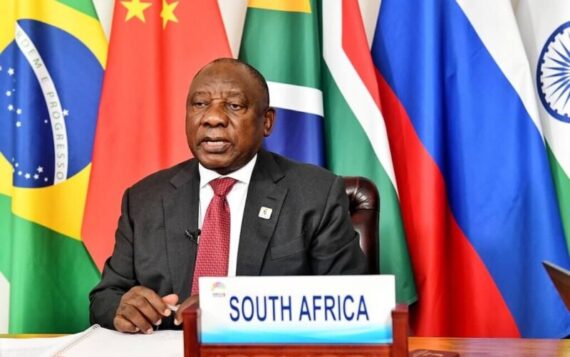
outh African President Cyril Ramaphosa has reaffirmed that his country’s genocide case against Israel at the International Court of Justice (ICJ) will continue, despite the recently announced ceasefire in Gaza, which has been hailed as a breakthrough in ending nearly two years of war.
Speaking before parliament in Cape Town on Tuesday, Ramaphosa said the peace deal “will have no bearing” on the ongoing legal proceedings. He emphasized that South Africa remains committed to ensuring justice for the people of Gaza, accusing Israel of committing acts that amount to genocide under international law.
“The peace deal that has been struck, which we welcome, will have no bearing on the case that is before the International Court of Justice,” Ramaphosa said. “The case is proceeding, and it now has to go to the stage where Israel has to respond to our pleadings that have been filed in the court, and they have to do so by January of next year.”
South Africa first filed the case in December 2023, alleging that Israel’s military campaign in Gaza violated the Genocide Convention of 1948. The government submitted a 500-page legal brief to the ICJ in October 2024, detailing evidence of mass killings, the destruction of civilian infrastructure, and deliberate obstruction of humanitarian aid.
Under ICJ timelines, Israel’s response is due by January 12, 2026, with oral hearings expected in 2027. A final judgment could come as late as 2028, according to legal experts familiar with the process.
So far, the court has issued three provisional measures, ordering Israel to prevent genocidal acts, punish incitement to genocide, and ensure the delivery of humanitarian assistance to Gaza. Israel has largely ignored these rulings, according to UN monitors.
The genocide, which began in October 2023, has killed more than 67,000 Palestinians, according to Gaza’s health authorities, leaving much of the enclave in ruins and displacing millions.
Ramaphosa underscored that South Africa’s pursuit of the case was not political, but moral and legal, rooted in the principles of accountability and human rights.
“We cannot go forward without the healing that needs to take place, which will also result from the case being properly heard,” he said. “True peace requires justice, recognition, and reparations.”
His remarks drew widespread support from international human rights advocates. Francesca Albanese, the UN Special Rapporteur on the occupied Palestinian territories, wrote on X that “peace without justice, respect for human rights and dignity, without reparations and guarantees of non-repetition, is not sustainable.”
South Africa has gained growing international backing for its ICJ case. Several countries — including Spain, Ireland, Turkiye, and Colombia — have joined or declared their intent to join the proceedings in support of Pretoria’s efforts.
Colombian President Gustavo Petro said earlier this year that governments “risk becoming complicit in atrocities” if they fail to act, while Spanish Prime Minister Pedro Sánchez, one of Europe’s most outspoken critics of Israel’s conduct, reiterated on Tuesday that the ceasefire “cannot mean impunity.”
“There cannot be impunity,” Sánchez told Spanish radio. “The main actors of the genocide will have to answer to justice.”
Human rights groups such as Amnesty International and Human Rights Watch have also accused Israel of committing acts amounting to genocide and crimes against humanity. A UN Commission of Inquiry released in September 2025 concluded that Israel had committed genocide in Gaza, adding weight to South Africa’s case at The Hague.
Israel has strongly rejected all allegations of genocide, calling South Africa’s case “baseless” and “politically motivated.” Israeli officials have insisted that their military operations targeted Hamas fighters, not civilians, and that they acted in self-defense following the group’s October 2023 attacks.
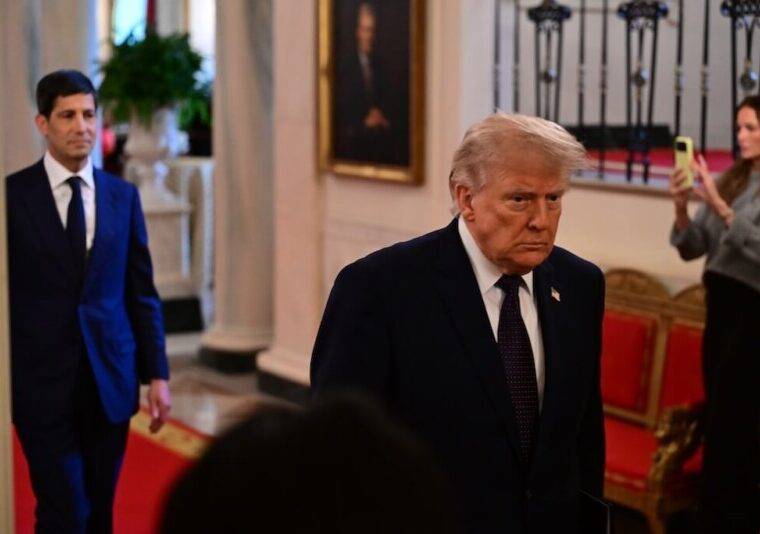
The US-brokered ceasefire agreement, announced last week by President Donald Trump, aims to halt hostilities and pave the way for reconstruction and the return of displaced Palestinians. It has been widely welcomed by world leaders and humanitarian agencies, who say it offers a rare opportunity to rebuild Gaza after two years of devastation.
However, Ramaphosa and other leaders have cautioned that the ceasefire, while necessary, does not erase the need for accountability.
“Peace cannot come at the expense of justice,” Ramaphosa said, drawing applause in parliament. “For the victims, for the families, and for humanity itself, the truth must be heard.”
Beyond the ICJ proceedings, South Africa has taken a leading role in building international momentum to hold Israel accountable. In January 2025, Pretoria co-founded The Hague Group, a coalition of countries — including Ireland, Chile, Malaysia, and Colombia — focused on legal, diplomatic, and economic strategies to respond to Israel’s actions in Gaza and the West Bank.
The coalition aims to coordinate sanctions, trade restrictions, and diplomatic pressure on Israel, as well as to advocate for the recognition of Palestinian statehood. South Africa’s foreign minister, Naledi Pandor, described the initiative as “a movement to ensure that international law is not applied selectively.”
Recommended
Ramaphosa’s government has cast its campaign at the ICJ as part of South Africa’s broader legacy of supporting global justice, drawing parallels with its own history of apartheid. During his address, the president invoked the moral authority of figures such as Nelson Mandela and Desmond Tutu, who were outspoken advocates for Palestinian rights.
“South Africa will always stand where justice and humanity demand,” Ramaphosa said. “Our history compels us to speak for those who cannot be heard.”
As Gaza’s fragile truce holds and rebuilding begins, South Africa’s legal battle at the ICJ is set to become a defining test of the international community’s commitment to accountability — and whether peace can endure without justice.
(Source: Aljazeera English)

Politics Today is dedicated to publishing insightful analyses in order to understand the changing nature of contemporary politics. It aims to contribute to the sound and constructive discussion of international affairs.
You can see how this popup was set up in our step-by-step guide: https://wppopupmaker.com/guides/auto-opening-announcement-popups/

Stay informed by subscribing to
our weekly newsletter.
You can see how this popup was set up in our step-by-step guide: https://wppopupmaker.com/guides/auto-opening-announcement-popups/
You can see how this popup was set up in our step-by-step guide: https://wppopupmaker.com/guides/auto-opening-announcement-popups/
You can see how this popup was set up in our step-by-step guide: https://wppopupmaker.com/guides/auto-opening-announcement-popups/
You can see how this popup was set up in our step-by-step guide: https://wppopupmaker.com/guides/auto-opening-announcement-popups/