T
he 36th NATO Summit, held in Ankara on July 7-8, 2026, addressed critical agenda items not only concerning key themes such as the Russia-Ukraine War, defense spending or European security, but also within the context of NATO’s policies towards neighboring regions. In this context, the Summit can also be seen as a platform for redefining relations with the Middle East, North Africa and Gulf countries, which form the Alliance’s southern flank. NATO’s relations with the Gulf countries, which have been caught in a spiral of strategic uncertainty due to the US-Iran conflict, were specifically addressed at this Summit.
The summit held in Ankara demonstrates that the Istanbul Cooperation Initiative (ICI), launched with the Gulf states at the 2004 Istanbul Summit, has regained strategic importance 22 years later. As will be recalled, the Istanbul Cooperation Initiative, launched at the 2004 Istanbul Summit, marked the starting point of NATO’s institutional engagement with the Gulf states. However, over the span of 22 years, this initiative has failed to deliver the transformative impact that was anticipated. The potential of the Ankara Summit to revitalise this framework deserves to be assessed from both a symbolic and a strategic perspective.
The primary aim behind the establishment of the Istanbul Cooperation Initiative was for NATO to contribute to the security architecture in the Middle East and the Gulf region in an inclusive and collaborative manner. In particular, the Gulf states’ reliance on external sources for security and their fragile structure were the underlying reasons for this initiative. However, in 2004, only four out of the six Gulf states joined the initiative, meaning full inclusivity could not be achieved. Nevertheless, NATO continued to invest in the initiative, hoping that other Gulf states might eventually join Qatar, Bahrain, Kuwait and the United Arab Emirates, which had already joined the Istanbul Cooperation Initiative.
At this stage, the fact that membership of this initiative remains limited to four countries, with Saudi Arabia and Oman continuing to remain outside it, can be regarded as both a symbolic shortcoming and a structural weakness. The fact that Saudi Arabia and Oman, two of the most critical countries when it comes to the geopolitics of the Persian Gulf and the security of the Strait of Hormuz, are not part of the Istanbul Cooperation Initiative can be cited as the main reason why this initiative has remained a ‘limited-impact’ framework to date. Indeed, this situation also highlights the limitations that the Gulf states’ divergent security perceptions and foreign engagements may impose on cooperation with NATO. Consequently, the Istanbul Cooperation Initiative’s failure to demonstrate the expected trajectory of development can be explained not only by fluctuations in NATO’s regional priorities but also by the divergent approaches of the Gulf states.
NATO-Gulf cooperation in the shadow of crisis
From the perspective of Gulf geopolitics, it can be argued that the key factor distinguishing the 2026 Ankara Summit from the 2004 Istanbul Summit was the context in which the meetings took place. The Istanbul Summit was held in the wake of the largest wave of expansion in NATO’s history and against a relatively optimistic global backdrop. The Ankara Summit, however, took place in an uncertain geopolitical environment in which a conflict between the US and Iran, which had started on February 28, was directly affecting the Gulf states and posing a serious threat to their security. This situation has distinctly set this year’s IIG session apart from the routine diplomatic contacts of previous years.
In this context, NATO foreign ministers and representatives from the Gulf states came together at a meeting held on the margins of the summit. At the meeting, a consensus was reached on strengthening cooperation in the face of the security challenges posed by the conflict in the Gulf region. This approach can be interpreted as a sign that the initiative may be evolving beyond a purely rhetorical framework of cooperation towards a crisis-management-centered function. A notable aspect here is the shift in the rhetoric of European allies. The fact that the stability of the Gulf is now framed not merely as a regional issue but as an integral part of European security and energy supply security can be interpreted as a shift in rhetoric that enhances the strategic significance of the IIG. This shift also points to the concretization, specifically in the context of the Gulf, of the ‘360-degree security’ approach that has long been debated within the Alliance.
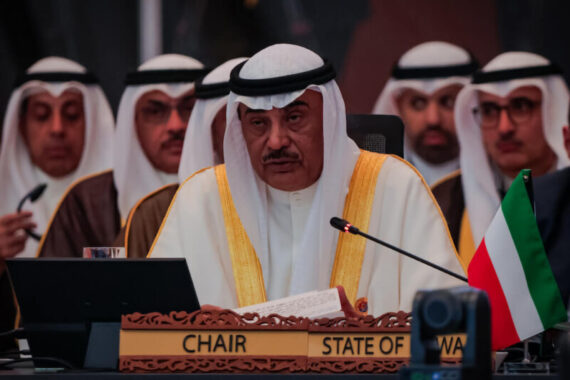
On the other hand, from the perspective of representation, it is noteworthy that whilst the foreign ministers of NATO countries attended the meeting, only Kuwait, among the Gulf states, was represented at the level of foreign minister. The attendance of State Minister for Foreign Affairs Mohammed bin Abdulaziz al-Khulaifi from Qatar, State Minister for Defense Mohammed bin Mubarak Fadil al-Mazrui from the UAE, and Director-General for Bilateral Relations at the Ministry of Foreign Affairs, Sheikh Abdullah al-Khalifa, from Bahrain, highlights that, despite strong diplomatic messages and rhetoric on cooperation, the Gulf states had limited expectations of the summit.
In terms of positive outcomes, however, it was observed that discussions took place at the summit regarding the possibility of taking some concrete steps between NATO and the Gulf states within the framework of the GCC. In this context, the agreement reached between Qatar and NATO on a partnership program to frame civil and military cooperation between the two sides, and the fact that the establishment process for a regional centre for peace support operations planned to be set up in Qatar is approaching its final stage, can be regarded as concrete steps in the Istanbul Cooperation Initiative’s transition beyond being merely a consultative platform.
State Minister al-Khulaifi, who attended the summit on behalf of Qatar, emphasized in his statement that his country attaches great importance to the IIG and is ready to implement concrete outcomes. Kuwait, another country taking concrete steps in cooperation with NATO and hosting the GIG-NATO regional centre, launched the Kuwait-NATO Political and Security Dialogue Mechanism in January 2026. Sheikh Jarrah Jabir al-Ahmed al-Sabah, Kuwait’s Minister of Foreign Affairs, who attended the Ankara summit, also proposed in his statement that the GCC Ministerial Summit be held in Kuwait in 2027.

Recommended
The future of NATO-Gulf cooperation
At this stage, it remains unclear whether NATO’s renewed engagement with the Gulf states is the result of a temporary momentum generated by current crises, or the outcome of a process aimed at implementing lasting structural measures. Given the Gulf states’ quest for security, having recognized the ineffectiveness of a security mechanism entirely dependent on the US during the Iran conflict, it is reasonable to suggest that they may wish to consider NATO as a new alternative security provider. Indeed, the Gulf states, which already maintain strong partnerships with NATO member states such as the US and Turkey, may also aim to formalize institutional cooperation with NATO.
Turkey’s role in this process, as the host of the Ankara Summit, is also noteworthy. Having hosted the 2004 Istanbul Summit during the enlargement process, Turkey has, by 2026, become a more central actor on the Alliance’s southern flank, owing both to its geographical location and its growing defense industry capacity. Efforts to position the reconstruction process in Syria as a bridge between NATO’s sphere of influence and Gulf capital can also be cited as one of the concrete manifestations of this central role. The progress Turkey has made in the defense industry sector and its transformation into a significant actor in terms of military deterrence have made Ankara an important security partner for the Gulf states.
Consequently, the Ankara Summit has had limited yet positive implications for the future from the perspective of the Gulf states. The interactions revealed by the Summit, particularly regarding the Istanbul Cooperation Initiative, demonstrate that an initiative which had seen relatively limited progress over the past 22 years has been able to regain significance in the wake of the crisis. At this stage, the most significant question mark concerns whether this momentum will translate into a permanent institutional framework.
Whether the NATO–ICI dialogue will remain a temporary reaction to the geopolitical uncertainty created by the US–Iran conflict will become clear through the concrete steps the parties take in the future. Key factors in this regard will include whether key actors such as Saudi Arabia and Oman will join the initiative, and to what extent the emerging cooperation programm will be reflected in practice. Consequently, the most tangible dynamic in NATO’s future in the Gulf can be identified as the success of the transition from rhetorical solidarity to sustained institutional cooperation.
(Originally published in Turkish by Kriter)