The Arrogance of States and the Case for The United States
Perhaps one of the most significant factors contributing to US arrogance was the transformation of the post-Cold War world order into a unipolar international system.
June 17, 2026
W
ithin the framework of international relations, powerful states often act with an excessive demonstration of power to protect their political and economic interests, even if this behavior goes on to negatively impact weaker states. They employ various means to achieve this, including military alliances, economic influence, political and military intervention, and sanctions on their perceived enemies. These actions embody the characteristic of “states’ arrogance” since such an act is not exercised within the framework of accepted international legitimacy, and without a mandate from international institutions such as the United Nations. The stronger party uses its greater power and develops the belief that it has the right to impose its vision on other parties, conceiving this from the notion of holding an obligation to achieve a situation of peace and stability. Nevertheless, this is in fact solely derived from the desire to reach certain objectives within its own national security interests, using only the logic of power.
The development of the concept of “states’ arrogance” represents a radical shift in international relations, explaining as it does the inability of powerful states to adapt to a changing global order. These states tend to believe that their political system, economic influence, and military power grant them the right to dominate international affairs and exert pressure so as to steer other countries’ positions in their favor. This has led to a fundamental transformation in the role played by powerful actors, a role that may be driven by both internal and external pressures. This article intends to shed the light on the behavior of the United States in recent decades and how it embodies the role of an arrogant power deviating from the traditional concept of international relations.
The concept of arrogance within approaches to international relations has differed according to how it is situated in terms of each state’s interaction with the outside world. Although not directly addressed with this term, “states’ arrogance”, it is often referred to using terms that hold similar meanings, such as “vanity” and “domination”. Within the realist approach, Thomas Hobbes addressed the concept in his ideas on the social contract, describing human nature as being driven by glory and pride, which leads to conflict with others. In 1948, the German-American Hans Morgenthau published his book “Politics Among Nations”, arguing that the concept is “the selfish manifestation” of a subjective stance of states to adopt narcissistic and often “hostile” policies. Employing a more extreme definition of arrogance, Kenneth Waltz suggests that the term involves a degree of reckless policies in pursuit of national security.
In the liberal school, arrogance is viewed as an obstacle to the achievement of peace and freedom. David Hume, the philosopher, historian, and economist, argues that a world driven by commercial competition cannot avoid conflicts without also avoiding the arrogance and selfishness of the more powerful states. In his book “Beyond Hegemony: Cooperation and Conflict in the World Political Economy”, Robert Cohen emphasizes the need for “strong communication” to fill the gap between strong and less powerful states, and therefore, enhance cooperation in order to achieve peace. The constructivist approach assumes that the arrogant behavior of states is a reality that is a social construct which states respond to according to their particular perspectives.
This approach treats the concepts of “pride” and “ego” as elements of states’ arrogance. This means that states with strong nationalist foreign policies act arrogantly toward actors that differ in terms of ideology. Nicholas Onoff, a pioneering advocate of the constructivist school, argues that states that are in conflict and which hold identity and religious differences such as Pakistan and India view each other as being arrogant, while referring to their own behavior as being truthful and legitimate. While states adopting a rhetoric that reflects their culture and identity, such as Iran, are viewed as being arrogant by the United States, the latter represents a clear example of arrogant behavior, with its possession of hard power and its complex network of international relations.
In recent decades, the behavior of the United States has stood out as a prime example of states’ arrogance, representing a radical shift from behavior within the traditional concept of international relations to a more problematic form of international relations, one from which the concept of states’ arrogance emerges.
Immediately after the end of World War II, the United States emerged as a superpower in a global system, rivaled only by the Soviet Union. It enjoyed military and economic power, as well as a political influence that played a pivotal role in the establishment of numerous international institutions such as the United Nations, the World Bank, and the International Monetary Fund. Although the United States exploited its influence within these institutions to serve its own interests, these institutions undoubtedly contributed to enhancing a degree of stability and cooperation among member states.
The American role has been manifested in the exercise of its influence and dominance through intervention in the internal affairs of several countries, such as in Korea, Vietnam, Chile, Afghanistan, and Iraq. Such interventions were sometimes justified by the assumption that they were protecting the global order from the threat posed by weaker and relatively unstable states, and at other times under the pretext of protecting democracy and preventing the spread of other political systems such as communism, or because of the proliferation of weapons of mass destruction in those states, thus undermining the sovereignty of weaker countries and suppressing the desires of their people.
The United States invasion of Iraq is an example of states’ arrogance, supported by some of the United States’ allies such as the UK, where former US President George W. Bush presented the rest of the countries with two choices: “Either you are with us, or you are with the terrorists.” Following the claim that Iraq possessed weapons of mass destruction, the international community viewed the United States through the lens of having acted unilaterally and without authorization from international organizations, thereby exploiting its influence and military power, resisting the international community, and showing distrust in the role of the international organizations. Such an act intensified criticism directed at Washington, and damaged the reputation of the United States, its foreign policy, and its international role, which had for long maintained global stability and established a remarkable period of relative calm.
Perhaps one of the most significant factors contributing to US arrogance was the transformation of the post-Cold War world order into a unipolar international system, granting the United States absolute hegemony. However, this did not last long, especially as the world witnessed the rise of China and the increasing influence of Russia, demonstrated through its intervention in Ukraine in February 2022 without international authorization, which represents another version of states’ arrogance.
Despite the losses and depletion of resources which the United States suffered in its wars in Afghanistan and Iraq, diplomacy and international partnerships were not Washington’s primary options. This has been evident in its recent handling of the Iranian issue, where it has opted for the military option alongside its ally Israel, seizing the initiative at a time when negotiations sponsored by Oman were on the verge of reaching an agreement. Once again, the military option yielded no declared results and, in fact, caused harm to the region and the whole world.
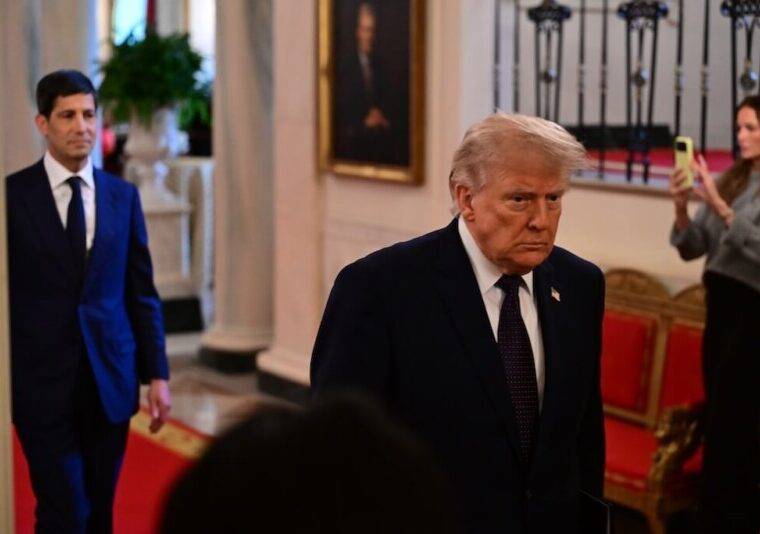
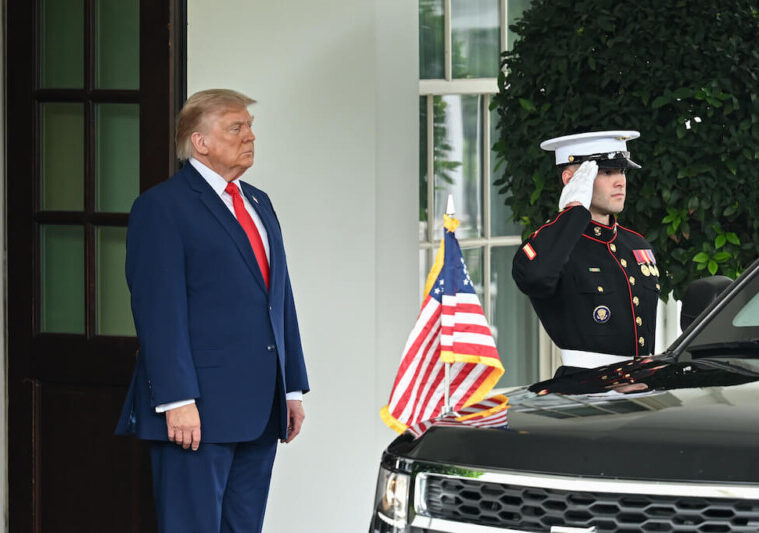
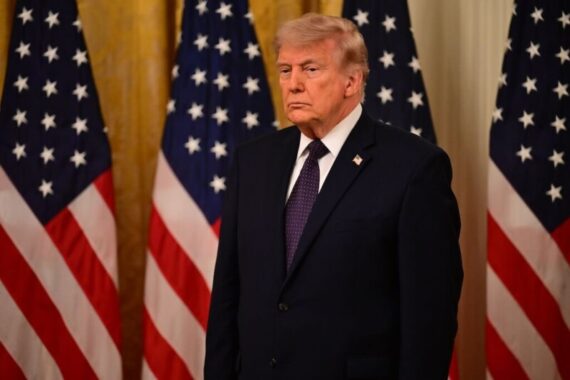
Prior to this, Washington had even attempted to annex Canada after the election of current US President Donald Trump in late 2024, following a wave of threats to impose tariffs, and demands for Canada to increase its military spending. This was followed by talk of annexing Greenland since March 2025, with the primary objective of controlling a region that would allow the United States to monitor economic and military activities across three continents (Europe, Asia, and the Americas). The arrogance of the United States became yet more visible through the kidnapping of the Venezuelan president and his wife in January 2026, and their transfer to New York to await trial on drug trafficking charges. These are a series of actions carried out by Washington within the joint framework of hegemony and arrogance, driven by its military capabilities, which are sometimes overestimated.
Recommended
The United States’ arrogant behavior can be seen through its refusal to join international bodies such as the International Criminal Court, or to sign the Kyoto Protocol that deals with climate change, and its withdrawal from the Paris Agreement and the Iran Nuclear Deal, during the first Trump administration, often referred to as the Joint Comprehensive Plan of Action (JCPOA) that was signed in 2015 during Obama administration. Thus, American arrogance comes about within the framework of a radical shift from traditional international relations to the current sordid international relations, which also include the concepts of “state selfishness”, “opportunism”, and “immorality”.
These practices are characterized by distrust and exploitation, which weakens cooperation between countries, destabilizes global order, leads to the collapse of alliances, the outbreak of wars and the furtherance of arms races, and ultimately means a noticeable decline in the supremacy of international institutions. Consequently, this undermines the search for global peace, negatively affects trade activities and the energy markets, and sabotages the efforts made by countries collectively on issues of paramount importance such as security and the climate crisis.
In conclusion, it can be said that the pursuit of hegemony by powerful states over the global system undermines the quest for peace, stability, and international cooperation. This approach satisfies interests individualistically at the expense of mutual respect and international justice, thus exacerbating those tensions that lead to conflicts and wars. At that point, the stronger states realize that diplomacy and respect for the sovereignty of states remain the optimum strategy toward a more balanced global system, in which states’ interests are achieved within a collective framework.
Through this balanced approach, countries’ rights are then preserved not through arrogance and hegemony, but through the values of justice and respect for the foundations and principles of international relations. The United States is often criticized for being a prominent example of states’ arrogance that undermines the traditional principles of international relations. Although this condition of global dominance is perceived as a natural outcome in a unipolar world that lacks a counterbalance of power, such an approach can culminate in a decline of the role of international organizations, and can further motivate strong and powerful states to pursue a similar strategy to that of Washington.

Said Abdullah Albimani is a retired colonel and a fighter pilot from the Royal Air Force of Oman with 37 years of total military service in the Omani and Qatari air forces, with master degrees in strategy and policy (Australia), political science (USA), strategic studies (USA), executive MBA (USA), and a PhD in Gulf Studies from Qatar University. His field of interest is mainly politics and security. His publications include a book chapter of Oman’s foreign policy towards the Arab Gulf region, and insights into regional issues within the Arab Gulf especially foreign policies and maritime security. His email is saidalbimani@hotmail.com
You can see how this popup was set up in our step-by-step guide: https://wppopupmaker.com/guides/auto-opening-announcement-popups/

Stay informed by subscribing to
our weekly newsletter.
You can see how this popup was set up in our step-by-step guide: https://wppopupmaker.com/guides/auto-opening-announcement-popups/
You can see how this popup was set up in our step-by-step guide: https://wppopupmaker.com/guides/auto-opening-announcement-popups/
You can see how this popup was set up in our step-by-step guide: https://wppopupmaker.com/guides/auto-opening-announcement-popups/
You can see how this popup was set up in our step-by-step guide: https://wppopupmaker.com/guides/auto-opening-announcement-popups/