The Doha Summit: A New Era in Regional Security?
The joint response following Israel's attack on Qatar indicates that a new security architecture is emerging in the Middle East.
September 18, 2025
I
srael’s ongoing genocide and aggression in Gaza has not been limited to Palestine but has taken on a regional dimension with airstrikes targeting Tehran, Beirut, Damascus and Sanaa. On September 9, 2025, the Tel Aviv regime launched an air strike on the Qatari capital, Doha, claiming to target Hamas leaders. Five Hamas members and a Qatari internal security official were killed in the attack, which targeted Hamas’s negotiation delegation. This step went down in history as another direct attack on the territory of a sovereign country by Israel.
While the Doha administration described the incident as ‘state terrorism,’ President Recep Tayyip Erdoğan also emphasised that the Netanyahu government now poses a threat not only to Palestine but to the entire region. This attack demonstrated that Israel’s aggression knows no bounds and pushed regional countries to adopt a common stance. Even the United Arab Emirates (UAE), which had previously entered into a normalization process with Israel, condemned Tel Aviv. Arab and Islamic countries viewed Israel’s move as a threat that sabotaged the search for peace.
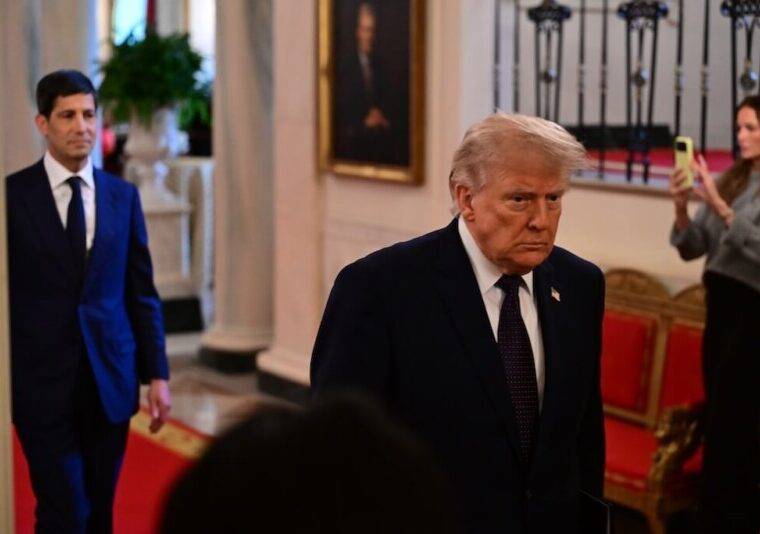
Qatar hosts the U.S.’s largest military base in the region, Al-Udeid. Despite this, it was unable to protect itself from the Israeli attack. This situation has led to questions about Washington’s security commitments. Although U.S. President Donald Trump emphasised Qatar’s importance in a cautious statement, he only issued symbolic warnings to Israel. He even reiterated his support by sending U.S. Secretary of State Marco Rubio to Israel. This stance increased doubts about the U.S.’s reliability in the Gulf.
In fact, this loss of trust is not new. In 2019, Washington’s indifference following the Houthis’ attacks on Saudi Arabia’s Abqaiq and Khurais oil facilities caused great disappointment in Riyadh. Today, similar mistrust has resurfaced following the attack on Qatar. Gulf countries believe that the U.S. is applying double standards in favour of Israel and that its security guarantees are no longer valid. As a result, the U.S.’s traditional role as a security provider has been seriously undermined.
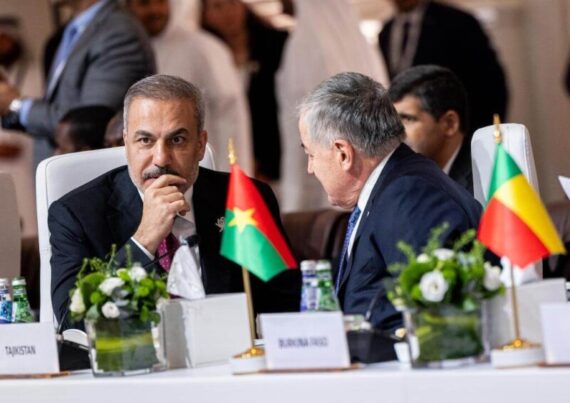
The collective response following Israel’s attack on Qatar indicates that a new security architecture is emerging in the Middle East. Qatari Prime Minister Mohammed bin Abdulrahman Al Thani called on the international community to abandon double standards and adopt a collective response. The extraordinary joint summit of the Organization of Islamic Cooperation (OIC) and the Arab League, held in Doha on September 15, 2025, was a concrete example of this response.
At the summit, 57 OIC and 22 Arab League countries adopted a united stance against Israel’s attacks. Iran’s proposal for a ‘joint operations centre’ brought military cooperation among Islamic countries to the agenda. At this point, Egypt also brought the idea of a joint Arab defence force, which had been shelved for years, back to the table. According to Cairo’s plan, a joint army consisting of land, air and sea armies from member countries would be established, with initial command given to Egypt. This structure, which could be spearheaded by powerful armies such as those of Turkey, Saudi Arabia, Egypt and Iran, aims to provide regional deterrence. Thus, similar to NATO’s Article 5, the principle that ‘an attack on one is an attack on all’ could be transformed into a concrete defence mechanism within the OIC and Arab League.
Recommended
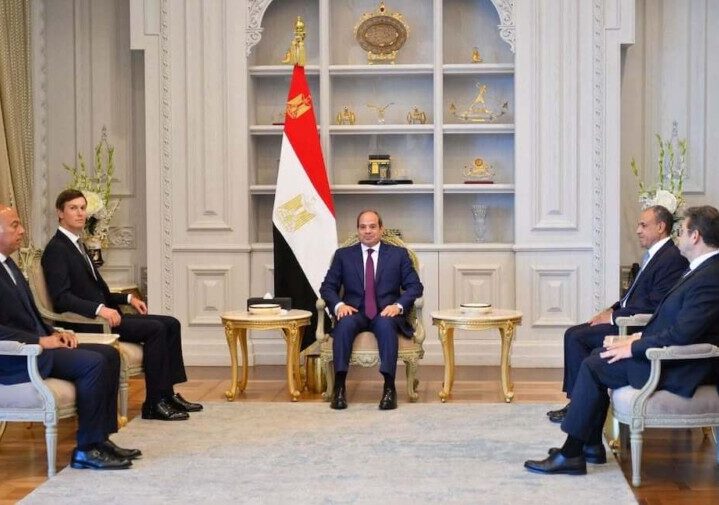
A few days after Israel’s attack on Qatar, President Recep Tayyip Erdoğan travelled to Doha to attend the extraordinary summit of the Organization of Islamic Cooperation (OIC). President Erdoğan met with the Emir of Qatar, Sheikh Tamim bin Hamad Al Thani, and conveyed Ankara’s message of solidarity. In his speech at the summit, President Erdoğan strongly condemned Israel’s attacks on Gaza and its provocation towards Doha. Ankara stated that Israel’s actions pose a threat not only to Palestine but to the security of the entire region. Turkey also called for supporting diplomatic initiatives such as Palestine’s full membership to the United Nations (UN) and a permanent ceasefire in Gaza. Stating that Israel must be economically pressured, President Erdoğan said that concrete steps could be taken within the OIC and new mechanisms could be established.
Turkey’s role in the new process in the Middle East is not only diplomatic but also prominent in terms of its military capacity. Ankara’s progress in the defence industry in recent years sets an example for countries in the region. Domestic UAV and missile systems, as well as national fighter jet projects, have made Turkey an actor that reduces its dependence on foreign countries. Countries such as Qatar and the UAE have also begun to add these military equipment to their inventories. This situation is encouraging Gulf countries to increase their defence investments in a similar manner. Saudi Arabia’s acceleration of domestic defence projects is an indication of this trend.
Turkey’s military strength has been proven in many parts of the region, such as Syria and Libya. Iran’s direct or proxy wars with Israel, Egypt’s military capacity, and the Gulf’s economic power could present a tangible power projection against Israel. Therefore, the Middle East is on the verge of a new era in response to Israeli aggression. In this sense, Israel’s attack on Doha has brought the region to a critical threshold. Regional countries are seeking joint mechanisms to ensure their own security at a time when the U.S. security umbrella is increasingly losing its meaning.
On the other hand, the joint statement issued at the Doha summit conveyed the message that there would be no silence in response to Israel’s actions. The Qatari Emir’s statement that ‘our right to respond is reserved’ indicates that military options are also on the table. In the coming period, if Turkey’s diplomatic and military power, Egypt’s military experience and the Gulf’s financial support are combined, the establishment of a new security order in the Middle East could accelerate. As long as Israel’s aggression continues, the solidarity reflex of the countries in the region seems likely to strengthen. These developments point to a turning point that could fundamentally change the balance of power in the Middle East.

Mehmet Rakipoglu completed his BA in International Relations at Sakarya University. He worked as a teaching assistant at Sakarya University Center for Middle Eastern Studies from 2015-2017. Rakipoglu is currently a PhD candidate at the same Center. His research areas include foreign policy in the Gulf, Turkey’s policies towards the Gulf region, and political Islam.
You can see how this popup was set up in our step-by-step guide: https://wppopupmaker.com/guides/auto-opening-announcement-popups/

Stay informed by subscribing to
our weekly newsletter.
You can see how this popup was set up in our step-by-step guide: https://wppopupmaker.com/guides/auto-opening-announcement-popups/
You can see how this popup was set up in our step-by-step guide: https://wppopupmaker.com/guides/auto-opening-announcement-popups/
You can see how this popup was set up in our step-by-step guide: https://wppopupmaker.com/guides/auto-opening-announcement-popups/
You can see how this popup was set up in our step-by-step guide: https://wppopupmaker.com/guides/auto-opening-announcement-popups/