The New World Order Following July 15 and President Erdoğan’s Leadership

July 23, 2026

President Erdoğan not only ensured the coup attempt failed by directing the nation onto the streets on the night of 15 July, but also strengthened the country’s power through the steps he took afterwards.
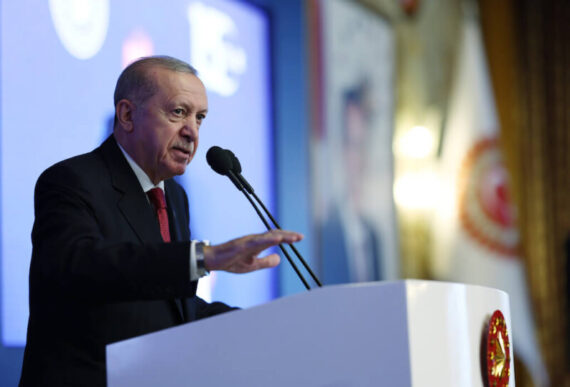
Turkish President Recep Tayyip Erdogan delivers a speech during the July 15 Democracy and National Unity Day commemoration program at the Grand National Assembly of Turkiye in Ankara, Turkiye, on July 15, 2026. Photo by Anadolu Images.

T

en years have passed since the coup attempt of July 15, 2016. From the very first day, the state launched a comprehensive campaign against the damage caused by FETÖ, the perpetrator of the coup attempt, within the system. With the support of society, a restoration of the state’s institutional structure was undertaken; this did not stop at merely erasing the traces of FETÖ, but also involved intensive efforts to thoroughly eliminate the effects of the tutelage mechanisms within the system. Of course, this is not a process that has been fully completed. It is clear that, just as FETÖ, which infiltrated the system over many years, may still have a small number of dormant cells within it, so too do the external links it established from the very beginning continue to exist.

Consequently, we must remain vigilant regarding the potential for FETÖ, and, naturally, similar organisations, to cause harm to the system, even if they cannot go as far as staging a coup. However, another matter of at least equal importance is to recognise what else was actually prevented on the night of July 15, 2016, when the coup attempt was thwarted. Under the leadership of President Erdoğan, the Turkish nation stood up to the coup plotters on July 15, thereby saving not only democracy but also the country’s independence and future.

This is because developments that emerged particularly prior to the coup attempt – and which have continued to accelerate over the past decade – indicate that politics has taken on a new dimension globally. Thanks to President Erdoğan’s leadership and the public’s confidence in him, Turkey is putting up a strong fight during this challenging period. The loss of ground in foreign policy faced by many states in recent years, particularly France, has not affected Turkey. On the contrary, Turkey has expanded its sphere of influence by utilizing both soft and hard power elements simultaneously.

The world from 2016 to the present

Over the past decade, numerous studies have been conducted analyzing the causes and consequences of the 15 July coup attempt, covering topics ranging from FETÖ’s infiltration of the state from the 1970s onwards to the point where it gained sufficient power to attempt a coup. At this juncture, it is worth focusing on the developments that have taken place in the world and in Turkey over the ten-year period following the coup attempt. Indeed, the past decade has witnessed one of the most rapid periods of transformation in human history. First and foremost, the course of global politics has shifted. Donald Trump, who emerged victorious from the US Presidential Election in November 2016, effectively ushered in a new style of leadership.

The Covid-19 pandemic that emerged in 2020 led to a reassessment of states’ capacities and crisis-management capabilities. In a sense, the importance of being able to make swift decisions to cope with extraordinary circumstances was once again highlighted. Particularly in the early stages of the pandemic, international organizations proved ineffective, mechanisms for inter-state cooperation collapsed, and borders were closed on both sides. With Russia’s invasion of Ukraine, the prospect of a redrawing of the map in Northern Europe emerged. Indeed, Sweden and Finland, fearing that they might be next after Ukraine, hastily applied for NATO membership. During this period, in which the functions of international organizations were called into question, NATO remained an exception to the rule.

Indeed, not only did NATO’s membership increase, but expectations of its members also rose. Meanwhile, the ongoing Syrian Civil War came to an end at the end of 2024 with the overthrow of the Assad regime. Israel launched a genocide as part of its policy of depopulating Gaza. The terrorist state of Israel also carried out attacks against Iran and Lebanon, and in particular carried out assassinations targeting numerous figures within the Iranian state administration. This brief summary alone may suffice to illustrate the chaotic picture the world has faced over the past decade.

It is possible to say that the current process actually signals a paradigm shift in a sense. In fact, for almost the past twenty years, a security-oriented perspective, in which the reflexes of the nation-state have strengthened, has prevailed worldwide. States have prioritized their own national interests rather than adopting a universal perspective that emphasizes international cooperation mechanisms. To such an extent that the European Union (EU), which had already been losing ground following the UK’s departure in 2016, saw its influence further weakened due to its inability to present a united front in the face of global developments.

In particular, there was no unified voice among EU member states on defense and security policies. The voices of international organizations outside NATO were scarcely heard. Indeed, the very existence and functions of these organizations, including the United Nations, were called into question. Even if their existence were to continue, calls for significant structural changes were frequently voiced.

The longest decade in Turkish politics

Undoubtedly, the coup attempt orchestrated by FETÖ had significant repercussions on Turkish politics. One of the coup’s consequences, albeit not a direct one, was the adoption of a new system of government. With the constitutional amendments approved by a referendum in 2017, the country transitioned to a presidential system of government, thereby putting an end to the dual leadership in the executive branch. In the 2018 elections, President Erdoğan was elected as the first president under the new system.

In addition, far-reaching changes took place, particularly within the security and judicial bureaucracies. Whilst the country’s defense and security capabilities were strengthened on the one hand, they were also purged of FETÖ elements and genuinely nationalized on the other. Following the events of July 15, Turkey carried out the Euphrates Shield operation in 2016, the Olive Branch operation in 2017, the Peace Spring operation in 2019 and the Spring Shield operation in 2020 to prevent any security vulnerabilities. This prevented the formation of a ‘terror corridor’ along the line stretching from the Syrian border to the Mediterranean. During the same period, support was provided to Azerbaijan to regain its territories in Karabakh. In the Eastern Mediterranean, attempts by the Greek Cypriot Administration and Greece to expand their maritime zones were thwarted.

A clear stand was taken against Israel’s genocide and massacres targeting Palestinians. During this period, Turkey also faced a series of other challenges at home. It is fair to say that the most significant of these was the earthquake centered on Kahramanmaraş on the night of February 6, 2023, the effects of which were felt intensely across 11 provinces. In the earthquake, which claimed the lives of over 50,000 people, hundreds of thousands of homes were rendered uninhabitable. It is clear that this situation has also had a negative impact on the economy. This event, occurring just as the effects of the COVID-19 pandemic were beginning to be overcome, increased the pressure on economic management.

Turkey was directly or indirectly affected by almost all of these challenging processes. In contrast, Turkey emerged successfully from these trials, unlike many other states. Firstly, it was ensured that domestic developments did not lead to any weakness in state capacity. Although the security forces were most adversely affected by the coup attempt, both the Armed Forces and the law enforcement agencies continued their work without losing their capacity. The positions of the expelled FETÖ members were filled within a short time. Cross-border operations and domestic operations demonstrated that the security forces were able to carry out their duties without any weaknesses emerging. During the same period, Turkey also made significant strides, particularly in the security and defense sectors. Reducing dependence on foreign sources in the defense sector is one of the most important means of the country achieving true independence.

Historically, whenever Turkey’s national interests clashed with those of Western countries, it faced severe sanctions and embargoes from the opposing side. The most striking example of this was when, following the 1974 Cyprus Peace Operation, numerous countries simultaneously imposed embargoes on Turkey. From that point onwards, Turkey endeavored to establish its own national defense industry with the limited resources available at the time. These efforts intensified significantly during the Özal era, which began in 1983. However, subsequently, particularly amidst the chaotic environment of the 1990s, this process experienced various setbacks due to the impact of successive economic and political crises.

The real breakthrough, however, began with the AK Party’s rise to power and has gained significant momentum, particularly over the last decade. President Erdoğan, recognizing the shifting global balance of power and correctly interpreting the trends in new technology, launched a major initiative in the defense industry. Defence companies have increased their exports to various parts of the world. The progress made in this area is closely linked not only to the companies’ growing capacity to adapt to new technologies but also to their ability to identify new markets.

Given their status as critical sectors, simply producing high-quality equipment in the defence and security fields is not sufficient in itself. The country’s political power serves as the most important means of selling to other states. Turkey’s sphere of influence, which has grown thanks to the efforts of President Erdoğan, has also ensured that production in these sectors generates economic revenue through exports. Consequently, over the past decade, Turkey has become one of the world’s leading defense industry suppliers.


A strong Turkey under Erdoğan’s leadership

Meanwhile, President Erdoğan has steadily increased his influence in non-Western societies. Moreover, it is not only within the Islamic world but also amongst oppressed nations in various parts of the world, particularly in Africa and South America, that Erdoğan has been viewed almost as their natural leader. The interesting aspect is that the Western world has also accepted this role of Erdoğan’s. As exemplified by US President Trump’s favor towards him, as seen once again at the most recent NATO summit, Erdoğan has been recognized as the spokesperson for a vast region. It can be said that this process has begun to transform Turkey from a regional actor into a global power. The ‘Turkey Century’ vision is, in fact, a clear expression of this endeavor. In the coming period, it will be possible to see the positive results of the steps taken in terms of both soft and hard power more clearly.

It is also important to emphasize that these steps have not been limited to the fields of foreign policy and security. For example, Turkey demonstrated its ability to heal the wounds caused by an earthquake that deeply affected 11 cities, leaving some of them almost in ruins, within a short period of time. Hundreds of thousands of homes were built in the earthquake-stricken areas; in effect, new towns were established. Moreover, this process was carried out without disrupting ongoing public investment projects in other parts of the country. Just as in the political sphere, strong leadership was a key factor here. It is worth noting in passing that this process also demonstrated the benefits of the Presidential System of Government. The country continued to grow in a stable and determined manner without descending into the chaotic climate characterized by the coalitions that existed prior to the AK Party’s time in power.

It is clear that, had the 15 July coup attempt been successful, Turkey’s capacity to deal with problems, whether arising from external sources or from within the country itself, would have been extremely limited. In particular, it is easy to foresee that an independent foreign policy aligned with the country’s interests could not have been pursued. Indeed, the primary objective of the coup attempt was to reduce Turkey to a weakened state, with no room for manoeuver outside the Western world, and particularly the US, and where the expression of national will was suppressed. In contrast, the response of the people, under the leadership of President Erdoğan, ensured that these plans were turned on their head. The fact that the country weathered a coup attempt characterized by disproportionate use of violence, in which 253 people lost their lives, thousands were injured, and bombs rained down on cities, has boosted the nation’s self-confidence and enhanced the country’s standing in the international community.

At the same time, the importance of strong and resolute leadership has been demonstrated once again. President Erdoğan not only ensured the coup attempt failed by directing the nation onto the streets on the night of 15 July, but also strengthened the country’s power through the steps he took afterwards. It is clear that these developments are instructive in many respects. What is particularly striking is that Erdoğan’s resolute stance and determined attitude have strengthened Turkey’s position amongst nations. Of course, state administration and politics are closely linked to institutionalization and the full fulflilment of duties by professional teams. However, to be fair, it is important to emphasize the following point in particular: both the resistance witnessed on the night of July 15 and Turkey’s rapidly rising global standing in the aftermath are, to a large extent, the result of President Erdoğan’s leadership skills.

(Originally published in Turkish by Kriter)

Hamit Emrah Beriş holds a Ph.D. from Ankara University. Since 2002, he has been working in the Department of Political Science and Public Administration at the Faculty of Economics and Administrative Sciences of Gazi University, which was renamed Ankara Hacı Bayram Veli University. He has published six books and numerous articles. In November 2018, he was appointed Deputy President of the Police Academy. He is the Rector of Çukurova Un University in Turkey.