Trump to Host Armenia, Azerbaijan ‘Historic Peace Summit’
The Washington summit would include an official “Peace Signing Ceremony” and the signing of bilateral agreements between Washington and both Baku and Yerevan.
August 8, 2025

U
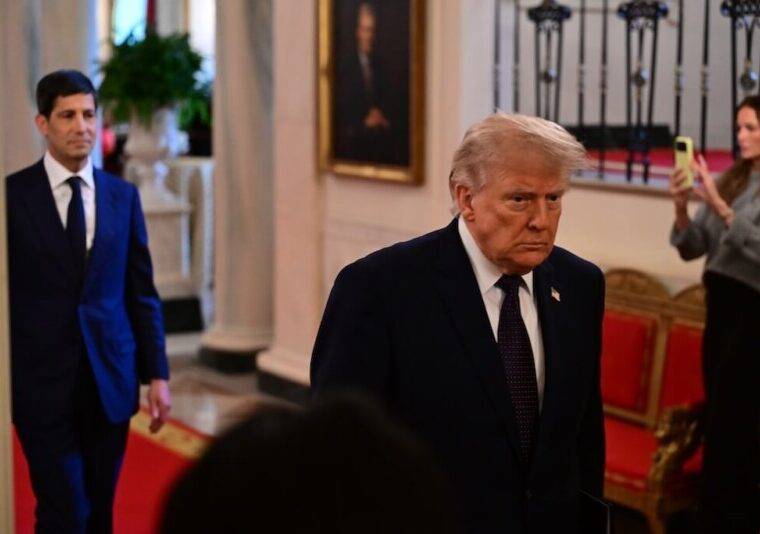
.S. President Donald Trump announced that he will host Azerbaijani President Ilham Aliyev and Armenian Prime Minister Nikol Pashinyan at the White House on Friday, August 8, 2025 for what he has called a “Historic Peace Summit.” The meeting is expected to culminate in the signing of a long-awaited peace agreement between the two South Caucasus nations, ending decades of hostility over the disputed Nagorno-Karabakh region.
Trump, speaking via his Truth Social platform on Thursday, framed the event as a personal diplomatic victory. “These two nations have been at war for many years, resulting in the deaths of thousands of people. Many leaders have tried to end the war, with no success — until now, thanks to ‘TRUMP,’” he wrote, using capital letters for emphasis.
The U.S. president revealed that the summit would include an official “Peace Signing Ceremony” and the signing of bilateral agreements between Washington and both Baku and Yerevan. According to Trump, these agreements will aim to expand economic cooperation, trade, and investment in the strategically important South Caucasus region, which lies at the crossroads of Europe and Asia and is rich in energy resources.
“I am very proud of these courageous leaders for doing the right thing for the great people of Armenia and Azerbaijan,” Trump stated. “It will be a historic day for Armenia, Azerbaijan, the United States, and the world.”
Armenia and Azerbaijan, both former Soviet republics, have been locked in a bitter dispute over Nagorno-Karabakh since the collapse of the Soviet Union in 1991. The predominantly ethnic Armenian enclave, internationally recognized as part of Azerbaijan, declared independence in the early 1990s with Armenian military support. This sparked a full-scale war that killed tens of thousands and displaced more than a million people.
A fragile cease-fire brokered in 1994 failed to resolve the underlying dispute. Sporadic clashes continued over the years, culminating in the 44-day war in autumn 2020, when Azerbaijani forces recaptured large swathes of territory, including parts of Karabakh and the surrounding districts. That war ended with a Russian-brokered agreement, which also introduced Russian peacekeepers into the region.
In September 2023, Azerbaijan completed its military operations in Karabakh, restoring full sovereignty over the enclave after the surrender of the remaining separatist forces. The move marked a turning point, shifting the focus from military confrontation to political negotiations.
Efforts toward a comprehensive peace deal accelerated in early 2024, with multiple rounds of talks mediated by the European Union, Russia, and the United States. In March 2025, Baku and Yerevan announced that they had reached agreement on all 17 articles of a draft peace treaty, covering border demarcation, transport links, security guarantees, and the rights of ethnic minorities.
While details of the U.S.-brokered version of the peace agreement have not been released, analysts say it is likely to include American economic incentives and commitments to regional infrastructure projects, potentially tying the peace deal to broader U.S. strategic interests in the Caucasus.
The Armenia-Azerbaijan peace process has implications far beyond the South Caucasus. The region is a vital corridor for oil and gas pipelines connecting the Caspian Sea to European markets, bypassing Russia and Iran. Stability there would strengthen Europe’s energy security and create new opportunities for trade and transport across Eurasia.
Washington’s increased involvement also signals a shift in geopolitical influence. Russia, traditionally the main mediator in the conflict, has been distracted by its war in Ukraine and has seen its sway in the Caucasus diminish. The European Union has played a growing role, but the White House’s hosting of the signing ceremony is seen as a clear statement of U.S. diplomatic leadership.
Recommended
For Trump, who is seeking to reinforce his image as a dealmaker on the global stage, the summit offers a high-profile foreign policy achievement. His administration has been working behind the scenes for months, according to U.S. officials, with special envoys shuttling between Baku and Yerevan to iron out differences.
The president has frequently criticized previous administrations for failing to resolve long-standing international disputes. By securing what could be a definitive peace between Armenia and Azerbaijan, Trump may claim a breakthrough comparable to historic agreements like the Camp David Accords.
The peace summit is scheduled for Friday afternoon in Washington, followed by a formal signing ceremony on the White House lawn. Both leaders are expected to deliver remarks alongside Trump, and the event will be attended by senior U.S. officials, foreign diplomats, and invited guests from the Armenian and Azerbaijani diasporas.
If successful, the agreement would formally end one of the most enduring and bloody post-Soviet conflicts, setting the stage for a new era of cooperation between Armenia and Azerbaijan.
(Source: Anadolu Agency)

Politics Today is dedicated to publishing insightful analyses in order to understand the changing nature of contemporary politics. It aims to contribute to the sound and constructive discussion of international affairs.
You can see how this popup was set up in our step-by-step guide: https://wppopupmaker.com/guides/auto-opening-announcement-popups/

Stay informed by subscribing to
our weekly newsletter.
You can see how this popup was set up in our step-by-step guide: https://wppopupmaker.com/guides/auto-opening-announcement-popups/
You can see how this popup was set up in our step-by-step guide: https://wppopupmaker.com/guides/auto-opening-announcement-popups/
You can see how this popup was set up in our step-by-step guide: https://wppopupmaker.com/guides/auto-opening-announcement-popups/
You can see how this popup was set up in our step-by-step guide: https://wppopupmaker.com/guides/auto-opening-announcement-popups/