Türkiye’s Role in Trump's Gaza Plan
While Trump may be seen as the architect of the ceasefire agreement between Israel and Hamas, Erdoğan and Türkiye as a whole should not be forgotten.
November 11, 2025

I
srael’s attacks on Gaza, which began on October 7, 2023, finally came to an end on October 10, 2025, with the ceasefire agreement. However, the agreement only lasted two years.
U.S. President Trump first proposed the 21-point Gaza ceasefire plan on September 23, on the sidelines of the opening ceremonies of the 80th UN General Assembly. This proposal followed a “mini Gaza” summit organized between Trump and eight Muslim countries. Both Hamas and Israel accepted and implemented the plan, with some revisions. On October 13, at a ceremony in Egypt’s Sharm el-Sheikh region, the United States, Türkiye, Egypt, and Qatar signed a declaration of intent entitled “President Trump’s Plan to End the War in Gaza in a Comprehensive Manner” as guarantor countries.
Recalling the vision for Gaza that Netanyahu shared during his first visit in February, shortly after Trump took office, it’s clear that the current situation is a remarkable transformation. Certain actors have been instrumental in bringing Trump to this point. Türkiye and President Erdoğan are at the forefront of these actors who can steer an unpredictable figure like Trump away from mistakes and enable him to act fairly.
It is therefore crucial to explain how Trump’s initial ideas, which viewed Gaza merely as a real estate project to be resolved by removing all Gazans and rebuilding Gaza as the “Riviera of the Middle East,” were softened and transformed. To this end, we will first outline the conditions under which the ceasefire plan emerged, followed by an explanation of how the process evolved with Türkiye’s involvement.
As is well known, Trump promised during his campaign to end ongoing wars and conflicts around the world, particularly in Ukraine. Even before taking office, he played an effective role in facilitating the Israel-Hamas ceasefire, which took effect on January 19, 2025. Although Israel violated the ceasefire plan and resumed attacks on March 18, it was reported that Trump intended to negotiate a new ceasefire or a regional peace agreement in a different form.
However, it was understood that Trump’s plan was not fair or humane. It would not stop Israel’s genocide in Gaza. Rather, it would see Gaza completely evacuated and rebuilt as a tourist center, in line with Israel’s wishes.
However, there was no chance that Trump’s plan would be accepted by Hamas or other countries in the region. Additionally, a wave of anger and hatred against Israel had emerged worldwide. This wave slowly began to harm U.S. interests and force the US to protect and support Israel. Meanwhile, Israel continued to escalate its massacres in Gaza, causing the wave of anger and hatred to swell even further. Without considering the impending tsunami, Israel was placing almost the entire cost on the U.S.
Israel’s unlawful attacks and raids on the Sumud Fleet—a manifestation of the global conscience that emerged alongside individual initiatives to break the Gaza blockade and deliver humanitarian aid to Gaza—were not enough. Its detention of hundreds of activists, most of whom were from Western countries and were treated as terrorists, exhausted all patience.
The airstrike carried out on September 9 against a building in Doha, Qatar’s capital, where senior Hamas leaders had gathered to discuss a ceasefire proposal prepared by Trump’s team, exhausted Trump’s patience. For the first time, he was convinced that Israel must be stopped. Although Israel claimed that Qatar was not the target of the attack, Israeli media had long said that Qatar should be punished for supporting Hamas and hosting its leadership. Therefore, it was understood that, with this attack, Israel wanted to eliminate the Hamas leaders and send a strong message to countries that host Hamas members, such as Qatar.
The targeting of Qatar, one of the United States’ and specifically Trump’s closest allies in the region, has prompted Trump to swiftly implement a plan he says will stop Israel and bring peace to Gaza and the entire region.
Israel’s attack on Doha has forced the US and many Western countries to reconsider their positions on Israel and Palestine. These countries are now taking bolder steps towards recognizing Palestine, something they have refrained from doing until now. Ten countries, including France, the United Kingdom, Canada, Australia, Portugal, Belgium, Malta, Monaco, Luxembourg, and Andorra, announced their recognition of Palestine during the opening ceremonies of the 80th session of the United Nations General Assembly. The UN summit included more than these recognitions. The “two-state solution” conference, jointly organized by France and Saudi Arabia and held in the General Assembly hall, also signaled a turning point against Israel.
President Erdoğan’s speech at the UN General Assembly strongly condemned Israel and called on the international community to act immediately. His speech was met with appreciation and applause from all participants. However, when Netanyahu, a genocidal war criminal, took the podium, participants left the hall in protest. This demonstrates that Israel has lost its comfortable status and is increasingly isolated.
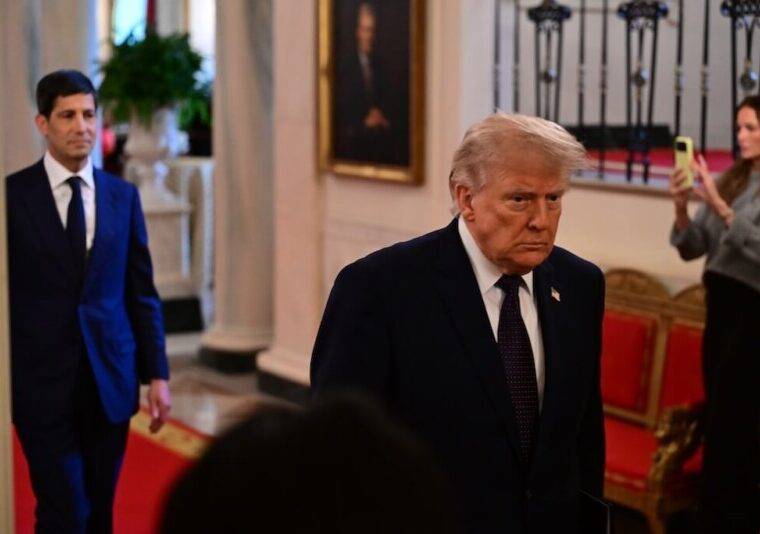
Finally, after a productive and cordial meeting with President Erdoğan on September 26, Trump received Netanyahu on September 29. At the end of the meeting, it was announced that Trump’s team’s 21-point Gaza plan had been accepted, with the exception of the clause relating to Qatar.
At the Gaza Summit in New York, Trump announced that Israel would cease its attacks, withdraw its army, and guarantee that it would not attack again. Humanitarian aid would be allowed to enter Gaza, and its people would not be forced to leave. Gaza would be rebuilt and ultimately governed by Palestinians. In exchange, Hamas would release all hostages, agree to lay down its arms, and relinquish its claim to the future of Gaza. But, the realization that these promises were not included in the text accepted by Netanyahu led to disappointment and backlash in all participating Muslim countries, particularly Türkiye.
During Netanyahu’s over three-hour meeting at the White House, it was revealed that Netanyahu had revised his plan from Israel’s perspective. President Erdoğan reportedly called Trump to inform him that Hamas would not be persuaded under these conditions and that progress should be made on the agreed-upon draft. Meanwhile, Trump announced that Israel had accepted the ceasefire plan and demanded that Hamas also accept the conditions and immediately release the hostages. Trump stated that he had given Hamas until midnight on October 5 and warned that, if the hostages were not released by that time, he would make Gaza uninhabitable.
In this tense environment, Türkiye intervened in the process again. With the help of MIT President Ibrahim Kalin, who was in Doha, Hamas responded thoughtfully to Trump, persuading them to agree to the ceasefire.
“We appreciate the Arab, Islamic, and international efforts, as well as the efforts of U.S. President Donald Trump, to stop the war on the Gaza Strip, exchange prisoners, allow immediate entry of aid, and reject the occupation and expulsion of our Palestinian people from the Gaza Strip. Within this framework, the initiative aims to halt the fighting and secure Israel’s complete withdrawal from the Gaza Strip. According to the exchange formula included in President Trump’s proposal, Hamas has agreed to release all live and dead hostages. Hamas also confirms its readiness to immediately begin negotiations with mediators to discuss the details of the plan.”
This response thwarted Israel’s plans and softened Trump’s stance toward Hamas. In his message, Trump praised Hamas’s response and ensured the start of the negotiation process.
Hamas’s response to Trump reiterated its agreement to transfer the administration of the Gaza Strip to an independent Palestinian body composed of technocrats based on the Palestinian national consensus and with the support of Arab and Islamic countries. This rendered Netanyahu’s attempt to incorporate Tony Blair’s formula into the plan invalid and ensured a return to the plan’s original form. This is precisely the form that Trump promised the leaders of eight Muslim countries at the mini Gaza summit.
After Trump stated that he would not ignore Hamas’s offer of peace and that negotiations should begin, Hamas announced that it had accepted the ceasefire plan with the support of Türkiye and Qatar. Israel’s move, based on the assumption that Hamas would reject the proposed plan, backfired, causing major shock in Israel. Furthermore, after Hamas accepted Trump’s plan, it became impossible to backtrack on the plan Netanyahu had announced on September 29. Consequently, Israel failed to achieve its declared objectives after October 7. In fact, while seeking to eliminate Hamas, Israel was forced to negotiate with it at the same table. Afraid of Trump’s reaction, Israel stalled the process under the pretext of cabinet approval before finally approving the ceasefire plan on October 10.
Recommended
Eager to transform the ceasefire agreement — which took effect 24 hours after the Israeli cabinet approved it — into a grand spectacle, Trump announced that he would travel to Egypt at the invitation of President Abdel Fattah el-Sisi to attend the signing ceremony. Before traveling to Egypt, Trump stopped in Israel, where he delivered a speech in the Knesset outlining the ceasefire plan. This was an attempt to help Netanyahu market the ceasefire as a victory. However, just as Trump was expected to leave Israel for Sharm El-Sheikh, Trump, Netanyahu, and el-Sisi participated in a three-way telephone conversation at Netanyahu’s request. Netanyahu was reported to accompany Trump to Sharm El-Sheikh for the signing ceremony, despite his name not being on the list announced to the media.
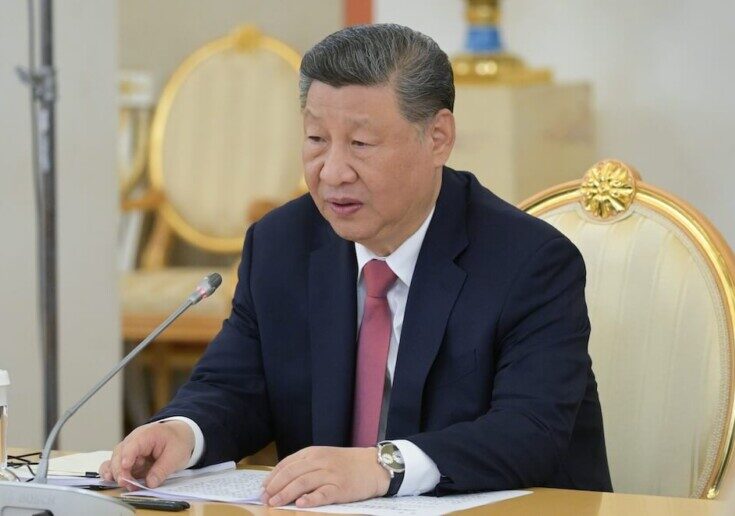
At this point, President Erdoğan demonstrated his determination once again. Defying convention, he ordered the presidential plane to pass the runway and then informed el-Sisi and Trump that he would leave if Netanyahu attended the summit. Encouraged by Erdoğan’s stance, several other leaders also opposed Netanyahu’s participation. Netanyahu’s plan to attend the summit was thwarted, and he was removed under pressure.
Although some media outlets may portray this development as President Erdoğan’s second “one minute” moment toward Israel, his stance is actually far from inflammatory. It is a legal and humanitarian response to Netanyahu’s genocidal actions. After all, Netanyahu is responsible for the deaths of nearly 70,000 Palestinians, so it would be unacceptable for anyone, let alone Erdoğan, to stand alongside him and thereby legitimize him as a war criminal. President Erdoğan’s reaction ultimately prevented Netanyahu from attending the signing ceremony and putting on a show. It also prevented the normalization of standing alongside a war criminal, which would have effectively whitewashed Israel by giving it a place on the podium.
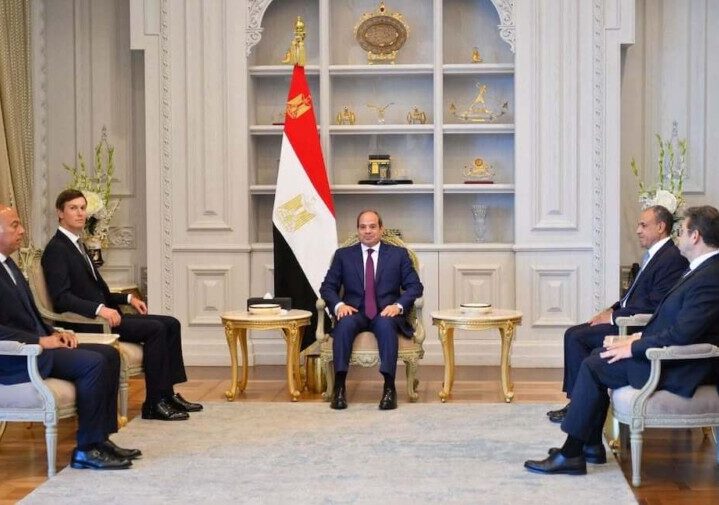
Consequently, the signing ceremony for Trump’s Gaza plan took place with more than thirty-five leaders in attendance and great hope. Trump stated that this agreement was intended not only to bring peace to Gaza but also, with the help of the guarantor countries, to resolve ongoing conflicts in the Middle East and bring peace and tranquility to the region. However, without Türkiye’s and President Erdoğan’s timely intervention and delicate touch, neither Trump’s motivation nor the agreement between Hamas and Israel could have been sustained.
If this ceasefire was possible, it was largely thanks to President Erdoğan’s leadership, determination, and personal influence over Trump, which kept Trump engaged. This smart policy sometimes aligned with Trump and sometimes called him out on his mistakes. Ultimately, it prevented Trump from falling into Netanyahu’s orbit.
Therefore, while Trump may be seen as the architect of the ceasefire, Erdoğan and Türkiye as a whole should not be forgotten. They are the real heroes behind the scenes, with their human resources trained in foreign policy and intelligence.
(Originally published in Turkish by Kriter)
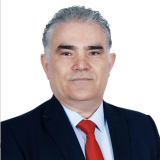
After serving 25 years in the Turkish Navy, he retired in 2014. Afterwards, he started his doctoral education on Middle East Studies at Sakarya University Middle East Institute and worked as a researcher at the Israel Studies desk of the institute. Between 2019-2021, he served as a Levant Specialist at Center for Middle Eastern Studies (ORSAM) and led the Palestine and Israel studies during this period. Currently, as an independent researcher, he conducts research on Palestine, Israel, the Middle East and Turkish Foreign Policy, writes analyses for various platforms and is a commentator on TV.
You can see how this popup was set up in our step-by-step guide: https://wppopupmaker.com/guides/auto-opening-announcement-popups/

Stay informed by subscribing to
our weekly newsletter.
You can see how this popup was set up in our step-by-step guide: https://wppopupmaker.com/guides/auto-opening-announcement-popups/
You can see how this popup was set up in our step-by-step guide: https://wppopupmaker.com/guides/auto-opening-announcement-popups/
You can see how this popup was set up in our step-by-step guide: https://wppopupmaker.com/guides/auto-opening-announcement-popups/
You can see how this popup was set up in our step-by-step guide: https://wppopupmaker.com/guides/auto-opening-announcement-popups/